
There’s a certain comfort in the simple act of boiling eggs, but let me take you on a flavorful journey that transforms those humble ingredients into something extraordinary. Imagine the delicate dance of spices and tea leaves swirling around your kitchen as you craft Chinese Tea Eggs. This delightful dish isn’t just visually stunning with its marbled pattern; it offers a captivating blend of savory flavors that will have your taste buds singing.
I first encountered Chinese Tea Eggs at a bustling street market, the earthy aroma of soy sauce, star anise, and cinnamon wafting through the air. I was instantly hooked! With just a handful of ingredients and minimal effort, these eggs become a delectable addition to any meal or a charming snack on their own. They’re perfect for impressing guests or simply enjoying a unique twist on breakfast. With each bite, you’ll rediscover the joys of homemade cooking and the adventure of global flavors. Let’s dive into this comforting recipe that’s sure to satisfy your cravings and elevate your culinary repertoire!

Why are Chinese Tea Eggs so special?
Unique Flavor Profile: The harmonious blend of spices creates an aromatic experience that elevates this simple dish into something memorable.
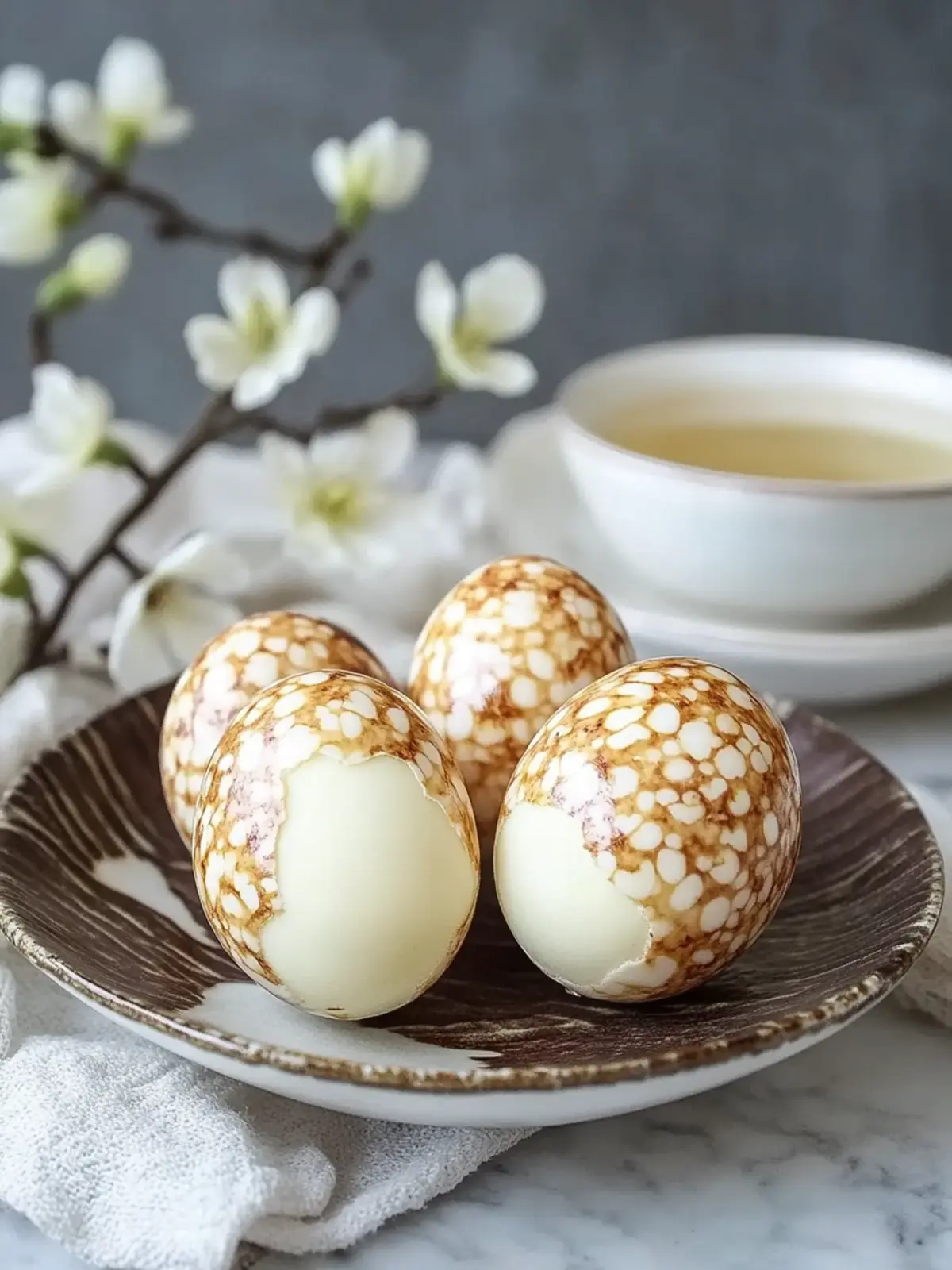
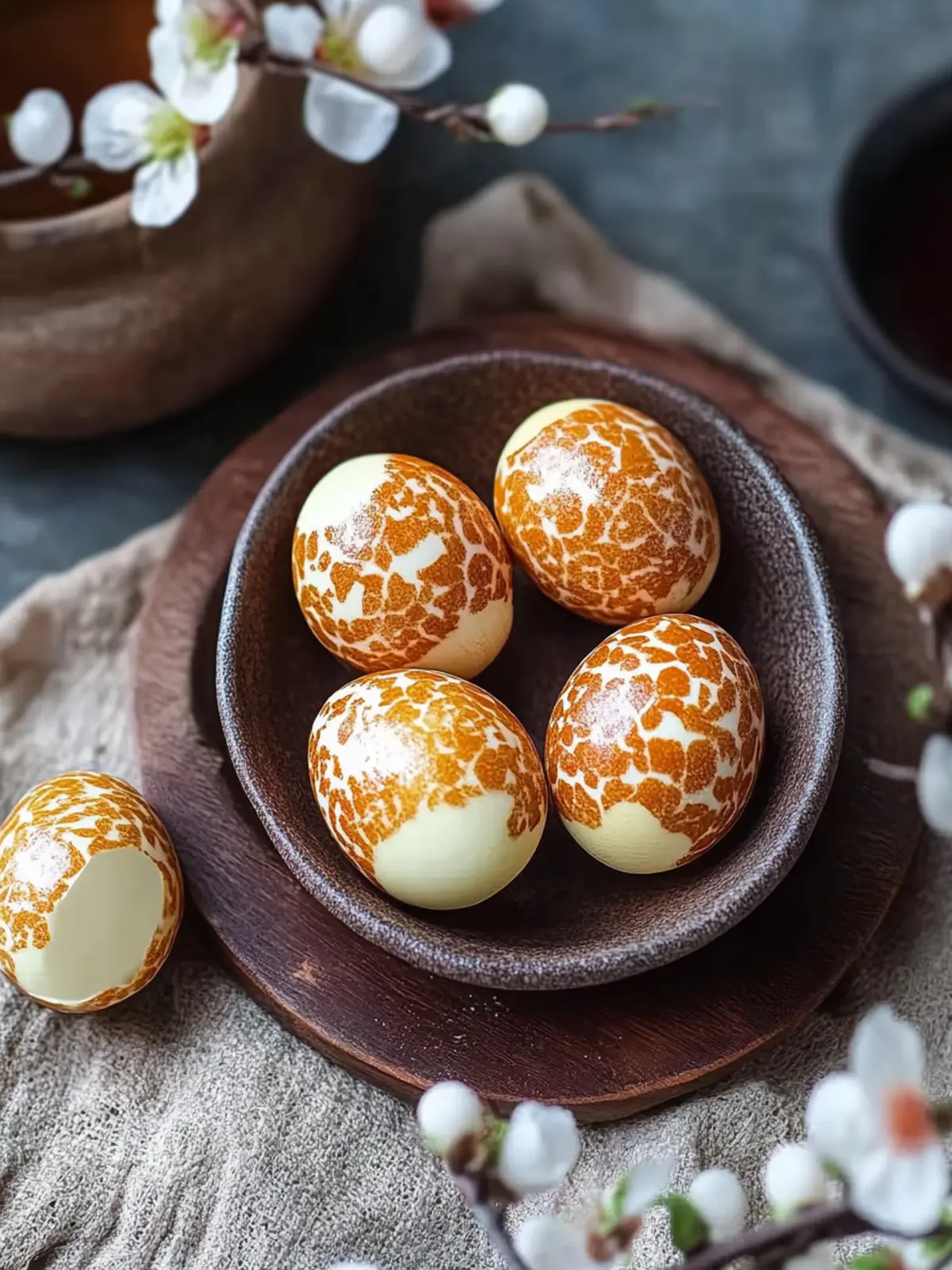
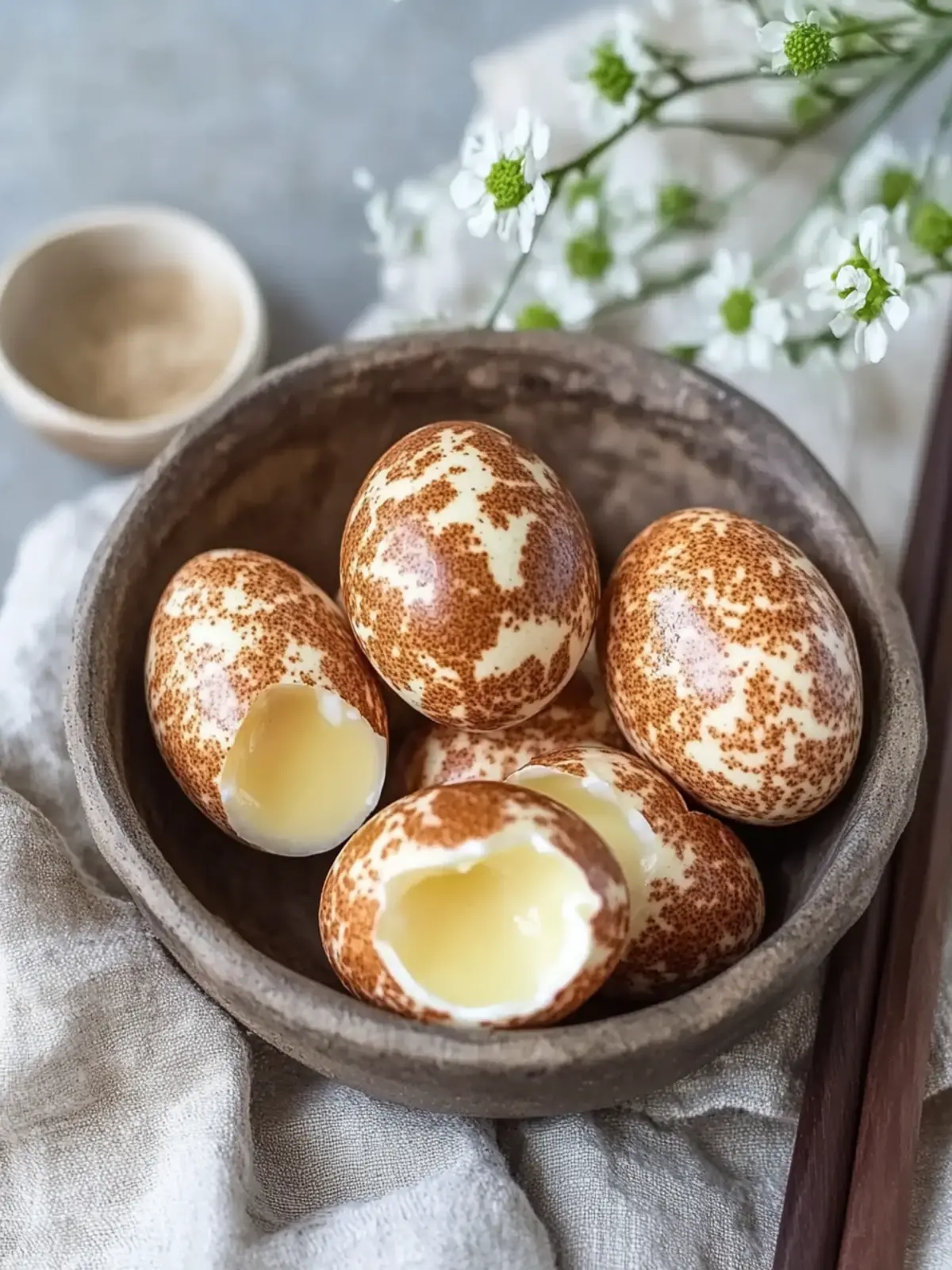
Visually Stunning: The marbled pattern on the eggs not only looks impressive but also invites curiosity and appreciation from guests.
Versatile Snack: Perfect hot or cold, these eggs make a delightful addition to any meal or an easy snack on the go.
Time-Saving: With minimal active cooking time, you can prepare these delicious eggs while focusing on other meal prep.
Homemade Happiness: Rediscover the joy of home-cooked goodness that fast food simply can’t replicate. You might also be inspired to explore more exciting Asian recipes!
Chinese Tea Eggs Ingredients
• Get ready to savor the rich flavors of these remarkable eggs!
For the Eggs
- 12 large eggs – The star of the show; choose the freshest ones for the best flavor.
For the Tea and Spices
- 2 black tea bags – They provide the essential earthy base for the broth.
- 3 whole star anise – Adds a sweet, licorice-like flavor that is both warming and aromatic.
- 2 cinnamon sticks – Bring warmth and a hint of sweetness to the dish.
- 1 teaspoon Sichuan peppercorns – Offers a unique tingly sensation; feel free to adjust for spice preference.
- 4 whole cloves – Introduces a warm, aromatic spiciness that complements the other flavors.
- 1 teaspoon fennel seeds – Provides a sweetness and a complex flavor that blends beautifully.
For the Broth
- 1/2 cup (120 ml) light soy sauce – The main seasoning, giving it depth and umami richness.
- 2 tablespoons (30 ml) dark soy sauce – Optional but recommended for a richer color and flavor.
- 2 tablespoons rock sugar or brown sugar – Balances the saltiness and enhances the broth’s complexity.
- 6 cups (1.4 liters) water – The base for the tea broth, ensuring each egg gets infused with flavor.
- 1 teaspoon salt – Essential for flavoring the broth and enriching the overall taste of the eggs.
Embrace the process and enjoy making these delightful Chinese Tea Eggs that will not only tantalize your taste buds but also impress your friends and family!
How to Make Chinese Tea Eggs
-
Boil the Eggs: Place the 12 large eggs in a single layer in a large pot. Cover with cold water by about 1 inch (2.5 cm). Bring to a rolling boil over medium-high heat, then immediately reduce to low and simmer for 7 minutes.
-
Cool the Eggs: Transfer the eggs to an ice bath for 10 minutes. Once cool, gently tap each egg all over with the back of a spoon to crack the shells without peeling them off.
-
Prepare the Broth: Discard the water from the pot. Add 6 cups (1.4 liters) of fresh water, 2 black tea bags, 3 star anise, 2 cinnamon sticks, 1 teaspoon Sichuan peppercorns, 4 cloves, 1 teaspoon fennel seeds, 1/2 cup (120 ml) light soy sauce, 2 tablespoons (30 ml) dark soy sauce, 2 tablespoons rock sugar, and 1 teaspoon salt. Bring to a gentle boil, stirring to dissolve sugar and salt.
-
Simmer the Eggs: Carefully add the cracked eggs back into the simmering broth. Reduce heat to low and gently simmer for 1 hour, turning occasionally to ensure even color and flavor absorption.
-
Steep the Eggs: Turn off the heat, cover the pot, and let the eggs steep in the spiced tea broth for at least 8 hours or overnight for the best flavor.
-
Serve and Enjoy: Peel the eggs just before serving. Serve warm or cold, and enjoy the aromatic delights!
Optional: Garnish with fresh herbs for an added touch of flavor!
Exact quantities are listed in the recipe card below.
Chinese Tea Eggs Variations
Feel free to get creative with your Chinese Tea Eggs and tailor them to your taste preferences!
-
Spicy Kick: Add sliced fresh chili peppers or a dash of chili oil to the broth for a fiery twist that’ll ignite your senses.
-
Herb-Infused: Toss in fresh herbs like basil or cilantro while steeping to give the eggs a refreshing aromatic layer that’s simply delightful.
-
Coconut Flavor: Swap half of the water for coconut milk to introduce a creamy texture and a subtly sweet flavor that pairs beautifully with the spices.
-
Low-Sodium: Use low-sodium soy sauce and adjust salt levels to keep the dish heart-healthy without compromising on flavor.
-
Vegan Alternative: Replace eggs with tofu cubes and simmer until they’re infused with the broth, creating a unique plant-based dish that’s equally satisfying.
-
Sweet Elements: Incorporate slices of ginger or include a bit of orange zest in the broth for a curious sweet twist that complements the savory notes.
-
Smoky Undertone: Try using lapsang souchong tea instead of black tea for a rich, smoky flavor that adds a whole new dimension.
-
Preserved Egg Adaptation: For a twist on texture, use century eggs instead of fresh eggs, enhancing that deep umami flavor while retaining the beauty of the marbled design.
With these variations, your Chinese Tea Eggs will never be boring! Enjoy the culinary adventure!
What to Serve with Chinese Tea Eggs?
Creating the perfect meal means harmonizing flavors and textures, making every bite a delightful experience.
- Steamed Jasmine Rice: Its delicate aroma and fluffy texture complement the savory flavors, balancing each bite beautifully.
- Stir-Fried Bok Choy: The mild, crisp greens add a touch of brightness and crunch, making every forkful refreshing. Toss them with a bit of garlic for extra zing!
- Spicy Szechuan Noodles: These noodles bring a kick of heat that contrasts gloriously with the rich, marbled eggs, creating an exciting flavor explosion.
- Pickled Vegetables: The tangy and crunchy pickled cucumbers or radishes cleanse the palate and enhance the overall meal experience. They’re crunchy companions to the soft, flavorful eggs.
- Chinese Tea: A warm cup of fragrant tea echoes the essence of the eggs, providing a cozy, comforting beverage to sip alongside.
- Sesame Oil Drizzle: A light drizzle over the eggs before serving adds a nutty aroma that enhances their already captivating flavor.
- Fluffy Chinese Steamed Buns: These soft buns serve as a delightful vessel for the flavors of the tea eggs, creating a delightful texture contrast.
- Fruit Sorbet: For dessert, a refreshing mango or lychee sorbet can cleanse the palate and leave a light, sweet finish to your meal.
With these pairings, your meal featuring Chinese Tea Eggs will surely become a memorable feast that warms the heart and delights the senses!
Make Ahead Options
Chinese Tea Eggs are a fantastic choice for meal prep, allowing you to save time throughout the week. You can boil and crack the eggs up to 24 hours in advance; just store them in the refrigerator in a covered container after they’ve cooled. To infuse the flavors, prepare the tea broth (as in step 3) and let the cracked eggs steep in it for at least 8 hours or overnight before serving. This method ensures the eggs remain just as delicious and flavorful. When it’s time to enjoy your Chinese Tea Eggs, simply peel them and serve them warm or cold for a delightful treat ready in minutes!
How to Store and Freeze Chinese Tea Eggs
Fridge: Store peeled and uneaten Chinese Tea Eggs in an airtight container in the refrigerator for up to 3 days to maintain freshness and flavor.
Freezer: If you want to freeze them, do so before peeling for up to 3 months. Wrap each egg tightly in plastic wrap and place them in a freezer bag.
Reheating: To reheat, thaw frozen eggs in the fridge overnight and gently warm them in a pot of hot water or in the microwave for a few seconds, ensuring they don’t overcook.
Flavor Preservation: For the best taste, consume the eggs within a week; the longer they sit, the more their flavor can diminish.
Expert Tips for Chinese Tea Eggs
- Perfect Boil Time: Ensure you simmer the eggs for just 7 minutes; overcooking can lead to a green ring around the yolk.
- Cracking Technique: Tap the eggs gently all over but don’t peel them! This creates the beautiful marbled effect in your Chinese Tea Eggs.
- Steeping Time: For the deepest flavor, let the cracked eggs steep for at least 8 hours or overnight; this enhances infusion.
- Maintaining Broth Balance: Adjust salt and sugar levels to taste; the perfect balance will elevate the soy sauce’s umami flavors.
- Experiment with Spices: Feel free to customize the spices based on your preference; adding more fennel or cinnamon can create unique variations!
Chinese Tea Eggs Recipe FAQs
How do I select the best eggs for Chinese Tea Eggs?
Absolutely! When choosing eggs, opt for the freshest large eggs you can find. Look for eggs that are clean and free of cracks. Fresh eggs will provide you with the best flavor and texture in your Chinese Tea Eggs.
What’s the best way to store Chinese Tea Eggs after cooking?
Once your delicious Chinese Tea Eggs are done, store them peeled and in an airtight container in the refrigerator for up to 3 days. If they’re unpeeled, they will stay fresher in the fridge for about 5 days, as the shells help protect them from absorbing odors.
Can I freeze Chinese Tea Eggs, and how should I do it?
Yes, you can freeze them! Wrap each unpeeled egg tightly in plastic wrap and place them in a freezer bag. They’ll keep well for up to 3 months. When you’re ready to enjoy them, thaw the eggs in the fridge overnight, and then gently warm them up in a pot of hot water for a perfect treat.
What should I do if the eggs turned out overcooked or have a green ring around the yolk?
If you notice a green ring forming around the yolk, it’s likely that the eggs were simmered too long. For the next batch, ensure to simmer for only 7 minutes and cool them immediately in an ice bath afterward. The key is to be gentle and swift to prevent that unfortunate discoloration.
Are Chinese Tea Eggs suitable for children or anyone with dietary restrictions?
Very! Chinese Tea Eggs can be a delightful treat for children due to their mild flavor. However, be mindful of any soy sauce allergies. You can use low-sodium soy sauce or even coconut aminos as an alternative for those avoiding soy. Always check the spices to ensure they align with any dietary needs.
How long can I steep the eggs for optimal flavor?
For the most flavorful Chinese Tea Eggs, I recommend steeping the cracked eggs in the spiced broth overnight, preferably for at least 8 hours. This long infusion allows the spices and tea to permeate deeply into the eggs, creating those beautiful marbled patterns and rich flavors you’ll love!
Irresistible Chinese Tea Eggs: A Flavorful Twist to Try Now
Ingredients
Equipment
Method
- Place the 12 large eggs in a large pot and cover with cold water by about 1 inch. Bring to a boil, then simmer for 7 minutes.
- Transfer the eggs to an ice bath for 10 minutes. Tap each egg all over with a spoon to crack the shells without peeling.
- Discard the water from the pot. Add fresh water and all tea, spice, and broth ingredients. Bring to a gentle boil.
- Carefully add the cracked eggs back into the broth. Reduce heat and simmer for 1 hour, turning occasionally.
- Turn off the heat and let the eggs steep in the broth for at least 8 hours or overnight.
- Peel the eggs just before serving. Serve warm or cold.