
There’s a certain charm in making your own pickles, but let me tell you, homemade vegan kimchi takes that experience to a whole new level. The tantalizing blend of Korean flavors fills your kitchen with an aroma that’s both spicy and savory—just imagine the warmth of garlic and ginger swirling together! This recipe was a happy accident for me when I found myself with a surplus of napa cabbage and a craving for something bold yet refreshing.
In just a few simple steps, you can transform cabbage into a vibrant, tangy dish that will elevate your meals, whether it’s a hearty stew or a rice bowl. It’s also a fantastic way to add a probiotic boost to your diet without abandoning your plant-based lifestyle. Plus, the satisfaction of crafting your own kimchi is truly unbeatable. So roll up your sleeves, embrace the fermentation journey, and let’s dive into this delightful homemade vegan kimchi recipe!

Why Choose Homemade Vegan Kimchi?
Bold, Flavorful Experience: This Homemade Vegan Kimchi is bursting with vibrant flavors, thanks to the perfect blend of gochugaru, garlic, and ginger.
Easy to Make: With only 30 minutes of prep time, fermentation works its magic while you kick back and relax.
Health Benefits: You’ll get a probiotic-rich dish that adds gut-friendly goodness to your meals.
Versatile Addition: Pair it with rice, in tacos, or even salads for a spicy kick that everyone will love!
Sustainable Choice: Making your own kimchi allows you to minimize food waste and customize flavors to your taste.
Embrace your culinary creativity and discover how easy it is to elevate your meals with this delightful vegan twist on a classic!
Homemade Vegan Kimchi Ingredients
Here’s what you need to create your very own Homemade Vegan Kimchi.
For the Cabbage
• 1 kg napa cabbage – This main ingredient provides the crunchy base for your kimchi.
• 1/4 cup salt – Helps draw out moisture and aids in the fermentation process.
For the Vegetables
• 5 stalks scallions – Add a fresh crunch and oniony flavor; cut into 2-inch pieces.
• 1/2 medium white daikon radish – Offers a sweet, crisp contrast; cut into thin matchsticks.
For the Kimchi Mixture
• 1/2 cup water – Essential for creating your brine.
• 1/4 cup sugar – Balances the heat and enhances the flavor.
• 1 tbsp sweet rice flour – Acts as a thickener to help the chili paste adhere to the vegetables.
• 1 tbsp vegan fish sauce – Adds umami richness; you can substitute with soy sauce for an entirely plant-based option.
• 1/3 cup gochugaru – This Korean chili powder provides the signature heat and red color.
• 2 cloves garlic – Infuses a robust flavor, minced for even distribution.
• 1 inch ginger – Adds warmth and depth; finely chopped for the best flavor release.
Gather these ingredients, and you’re one step closer to creating the vibrant and flavorful delight that is homemade vegan kimchi!
How to Make Homemade Vegan Kimchi
-
Prepare the Cabbage: Cut the napa cabbage into quarters lengthwise and remove the hard core. Then, slice each quarter into 1-inch wide strips for a perfect texture.
-
Massage and Salt: Rinse the cabbage under cold water and place it into a large bowl. Sprinkle with salt and give it a good massage with your hands or spatulas until it begins to soften, about 2-3 minutes.
-
Rest the Cabbage: Let the salted cabbage sit at room temperature for about 3 hours. Stir it once halfway through to ensure even salting, allowing it to wilt nicely.
-
Drain and Rinse: After the resting period, drain the cabbage while retaining the brine. Rinse the cabbage twice under cold water without squeezing to remove excess saltiness.
-
Combine Vegetables: In a large mixing bowl, add the drained cabbage, matchstick cut daikon radish, and scallions. Toss gently until everything is combined well.
-
Make the Kimchi Paste: Pour in the gochugaru mixture and stir well to coat the cabbage entirely. Use gloves to massage the mixture into the cabbage to evenly distribute the spices without staining your hands.
-
Pack the Jars: Firmly pack the coated cabbage mixture into two one-quart jars, leaving about 1/3 of the jars empty. Pour 1/4 cup of the reserved brine on top of each jar, ensuring everything is submerged.
-
Ferment the Kimchi: Loosely cover each jar with a lid and place them in a dark spot at room temperature (around 65-70°F) for 48 hours to ferment and develop delicious flavors.
-
Submerge if Needed: After the first day, check the kimchi and use a spoon to gently push any floating cabbage back down into the brine for even fermentation.
-
Check for Bubbles: After 48 hours, look for bubbles in the brine—this indicates your kimchi is ready!
-
Store and Enjoy: You can enjoy your fresh kimchi immediately, or store it in the refrigerator for 3-5 days to enhance its flavor even further.
Optional: Add sesame seeds for a lovely finishing touch before serving.
Exact quantities are listed in the recipe card below.
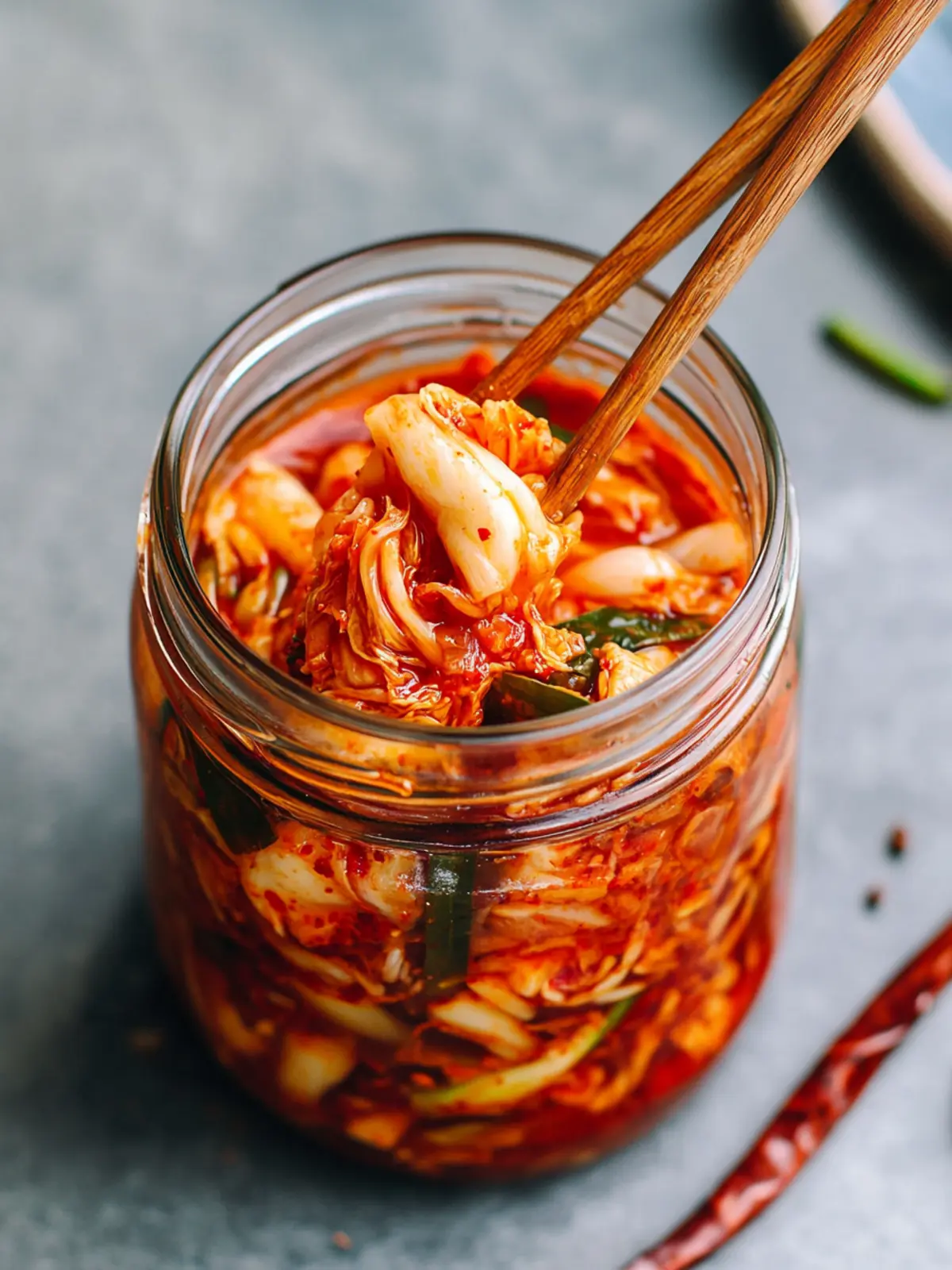
Homemade Vegan Kimchi Variations
Feel free to explore these exciting variations and substitutions to make the recipe your own!
- Spicy Kick: Add extra gochugaru or a splash of sriracha for an unforgettable heat level. Perfect for those who love a fiery taste!
- Crispy Texture: Incorporate shredded carrots or finely sliced cucumber to add a refreshing crunch and vibrant color to your kimchi.
- Herb Infusion: Mix in fresh cilantro or mint for a burst of freshness that elevates the traditional flavor profile wonderfully.
- Fermented Bean Paste: Swap out some of the vegan fish sauce for miso paste to enrich the umami flavor even further.
- Fruit Twist: For a unique sweetness, try adding diced apple or pear to the mix; this offers a delightful contrast with the spiciness!
- Lower Sodium: Use a salt substitute or reduce the salt amount to make a lighter, less salty version while keeping the fermentation process intact.
- Sweet Variation: Add a tablespoon of maple syrup or agave nectar for a subtly sweet touch, transforming your kimchi into a sweeter companion for your dishes.
- Smoky Flavor: Introduce a teaspoon of smoked paprika or liquid smoke to infuse a hint of smokiness into your kimchi, exciting your palate in new ways!
Let your creativity shine as you customize this Homemade Vegan Kimchi to suit your taste and dining preferences!
Make Ahead Options
These Homemade Vegan Kimchi jars are perfect for meal prep enthusiasts! You can prepare the salted napa cabbage up to 24 hours in advance, allowing you to save time on busy weeknights. Simply rinse the cabbage, massage with salt, and let it rest for about 3 hours at room temperature. After draining and rinsing, mix the cabbage with daikon and scallions, then prepare the kimchi paste as instructed. Once packed in jars, leave them to ferment for 48 hours before refrigerating. For the best texture and flavor, enjoy the kimchi within 3-5 days after fermentation, ensuring it remains just as delicious as the day it was made!
Expert Tips for Homemade Vegan Kimchi
• Cabbage Choice: Use fresh, firm napa cabbage for the best crunch. Avoid any with browning or wilting leaves to ensure maximum flavor.
• Massage Technique: Don’t rush the massaging step; it helps break down the cabbage and releases water for fermentation. The cabbage should feel soft yet still crunchy.
• Brine Importance: Always keep the brine! It’s crucial for the fermentation process and ensures your kimchi stays submerged, preventing spoilage.
• Temperature Matters: Maintain the ideal fermentation temperature (65-70°F) for best results. Too warm can lead to over-fermentation, while too cool slows the process.
• Taste Testing: Sample your kimchi after 48 hours to check its flavor. If you prefer it tangier, leave it out a bit longer before refrigerating.
Embrace these tips for a successful batch of Homemade Vegan Kimchi that your family will love!
How to Store and Freeze Homemade Vegan Kimchi
Fridge: Store your kimchi in an airtight container in the refrigerator for up to 3-5 days to allow the flavors to mature and deepen.
Freezer: If you want to keep your kimchi longer, freeze it in an airtight container for up to 6 months. Thaw in the fridge before using.
Reheating: While kimchi is typically enjoyed cold, you can add it to stir-fries or cooked dishes. Avoid reheating it too many times to preserve its probiotic benefits.
Room Temperature: After fermenting, do not leave kimchi at room temperature for extended periods, as it may spoil. Always keep it refrigerated after the fermentation process.
What to Serve with Homemade Vegan Kimchi?
Elevate your mealtime with vibrant pairings that bring out the bold flavors of this delightful condiment.
- Steamed Jasmine Rice: The fluffy texture of jasmine rice acts as a perfect canvas, complementing the spicy tang of your kimchi.
- Savory Tofu Stir-Fry: Tender tofu sautéed with seasonal veggies captures the essence of Asian cuisine and balances out the kimchi’s heat.
- Quinoa Salad: A light, nutty quinoa salad tossed with crisp vegetables showcases fresh flavors, offering a delicious contrast to the fermented, spicy notes.
- Korean BBQ Lettuce Wraps: Crisp lettuce leaves filled with grilled meats and topped with kimchi create a delightful bite, packed with contrasting textures and tastes.
- Spicy Ramen Noodles: Slurpy noodles in a savory broth harmonize beautifully with the kimchi, adding an extra punch of flavor and delightfully spicy undertones.
- Sesame Cucumber Salad: Crunchy cucumbers dressed in sesame oil provide refreshing brightness, perfectly balancing the bold flavors of the kimchi.
- Chilled Sake: A glass of chilled sake complements the umami notes of the kimchi while enhancing the overall dining experience.
- Green Tea: Sip on a warm cup of green tea to cleanse the palate between bites and elevate the appreciation of your meal.
- Mochi Ice Cream: For dessert, the soft and sweet mochi ice cream offers a delightful contrast to the spicy flavors of kimchi, closing the meal on a sweet note.
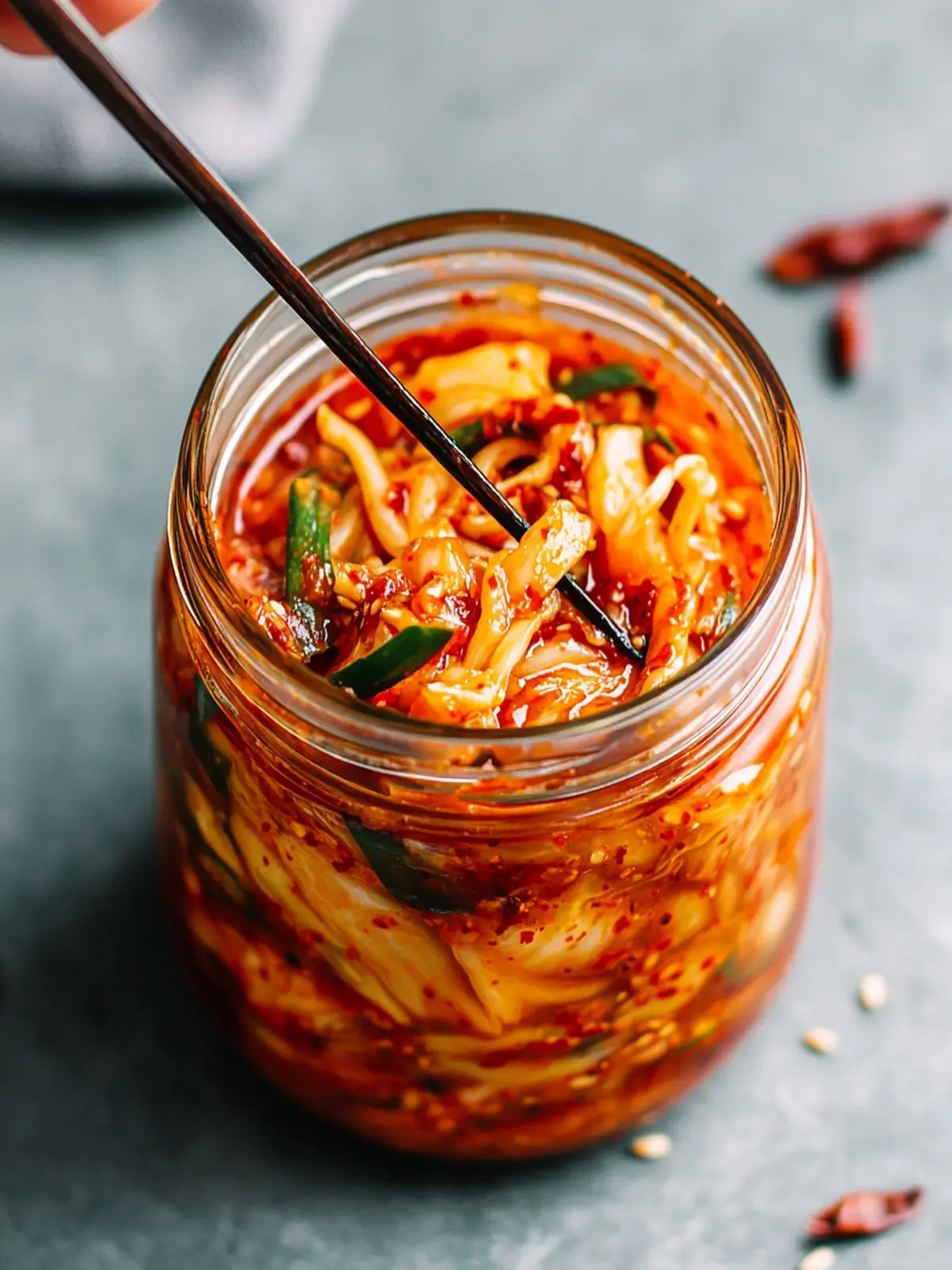
Homemade Vegan Kimchi Recipe FAQs
How can I ensure my napa cabbage is fresh?
Absolutely! Look for napa cabbage that is firm and heavy, with crisp leaves free from dark spots or wilting. Freshness means more crunch and flavor in your homemade vegan kimchi!
What’s the best way to store leftover kimchi?
I recommend transferring your homemade vegan kimchi to an airtight container and refrigerating it. It can last for about 3-5 days in the fridge, allowing the flavors to develop beautifully.
Can I freeze my kimchi, and if so, how?
Yes, you can freeze your kimchi! To do this, pack your kimchi firmly in an airtight container or freezer bag, leaving some space at the top for expansion. It can be stored for up to 6 months. When ready to use, simply thaw it in the fridge overnight.
Why does my kimchi taste too salty?
If your homemade vegan kimchi tastes too salty, it’s likely because of the salting step. Make sure to rinse the cabbage well after salting, as this helps remove excess salt. If it’s still too salty, adding a bit of sugar or vinegar can help balance the flavors.
Can my pets eat kimchi?
While some ingredients in kimchi are safe for pets, the spicy and fermented nature of the dish can be problematic. It’s best to avoid feeding kimchi to your pets, as garlic and certain spices can be harmful to them.
How can I enhance the fermentation flavor of my kimchi?
For tangier kimchi, try leaving it at room temperature for longer before refrigerating, checking after 48 hours for bubbles. If you want to experiment, adding more gochugaru or even a splash of lemon juice can give it that extra zing! Enjoy the journey of crafting your perfect homemade vegan kimchi!

Spice Up Your Life with Homemade Vegan Kimchi Delight
Ingredients
Equipment
Method
- Prepare the Cabbage: Cut the napa cabbage into quarters lengthwise and remove the hard core. Then, slice each quarter into 1-inch wide strips for a perfect texture.
- Massage and Salt: Rinse the cabbage under cold water and place it into a large bowl. Sprinkle with salt and give it a good massage with your hands or spatulas until it begins to soften, about 2-3 minutes.
- Rest the Cabbage: Let the salted cabbage sit at room temperature for about 3 hours. Stir it once halfway through to ensure even salting, allowing it to wilt nicely.
- Drain and Rinse: After the resting period, drain the cabbage while retaining the brine. Rinse the cabbage twice under cold water without squeezing to remove excess saltiness.
- Combine Vegetables: In a large mixing bowl, add the drained cabbage, matchstick cut daikon radish, and scallions. Toss gently until everything is combined well.
- Make the Kimchi Paste: Pour in the gochugaru mixture and stir well to coat the cabbage entirely. Use gloves to massage the mixture into the cabbage to evenly distribute the spices without staining your hands.
- Pack the Jars: Firmly pack the coated cabbage mixture into two one-quart jars, leaving about 1/3 of the jars empty. Pour 1/4 cup of the reserved brine on top of each jar, ensuring everything is submerged.
- Ferment the Kimchi: Loosely cover each jar with a lid and place them in a dark spot at room temperature (around 65-70°F) for 48 hours to ferment and develop delicious flavors.
- Submerge if Needed: After the first day, check the kimchi and use a spoon to gently push any floating cabbage back down into the brine for even fermentation.
- Check for Bubbles: After 48 hours, look for bubbles in the brine—this indicates your kimchi is ready!
- Store and Enjoy: You can enjoy your fresh kimchi immediately, or store it in the refrigerator for 3-5 days to enhance its flavor even further.