
Picture this: it’s chilly outside, and the comforting smell of warm rice fills the air. I found myself reminiscing about a cozy dinner I had at a quaint Japanese restaurant, where I was introduced to the delightful wonder of Ochazuke—an elegant Japanese Rice Tea Soup. In just a few minutes, you can transform your everyday ingredients into this soul-soothing bowl of goodness.
Whether you’re trying to escape the monotony of fast food or simply want a quick yet nourishing meal, this recipe is your answer. With flaked salmon, vibrant nori, and the refreshing essence of green tea or dashi, each spoonful invites you into a world of flavor and warmth. Plus, it’s a beautiful way to showcase leftovers while impressing your family or guests.
Join me as we embark on this culinary adventure, where simplicity meets sophistication, and get ready to savor a dish that feels like a warm hug on a plate!

Why Love Japanese Rice Tea Soup?
Comforting warmth: On a chilly day, this dish provides an instant cozy feeling with every spoonful.
Quick and easy: With just 10 minutes from start to finish, you can whip up a delightful meal no matter how busy you are.
Unique flavors: The balance of flaked salmon, crunchy bubu arare, and umami-rich dashi or green tea creates a truly unique taste experience.
Versatile: Customize with your favorite toppings, like scallions or wasabi, for the perfect touch.
Crowd-pleaser: Impress guests with this elegant yet comforting dish that’s ideal for any occasion.
For more quick recipes like this, don’t miss our guide on easy weeknight meals.
Japanese Rice Tea Soup Ingredients
For the Base
- Cooked Japanese short-grain rice – This gives the dish its hearty foundation and fluffy texture.
- Prepared dashi – Essential for a rich umami flavor; feel free to make your own or use store-bought.
- Soy sauce – Adds saltiness and depth; choose a low-sodium version if desired.
- Mirin – A touch of sweetness that balances the savory elements; essential for the dashi variation.
- Kosher salt – Just a pinch enhances the flavors in the dashi mix.
For the Toppings
- Cooked salmon fillet – A delicious protein that complements the rice and broth beautifully.
- Shredded nori seaweed – Adds a lovely umami flavor and a pop of color.
- Toasted white sesame seeds – These bring a nutty crunch that contrasts nicely with the rice.
- Bubu arare (or crushed rice crackers) – For an extra crunch; they elevate the soup’s texture.
- Mitsuba or scallions – Freshness and brightness that elevate the dish; scallions are a great substitute.
- Wasabi – A delightful heat that wakes up the palate; adjust to your taste!
For the Green Tea Version
- Japanese green tea leaves – Provides a delicate, fragrant twist; choose a high-quality variety for the best flavor.
- Hot water – Essential for brewing your tea; use freshly boiled for maximum taste.
- Soy sauce (optional) – A sprinkle adds an unexpected depth, perfect if you’re in a savory mood.
Explore the comforting world of Japanese Rice Tea Soup with these carefully selected ingredients, and craft a bowl of joy that will warm your heart!
How to Make Japanese Rice Tea Soup
-
Flake the Salmon: Tear the cooked salmon fillet into small bite-sized pieces and set it aside. If you can’t find bubu arare, gently crush some rice crackers into small crunchy bits for that perfect texture.
-
Prepare the Dashi: For a dashi version, mix the dashi, soy sauce, mirin, and kosher salt in a small saucepan. Bring it to a gentle boil, then reduce the heat and keep it warm until you’re ready to pour it over your rice.
-
Brew the Green Tea: If you’re going for the green tea version, place 2 teaspoons of Japanese green tea leaves in a teapot or heatproof container. Pour hot water over the leaves and let them steep for about 2-3 minutes before straining.
-
Assemble the Bowl: Take your cooked rice and place it in a cozy serving bowl. Top it off with the flaked salmon, then sprinkle the nori, sesame seeds, and bubu arare for an extra crunch and flavor.
-
Pour the Broth: When it’s time to enjoy, slowly pour the warm dashi or green tea over the rice until it is partially submerged, allowing the flavors to meld beautifully. Finish with chopped mitsuba or scallions, a dab of wasabi, and a splash of soy sauce if you’re using tea. Enjoy immediately for that perfect comforting meal!
Optional: Add a squeeze of fresh lemon for a zesty twist!
Exact quantities are listed in the recipe card below.
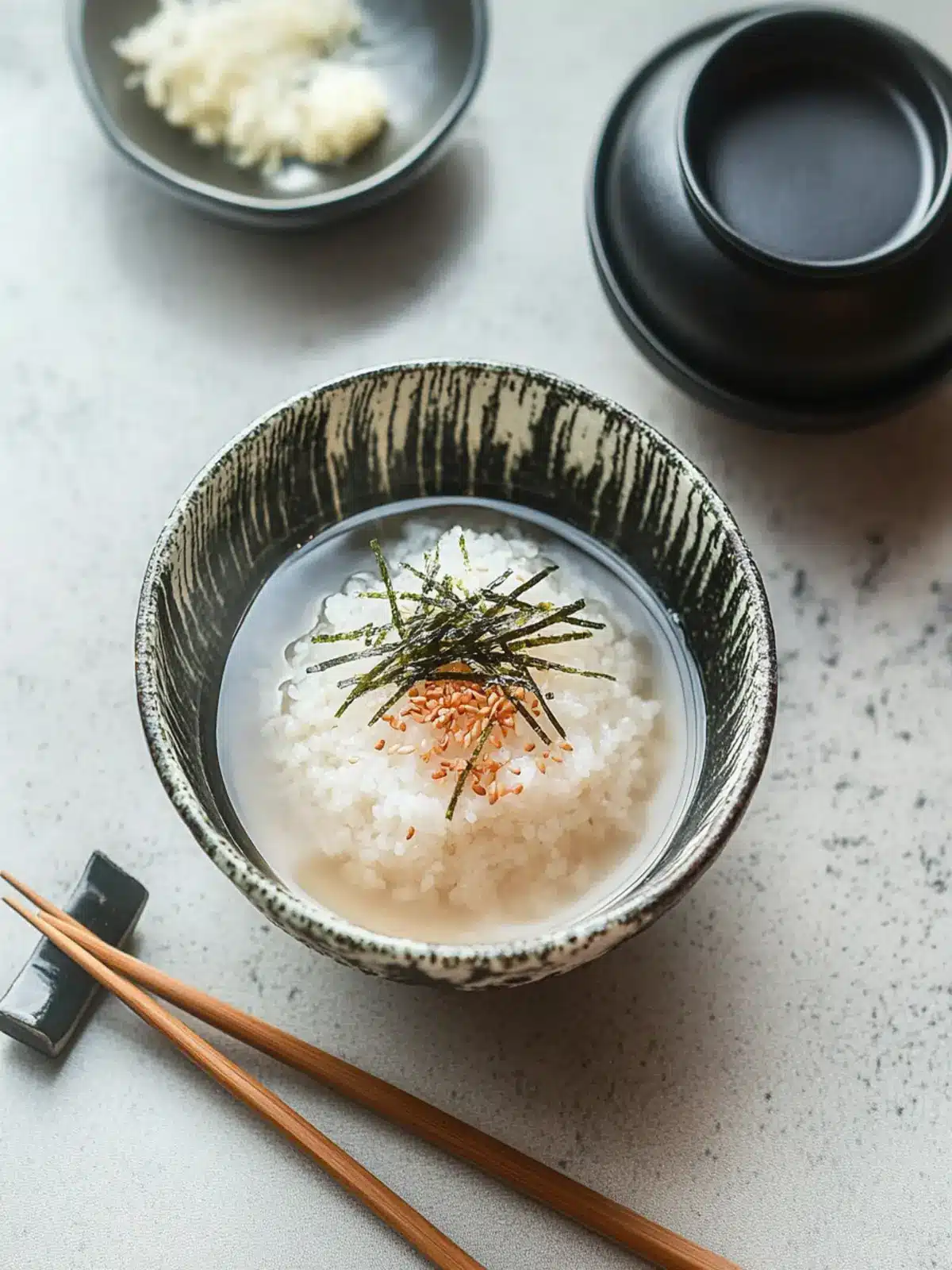
Tips for the Best Japanese Rice Tea Soup
-
Use Quality Ingredients: Fresh, high-quality salmon and quality dashi or green tea elevate the flavors tremendously. Don’t skimp on these essentials!
-
Perfect Rice: Make sure your Japanese short-grain rice is fluffy and tender. Overcooked or undercooked rice can ruin the texture of your Japanese Rice Tea Soup.
-
Customize the Broth: Feel free to adjust the dashi or green tea strength by adding more or less water to suit your taste. A stronger flavor can enhance your overall experience!
-
Topping Suggestions: Experiment with different toppings like pickled vegetables or avocado for a twist. Just be sure to balance flavors and avoid overpowering the delicate rice.
-
Don’t Rush: Take the time to prepare each component carefully, especially the broth. A little patience goes a long way in achieving that comforting umami flavor.
-
Serve Immediately: Enjoy your dish right after pouring the broth, as the flavors meld beautifully while still hot. This ensures that every bite is satisfying and comforting!
Make Ahead Options
These delicious Japanese Rice Tea Soup components are perfect for meal prep! You can flake the cooked salmon and refrigerate it in an airtight container for up to 3 days. The dashi or green tea broth can also be prepared in advance and stored in the refrigerator for up to 24 hours, which not only saves time but enhances the flavors as they meld together. When you’re ready to enjoy, simply reheat the broth and assemble the dish by layering the rice, salmon, and toppings. Finish by pouring the warm dashi or steeped green tea over the top, and you’ll have a cozy meal that feels freshly made, right at your fingertips!
Japanese Rice Tea Soup Variations
Feel free to personalize this soul-soothing recipe with exciting twists that elevate each bowl into a unique dining experience!
- Vegetarian: Swap the salmon for sautéed mushrooms or tofu for a plant-powered delight. This adds a different texture while still being hearty.
- Spicy Kick: Incorporate sliced jalapeños or chili oil for a delightful kick. A little heat harmonizes perfectly with the umami flavors.
- Citrus Zest: Add a squeeze of fresh lemon or yuzu juice to brighten the dish. The citrus notes enhance the overall flavor profile beautifully.
- Noodle Upgrade: Consider adding cooked udon or soba noodles instead of rice for a fun twist on texture. You’ll have a delightful noodle soup experience!
- Seafood Medley: Mix in shrimp or scallops for an ocean-inspired twist. Combining different seafood creates a symphony of flavors.
- Crunchy Nuts: Top with crushed peanuts or almonds for an added crunch and a nutty flavor that contrasts the soft rice and broth.
- Herb Infusion: Replace mitsuba with fresh cilantro or basil for a vibrant herbal note. This twist adds freshness and a new layer of fragrance.
- Creamy Add-In: Stir in a splash of coconut milk for a velvety rich broth. This swap transforms the dish into a luscious indulgence.
Let your creativity soar and tailor each serving of Japanese Rice Tea Soup to reflect your taste and preferences!
How to Store and Freeze Japanese Rice Tea Soup
Fridge: Store leftover Japanese Rice Tea Soup in an airtight container for up to 3 days. Keep broth and solid ingredients separate to maintain texture.
Freezer: For long-term storage, freeze the rice and broth separately in airtight containers or freezer bags for up to 1 month. Thaw overnight in the fridge before reheating.
Reheating: Reheat the broth gently on the stove or in the microwave until hot. Add fresh rice and any toppings before serving for the best flavor and texture.
Room Temperature: Serve your Japanese Rice Tea Soup immediately after preparation for the best taste and enjoyment. Discard leftovers left out for more than 2 hours.
What to Serve with Japanese Rice Tea Soup?
Creating a cozy meal experience doesn’t have to stop at the soup—let’s enhance your dining with delightful sides!
-
Steamed Edamame: These tender, salty soybean pods provide a fresh contrast and a burst of nutrients that complement the rice tea soup beautifully.
-
Pickled Vegetables: A side of tangy pickles adds brightness and crunch, enhancing the umami flavors of the soup while cleansing the palate.
-
Crispy Tempura: Delicate tempura vegetables introduce a delightful crunch and inviting texture that feels decadent beside your warm bowl.
-
Sesame Noodles: Nutty sesame-flavored noodles create a hearty, satisfying pairing that brings an enticing flavor parallel to the delicate soup.
-
Sweet Miso Glazed Roasted Eggplant: Rich, sweet miso brings depth to your meal, while the soft eggplant harmonizes well with the soup’s lightness.
-
Japanese Green Tea: Enhance the meal with a warm cup of green tea—its earthy notes will mirror the flavors in your Japanese Rice Tea Soup for a cohesive experience.
-
Mochi Ice Cream: End your meal on a sweet note with these delightful little bundles of joy. The chewy texture contrasts splendidly with the warmth of the soup for a delightful finish.
Elevate your dinner time by serving these delightful accompaniments that will elevate your cozy bowl into a nourishing and heartwarming feast!
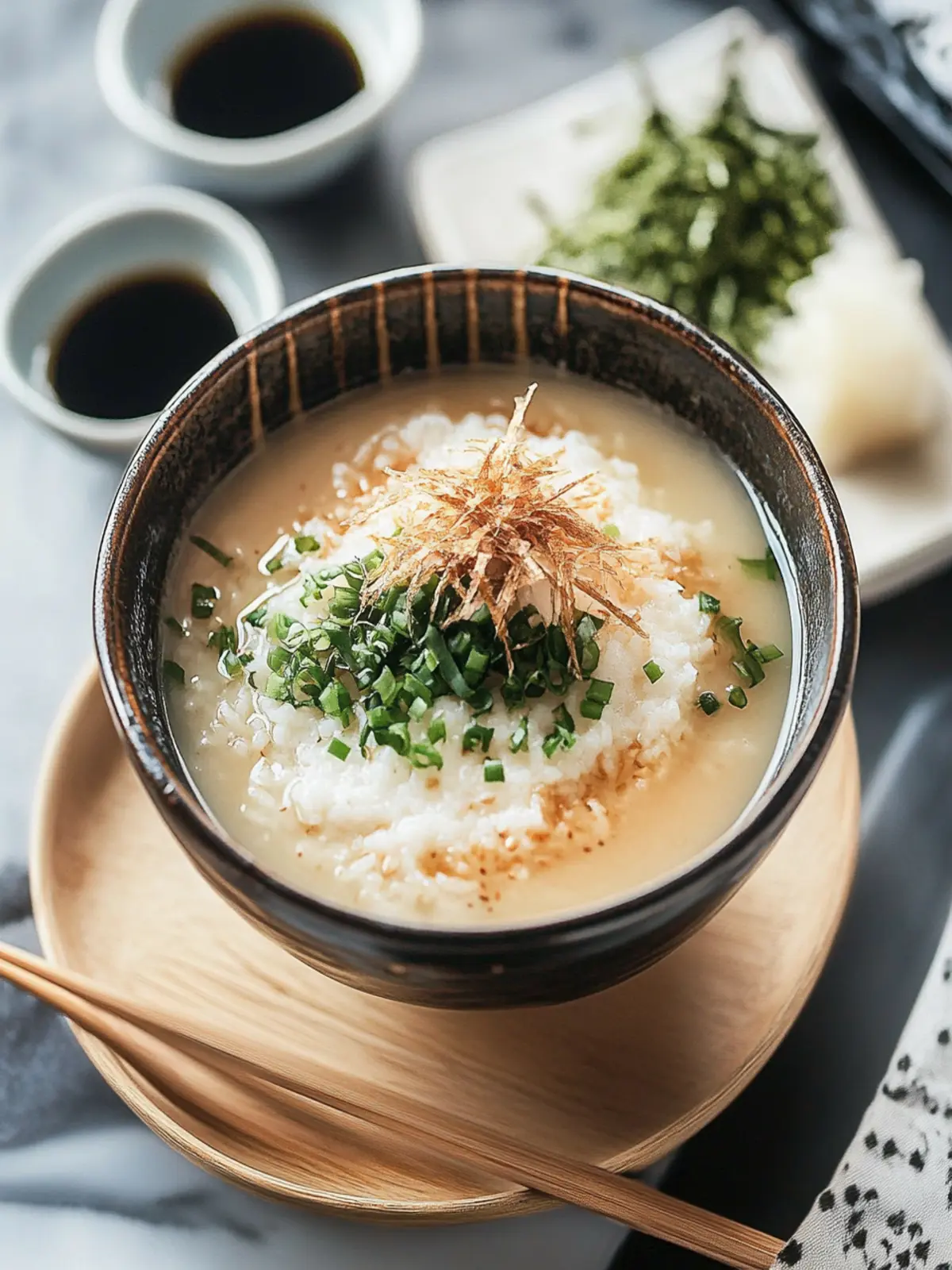
Japanese Rice Tea Soup Recipe FAQs
How do I choose the best salmon for my Japanese Rice Tea Soup?
Absolutely! Opt for fresh or high-quality frozen salmon fillets without skin or bones. Look for fillets that are bright in color and have a firm texture. Avoid any that have dark spots or a strong fishy scent. If possible, go for wild-caught salmon for a richer flavor.
How should I store leftovers of Japanese Rice Tea Soup?
You can refrigerate your leftovers in an airtight container for up to 3 days. To maintain the integrity of the soup, it’s best to store the broth and solid ingredients separately. This way, the texture of the rice remains nice and fluffy when you reheat!
Can I freeze Japanese Rice Tea Soup?
Definitely! To freeze, separate the rice from the broth. Store each in airtight containers or freezer bags, making sure to label them with the date. Your Japanese Rice Tea Soup can be frozen for up to 1 month. When ready to enjoy, thaw the containers overnight in the fridge, and reheat the broth gently before mixing it with fresh rice.
What should I do if my rice is overcooked or mushy?
No need to worry! If your rice turns out overcooked, you can spread it out on a baking sheet and place it in a warm oven (about 200°F) for a few minutes to dry out slightly. If it’s still edible, try using it in a different dish, like fried rice, to give it new life. Remember to keep an eye on cooked short-grain rice while preparing your Japanese Rice Tea Soup to ensure it stays fluffy.
Can I adapt this recipe for dietary restrictions?
Very much so! For gluten-free options, use tamari instead of soy sauce. You can make it vegetarian by replacing the salmon with tofu and using vegetable broth instead of dashi. If you’re concerned about allergens, be sure to check the labels on ingredients like bubu arare or rice crackers, and feel free to omit any elements that don’t fit your dietary needs.
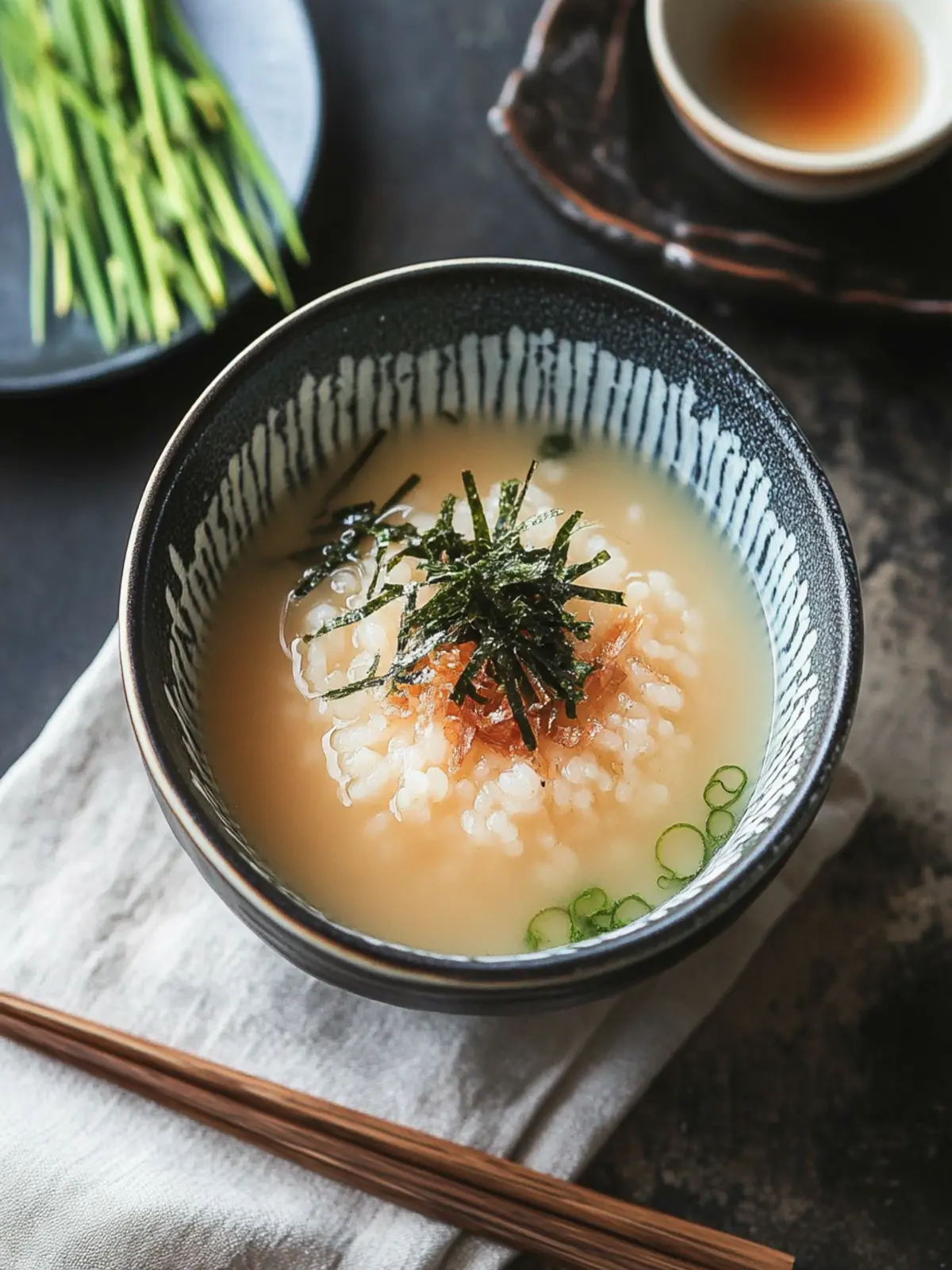
Delicious Japanese Rice Tea Soup for a Cozy Meal Experience
Ingredients
Equipment
Method
- Flake the Salmon: Tear the cooked salmon fillet into small bite-sized pieces and set it aside. If you can't find bubu arare, gently crush some rice crackers into small crunchy bits for that perfect texture.
- Prepare the Dashi: Mix the dashi, soy sauce, mirin, and kosher salt in a small saucepan. Bring it to a gentle boil, then reduce the heat and keep it warm until you're ready to pour it over your rice.
- Brew the Green Tea: If you're going for the green tea version, place 2 teaspoons of Japanese green tea leaves in a teapot or heatproof container. Pour hot water over the leaves and let them steep for about 2-3 minutes before straining.
- Assemble the Bowl: Take your cooked rice and place it in a cozy serving bowl. Top it off with the flaked salmon, then sprinkle the nori, sesame seeds, and bubu arare for an extra crunch and flavor.
- Pour the Broth: Slowly pour the warm dashi or green tea over the rice until it is partially submerged, allowing the flavors to meld beautifully. Finish with chopped mitsuba or scallions, a dab of wasabi, and a splash of soy sauce if you're using tea. Enjoy immediately!