
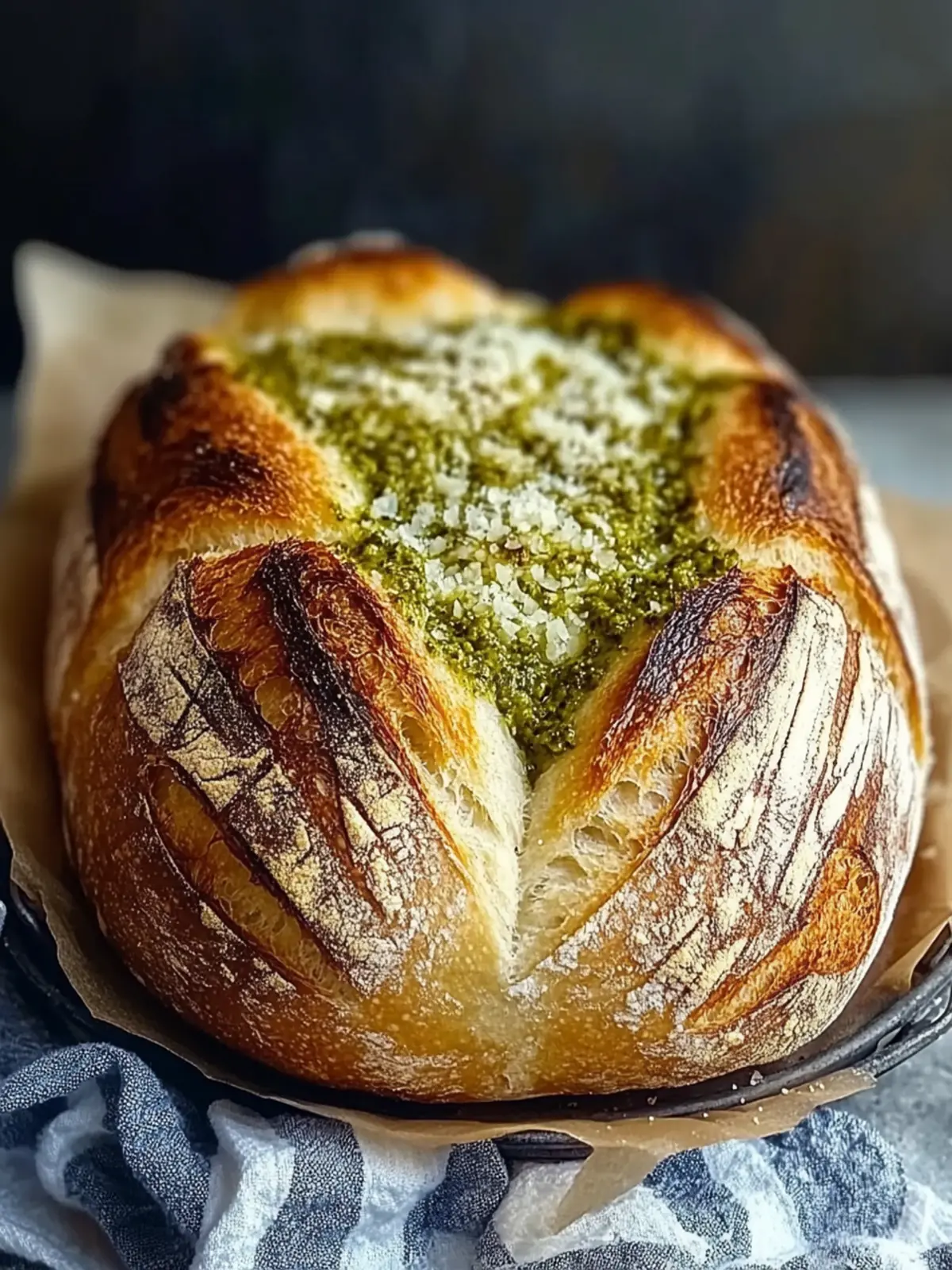
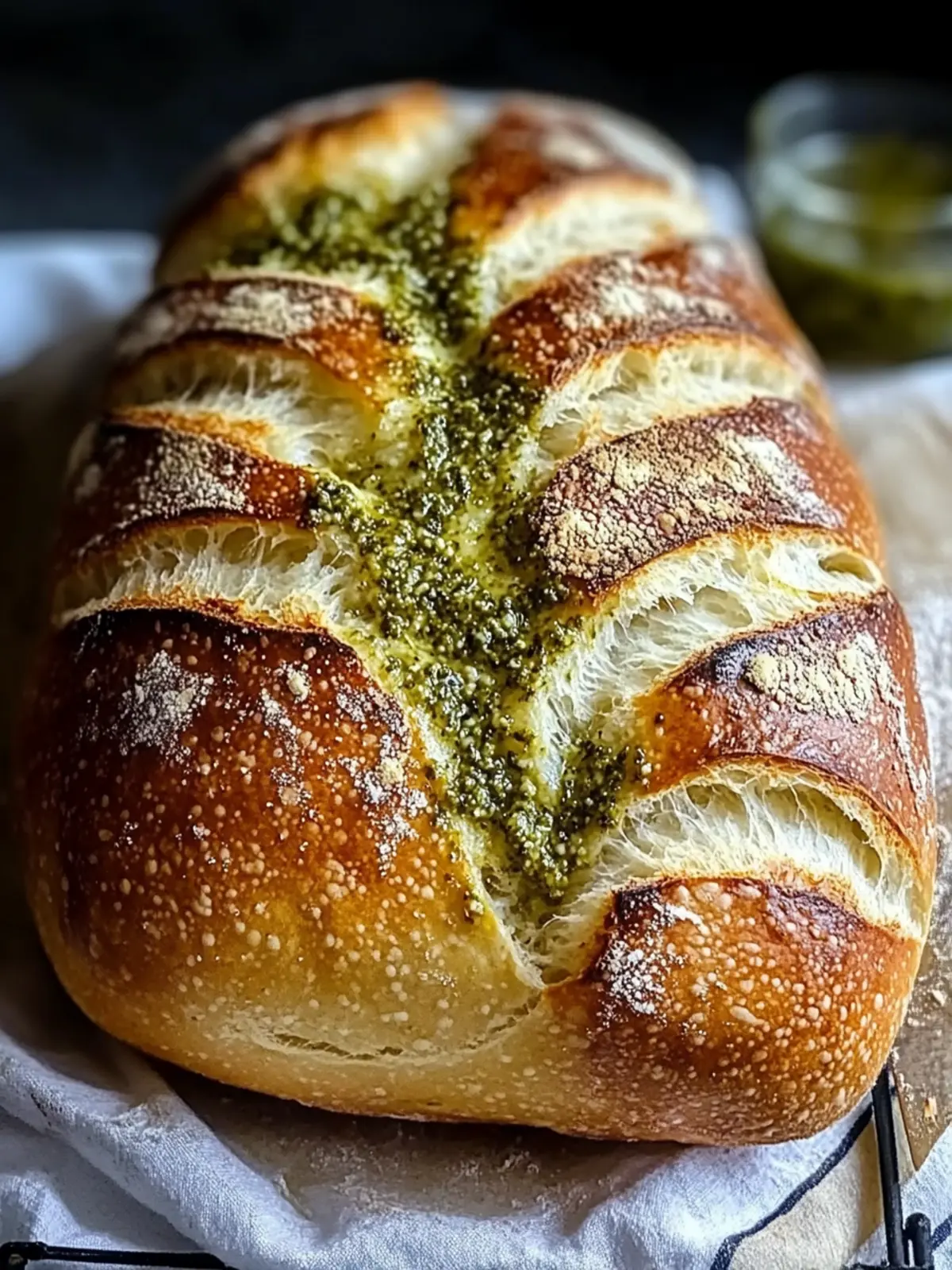
There’s something irresistibly comforting about the scent of freshly baked bread wafting through the house. As I knead away the day’s stresses, I can’t help but get lost in the rhythm of the dough. The idea to blend the classic flavors of basil pesto and rich parmesan into my sourdough formula blossomed one sunny afternoon while daydreaming at my kitchen counter. This Pesto Parmesan Sourdough transforms a traditional loaf into something extraordinary, combining earthy herb notes with the savory umami of cheese.
Perfect for a cozy family dinner or as the highlight of a gathering with friends, this bread is not just any home-baked treat—it’s a culinary adventure. In a world filled with fast food options, taking the time to create something wholesome and flavorful has never felt more rewarding. Each bite reveals a warm crust, yielding to a soft, cheesy middle infused with aromatic pesto—a surefire way to win over even the pickiest eaters. Ready to turn your kitchen into a bakery? Let’s dive into this delightful recipe together!

Why is Pesto Parmesan Sourdough a Must-Try?
Irresistible Aroma: The smell of baking bread mingled with basil and parmesan will have everyone in your home gathering around the kitchen.
Unique Twist: This recipe elevates traditional sourdough by incorporating vibrant flavors from rich pesto and nutty cheese.
Easy to Master: Even novice bakers will feel confident tackling this straightforward method—perfect for shaking off the monotonous fast food routine.
Versatile Enjoyment: Serve it warm as a side dish, or slice it up for scrumptious sandwiches that will impress your family and friends.
Time for Relaxation: The lengthy fermentation process allows you to enjoy a hands-off baking experience while you kick back and relax.
Get ready to discover a new favorite with this homemade delight!
Pesto Parmesan Sourdough Ingredients
For the Dough
• Bread flour – 500g of quality flour provides a sturdy base for your sourdough, ensuring a fantastic texture.
• Sourdough starter (active) – 100g of an active starter is crucial for that delightful rise and tangy flavor in your Pesto Parmesan Sourdough.
• Water – 350ml of lukewarm water helps activate the yeast for a good fermentation process.
• Salt – 10g enhances the flavor and strengthens the dough structure.
For the Flavor
• Basil pesto – 1/2 cup brings fresh herbaceous notes that will elevate the taste of your bread.
• Grated parmesan cheese – 1/2 cup adds a rich, nutty flavor that perfectly complements the pesto in your Pesto Parmesan Sourdough.
Dive into these ingredients, and get ready to craft a loaf that’s bursting with flavor and soul—perfectly suited for moments shared around the table!
How to Make Pesto Parmesan Sourdough
-
Mix: In a large bowl, combine the bread flour, 350ml of water, and 100g of active sourdough starter. Stir gently until just combined, then let the mixture rest for 30 minutes—this is called the autolyse and helps to enhance gluten development.
-
Add salt: Sprinkle in 10g of salt and mix thoroughly into the dough, ensuring it’s evenly distributed. This step is key for building flavor and strengthening your dough.
-
Stretch and fold: Over the next 2 hours, perform a series of stretch and folds every 30 minutes—a total of 4 times. This routine enhances structure and creates those lovely air pockets.
-
Layer flavors: After the final fold, turn the dough onto a lightly floured surface. Gently spread it out, then layer with 1/2 cup of basil pesto and 1/2 cup of grated parmesan cheese. Fold the dough over to envelop that cheesy goodness!
-
Shape: Form the dough into a ball, then transfer it to a floured banneton or a bowl lined with a floured towel. This helps shape your loaf perfectly for the final rise.
-
Refrigerate: Cover the dough and place it in the refrigerator for cold fermentation overnight, for 8 to 12 hours. This slow process develops depth of flavor.
-
Preheat: When ready to bake, preheat your oven to 475°F (245°C). Place your Dutch oven inside to heat up—it’s essential for creating that crusty exterior!
-
Score: Once preheated, carefully turn out the dough onto parchment paper. Use a sharp blade to score the top, allowing the bread to expand beautifully while baking.
-
Bake covered: Carefully transfer the dough into the hot Dutch oven. Cover with the lid and bake for 20 minutes to create steam, ensuring a perfect crust.
-
Bake uncovered: Remove the lid and continue to bake for an additional 25 minutes until the crust is golden brown and irresistibly crunchy.
-
Cool: Once baked, cool the bread completely on a wire rack before slicing. This step is crucial to develop the best texture—patience pays off!
Optional: Serve with extra pesto for a delicious dip!
Exact quantities are listed in the recipe card below.
Pesto Parmesan Sourdough Variations
Feel free to personalize this bread to suit your taste buds and dietary needs!
- Gluten-Free: Substitute bread flour with a gluten-free all-purpose blend, ensuring a suitable sourdough starter.
- Herb Infusion: Add a tablespoon of dried Italian herbs to the dough for an extra flavor kick that pairs delightfully with the pesto.
Imagine tearing into a slice that not only exudes the warm scents of garlic and cheese but also boasts a delightful herbal complexity!
- Spicy Option: Mix in a teaspoon of red pepper flakes for a gentle heat that adds a lively twist to each bite.
- Cheesy Delight: Swap parmesan for a mix of sharp cheddar and gouda for a creamy, rich flavor profile that’s hard to resist.
Think of the contrasting yet harmonious flavors of melted cheddar and nutty gouda dancing together in each slice!
- Nutty Crunch: Fold in a handful of toasted pine nuts or walnuts for added texture and rich earthiness.
- Olive Oil Boost: Replace a portion of the water with good-quality olive oil for a softer, richer crumb that’s indulgently flavorful.
Each slice promises a satisfying chew that complements the gourmet touch of high-quality olive oil!
- Veggie Twist: Incorporate finely chopped sun-dried tomatoes or roasted red pepper into the dough for bursts of flavor in every tear.
- Sweet Addition: For a breakfast version, add a drizzle of honey to the dough and mix in some dried cranberries or apricots, making it a delightful morning treat.
With these variations, your Pesto Parmesan Sourdough will never be boring—each loaf can become a new culinary adventure!
Make Ahead Options
These Pesto Parmesan Sourdough loaves are perfect for meal prep enthusiasts! You can mix and shape the dough up to 24 hours in advance, allowing your flavors to develop further during the cold fermentation process. After shaping, simply cover the dough tightly and refrigerate it overnight (8–12 hours) to keep it fresh and flavorful. When you’re ready to bake, just preheat your oven to 475°F (245°C), score the top, and place it in the hot Dutch oven as instructed. This method not only saves time on busy weekdays but also ensures your bread is just as delicious and aromatic—that’s the magic of planning ahead!
How to Store and Freeze Pesto Parmesan Sourdough
Room Temperature: Keep your Pesto Parmesan Sourdough at room temperature for up to 3 days, wrapped in a clean kitchen towel or stored in a paper bag to maintain its crusty exterior.
Fridge: If you need to store it longer, wrap it tightly in plastic wrap or an airtight container and refrigerate for up to 1 week. This helps preserve its flavor but may soften the crust.
Freezer: For extended storage, slice and freeze your Pesto Parmesan Sourdough in a freezer-safe bag for up to 3 months. Toast slices straight from the freezer for a delightful treat!
Reheating: To refresh your loaf, place unwrapped slices in a preheated oven at 350°F (175°C) for 10 minutes—this brings back that lovely crust while warming the cheesy center.
What to Serve with Pesto Parmesan Sourdough?
Transform your delightful sourdough into a full-course meal that tantalizes the senses.
-
Fresh Salad: A crisp arugula salad with lemon vinaigrette offers a zesty contrast to the richness of the bread.
-
Tomato Soup: This comforting classic pairs beautifully, with the soup’s acidity balancing the savory pesto flavors.
-
Charcuterie Board: An assortment of cured meats and cheeses complements the loaf’s flavors, making for an elegant sharing plate.
-
Grilled Vegetables: Smoky, charred veggies add depth and a delightful contrast to the soft, cheesy sourdough.
Imagine a gathering where friends dip this artisan bread into olive oil or spread a layer of fresh ricotta topped with herbs.
-
Olive Tapenade: This condiment brings a briny punch, enhancing the umami of the parmesan with its bold flavors.
-
Wine Selection: A light Pinot Grigio or a full-bodied Chianti elevates the meal, highlighting the garlic notes of the pesto.
-
Chocolate Fondue: For a sweet ending, serve with fresh fruit for dipping. The bread’s texture also makes a unique dessert component!
Elevate your dining experience around this Pesto Parmesan Sourdough with these delightful pairings.
Tips for the Best Pesto Parmesan Sourdough
Hydration Matters: Ensure your water is lukewarm, as too hot can kill the yeast in your active sourdough starter.
Mastering the Autolyse: Don’t skip the autolyse step—letting the dough rest for 30 minutes improves gluten development, resulting in a better texture.
Watch the Temperature: Ensure your Dutch oven is truly hot before adding your dough; this creates the perfect steam, leading to a beautifully crusty exterior in your Pesto Parmesan Sourdough.
Timing is Key: Allow the bread to cool completely on a wire rack before slicing; this will enhance the structure and flavor.
Get Creative: Experiment with different types of pesto or cheese for unique flavor combinations—don’t be afraid to make this recipe your own!

Pesto Parmesan Sourdough Recipe FAQs
What type of bread flour should I use?
Absolutely! For the best results, I recommend using high-protein bread flour as it helps develop gluten structure. This type of flour will give you that wonderful chewy texture in your Pesto Parmesan Sourdough.
How long can I store my Pesto Parmesan Sourdough?
You can keep your bread at room temperature for up to 3 days. Just wrap it in a clean kitchen towel or place it in a paper bag to maintain its crust. If you want to store it longer, wrapping it tightly in plastic wrap and refrigerating will extend its freshness for up to 1 week.
Can I freeze Pesto Parmesan Sourdough?
Certainly! Slice your bread and place it in a freezer-safe bag. It can be frozen for up to 3 months. When you’re ready to enjoy, simply toast the slices straight from the freezer for a warm and delightful treat!
What if my dough isn’t rising?
Very common! If your dough isn’t rising, it could be due to a few factors. First, ensure that your sourdough starter is active and bubbly before using it. If you’re not seeing any bubbles after the recommended feeding time, it may need more time or warmth. Additionally, ensure your dough is in a warm environment during fermentation; around 75°F (24°C) is ideal.
Can my dog eat Pesto Parmesan Sourdough?
While a little bread is fine for most dogs, it’s essential to note that items like pesto can contain garlic or onion, which are harmful to pets. If you’re planning to share, make sure the bread doesn’t contain any harmful ingredients and keep it as a rare treat!
What should I do if my crust turns out too hard?
Very important! If your crust is too hard, this could be due to over-baking or the Dutch oven being excessively hot. When baking, it’s crucial to monitor the time. You can also experiment with lowering the temperature slightly next time to achieve a softer crust while maintaining the desired loaf structure. Remember that every oven might vary slightly!
Delicious Pesto Parmesan Sourdough for Flavorful Baking Fun
Ingredients
Equipment
Method
- In a large bowl, combine the bread flour, 350ml of water, and 100g of active sourdough starter. Stir gently until just combined, then let the mixture rest for 30 minutes.
- Sprinkle in 10g of salt and mix thoroughly into the dough, ensuring it's evenly distributed.
- Perform a series of stretch and folds every 30 minutes over the next 2 hours, for a total of 4 times.
- Turn the dough onto a lightly floured surface. Gently spread it out, then layer with 1/2 cup of basil pesto and 1/2 cup of grated parmesan cheese. Fold the dough over to envelop the fillings.
- Shape the dough into a ball and transfer it to a floured banneton or a bowl lined with a floured towel.
- Cover the dough and place it in the refrigerator for cold fermentation overnight, for 8 to 12 hours.
- Preheat your oven to 475°F (245°C). Place your Dutch oven inside to heat up.
- Turn out the dough onto parchment paper and score the top with a sharp blade.
- Transfer the dough into the hot Dutch oven. Cover with the lid and bake for 20 minutes.
- Remove the lid and continue to bake for an additional 25 minutes until golden brown.
- Cool the bread completely on a wire rack before slicing.