
The first time I savored a vibrant bowl of Thai Basil Eggplant, I was astonished by how a simple medley of ingredients came together to create such a spectacular symphony of flavors. The combination of tender eggplant, fragrant garlic, and fiery Bird’s eye chilies ignited my taste buds and transported me to a bustling street market in Thailand. This dish isn’t just another dinner option; it’s a celebration of healthy eating that’s bursting with color and taste, perfect for those evenings when you crave something refreshing yet satisfying.
Forget about the tired fast-food routine; whipping up this Thai Basil Eggplant is quick and easy, taking less than 30 minutes from prep to plate! With the sweet notes of palm sugar balancing the heat of the chiles, plus the aromatic punch of Thai basil, this recipe embraces versatility—it can be enjoyed over rice, tossed in with noodles, or as a magnificent side dish. Ready to dive into a culinary adventure that will leave you feeling nourished and delighted? Let’s get cooking!

Why is Thai Basil Eggplant a Must-Try?
Simplicity at its Best: This recipe requires minimal prep and cooking skills, making it perfect for beginner cooks and busy chefs alike.
Vibrant Flavors: The delightful blend of eggplant, fresh herbs, and zesty chilies will elevate your dinner plate and awaken your senses.
Health-Conscious Choice: Packed with nutritious ingredients, it’s a guilt-free way to indulge your cravings without sacrificing flavor.
Quick and Easy: In just 28 minutes, you can enjoy a wholesome meal that’s perfect for weeknight dinners.
Versatile Dish: Serve it over rice, mix with noodles, or enjoy it as a standalone side dish to impress your guests!
For more tips and inspirations, check out my guide on how to level up your stir-fries with vibrant flavors.
Thai Basil Eggplant Ingredients
For the Eggplant
• Canola oil – Helps to stir-fry the eggplant to crispy perfection.
• Chinese eggplants or Thai eggplants – Choose based on availability; both bring sweetness to the dish.
For the Aromatics
• Shallots or red onion – Adds a mild sweetness and depth of flavor.
• Garlic – Infuses the dish with an irresistible aroma.
For the Vegetables
• Thai basil – This is the star ingredient, bringing a unique flavor that complements eggplant beautifully.
• Red bell pepper – Adds a splash of color and natural sweetness.
• Green bell pepper – Brings a slightly bitter note to balance the sweetness.
• Bird’s eye chiles – Enhance the dish with their characteristic heat; use more if you like it spicy!
For the Sauce
• Tamari – Perfect for adding depth; great for gluten-free versions.
• Sesame oil – Adds nuttiness and enhances the overall flavor profile.
• Rice vinegar – Provides a tangy kick and helps balance the richness of the sauce.
• Sambal oelek or sriracha – Introduces a flavorful heat; feel free to adjust based on your spice tolerance.
• Palm sugar, coconut sugar, or brown sugar – Sweetens the dish and balances the spicy elements.
• Vegan fish sauce – Introduces umami flavor; can be substituted with soy sauce.
• Water – Helps to dissolve the cornstarch and thins the sauce.
• Cornstarch – Thickens the sauce for a lovely, glossy finish.
For Garnishing
• Fresh Thai basil leaves – Add freshness and aromatic appeal.
• Thinly sliced Bird’s eye chiles – For an extra kick on top!
• Thinly sliced garlic chives or green onion – Bring a hint of onion flavor and color for the finishing touch.
Get ready to uphold the delightful tradition of street food right in your kitchen with this astonishing Thai Basil Eggplant recipe! Enjoy the vibrant flavors while creating cherished dining memories.
How to Make Thai Basil Eggplant
-
Heat the oil in a large frying pan or Dutch oven over medium-high heat. Add the sliced Chinese or Thai eggplants and cook for 7-8 minutes until tender and slightly browned. Set aside to keep warm.
-
Sauté minced shallots or red onion in the same pan, adding a little extra oil if needed. Cook for 4 minutes until fragrant and softened, bringing a comforting aroma to your kitchen.
-
Add garlic, Thai basil, sliced red bell pepper, green bell pepper, and sliced Bird’s eye chilies into the mix. Stir-fry for a few minutes until the vegetables are vibrant yet crisp—this is where the magic happens!
-
For the Sauce: Combine tamari, sesame oil, rice vinegar, sambal oelek or sriracha, your choice of sugar, vegan fish sauce, water, and cornstarch in a bowl. Whisk together until the cornstarch is completely dissolved.
-
Combine the cooked eggplant back into the pan with the sautéed vegetables, then pour the sauce over everything. Stir well to ensure an even coating, and let it simmer for a couple of minutes until the sauce thickens to perfection.
-
Serve by transferring everything to a serving plate. Garnish with fresh Thai basil leaves, thinly sliced Bird’s eye chilies, and garlic chives or green onion for pops of color and flavor.
Optional: Add a squeeze of lime for an extra zest!
Exact quantities are listed in the recipe card below.
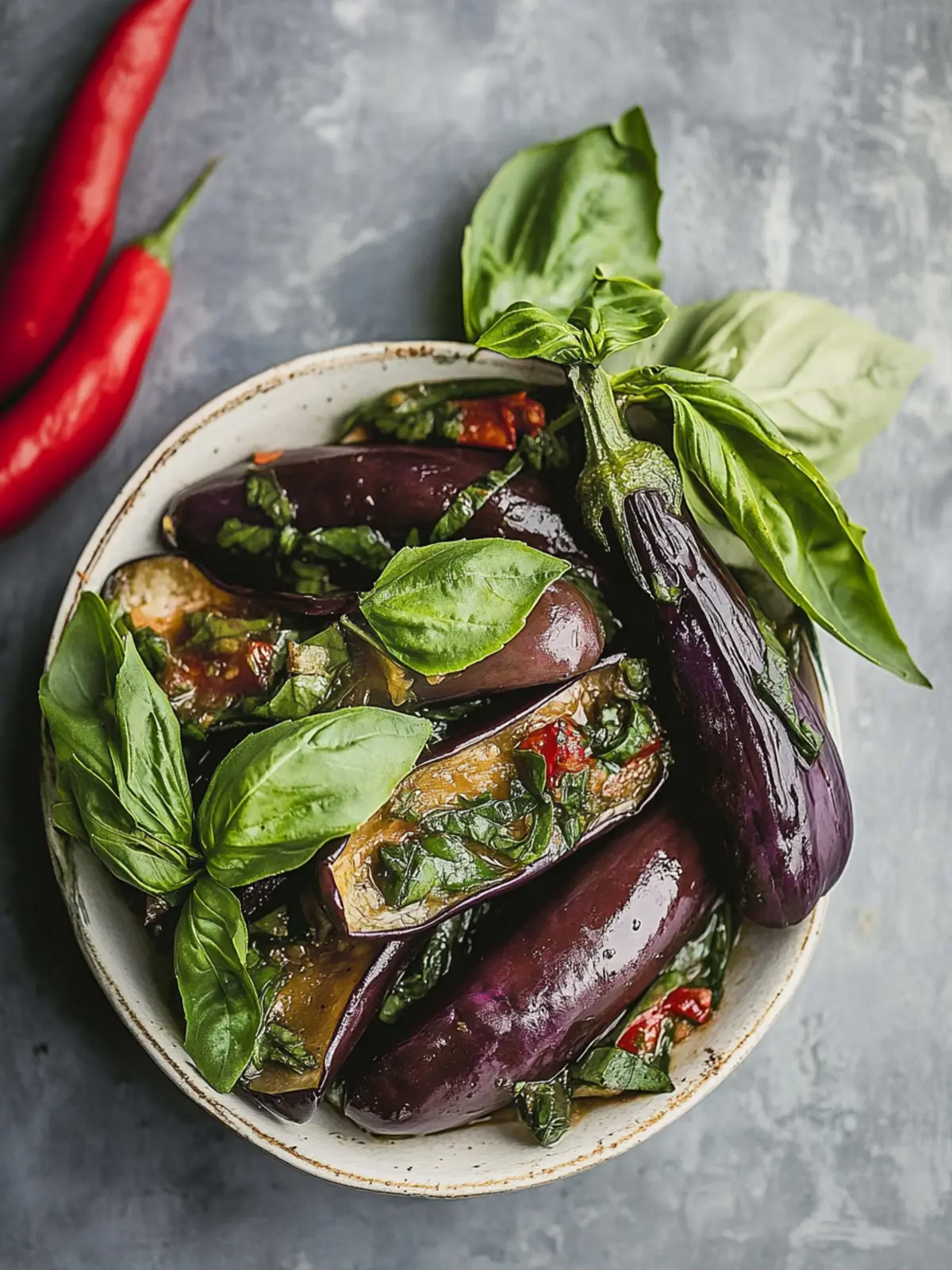
Expert Tips for Thai Basil Eggplant
• Choose the Right Eggplant: Opt for small Chinese or Thai eggplants as they have a sweeter flavor and tender texture, avoiding large varieties which may be more bitter.
• Heat Management: Cook eggplants on medium-high heat to achieve a nice browning without becoming mushy. Don’t overcrowd the pan for optimal frying!
• Flavor Adjustment: Taste and adjust the spice level by adding more Bird’s eye chiles or sambal oelek gradually; it’s easier to add than to tame the heat later.
• Fresh Herbs Matter: Use fresh Thai basil instead of dried, as fresh herbs impart vibrant flavor that is crucial for a delicious Thai Basil Eggplant dish.
• Don’t Skip the Sauce: Make sure to fully dissolve the cornstarch in the sauce; this ensures a smooth, glossy finish that clings to the eggplant and vegetables beautifully.
Thai Basil Eggplant Variations
Feel free to let your creativity shine and tailor this recipe to your taste preferences!
-
Vegetarian: Replace the vegan fish sauce with soy sauce for a satisfying vegetarian option.
-
Spicy: Add more Bird’s eye chiles or a dash of chili flakes for an extra heat kick that will awaken your taste buds!
-
Protein-Packed: Toss in diced tofu or tempeh during the sautéing stage for a heartier, protein-rich meal. It’s a wonderful way to add texture and sustenance.
-
Noodle Twist: Serve the dish over your choice of cooked noodles—rice noodles or udon work splendidly—bringing an inviting twist to the classic eggplant dish.
-
Coconut Milk: Stir in a splash of coconut milk with the sauce for a creamy texture and subtle sweetness that complements the spices nicely.
-
Veggie Boost: Incorporate snap peas, zucchini, or broccoli florets for added color and nutrition while maintaining that beloved crunch.
-
Gluten-Free: Use coconut aminos instead of tamari to create a delicious gluten-free alternative that doesn’t compromise on flavor.
-
Fruity Sweetness: Add pineapple or mango chunks in the final minutes of cooking for a refreshing contrast to the spicy components. Their natural sweetness enhances the overall flavor profile, making every bite a delightful surprise!
Make Ahead Options
These Thai Basil Eggplant are perfect for meal prep enthusiasts! You can chop and store the vegetables—including eggplant, bell peppers, and shallots—up to 3 days in advance. Simply keep them in an airtight container in the refrigerator to maintain their freshness and vibrant colors. The sauce ingredients can also be prepped ahead; mix them together and refrigerate for up to 24 hours in a sealed container. One critical tip is to avoid mixing the sauce with the veggies until you’re ready to stir-fry so they stay crisp and flavorful. When you’re ready to serve, just heat the oil, sauté the veggies for a few minutes, then add the sauce and simmer for a quick, delicious meal that saves time and keeps your busy weeknight dinners exciting!
What to Serve with Thai Basil Eggplant?
Creating a complete meal around this fragrant dish will delight your senses and satisfy your cravings.
-
Steamed Jasmine Rice: The fluffy texture and subtle aroma of jasmine rice make it a perfect base, soaking up the wonderful flavors of the eggplant.
-
Spicy Coconut Soup: This warming, creamy broth is infused with herbs and spices, offering a contrasting warmth to the vibrant, fresh notes of the Thai Basil Eggplant.
-
Crispy Tofu: Seasoned and pan-fried to perfection, crispy tofu adds protein and a satisfying crunch, balancing the tender vegetables beautifully.
-
Vietnamese Spring Rolls: Fresh veggies and herbs wrapped in rice paper create a light and refreshing option, ideal for contrasting the savory dish.
-
Garlic Noodles: These buttery, garlicky noodles bring a delightful richness to the table, enhancing the dish’s bold flavors with a creamy twist.
-
Mango Salad: Bright, sweet-tart mango and crunchy vegetables tossed in a light dressing perfectly complement the savory, spicy elements of the Thai Basil Eggplant.
Serving these dishes alongside your Thai Basil Eggplant will create a delightful and harmonious dining experience that will leave you craving more!
How to Store and Freeze Thai Basil Eggplant
Fridge: Store leftover Thai Basil Eggplant in an airtight container for up to 3 days. This keeps the flavors intact while maintaining its vibrant colors.
Freezer: For longer storage, freeze the dish in a freezer-safe container for up to 2 months. Be sure to cool it completely before sealing to avoid ice crystals.
Reheating: Thaw overnight in the fridge before reheating. Warm gently in a skillet over low heat, adding a splash of water if necessary to loosen the sauce.
Freshness Tip: Note that freezing may alter the texture of the eggplant slightly, but the flavors will still be delightful!
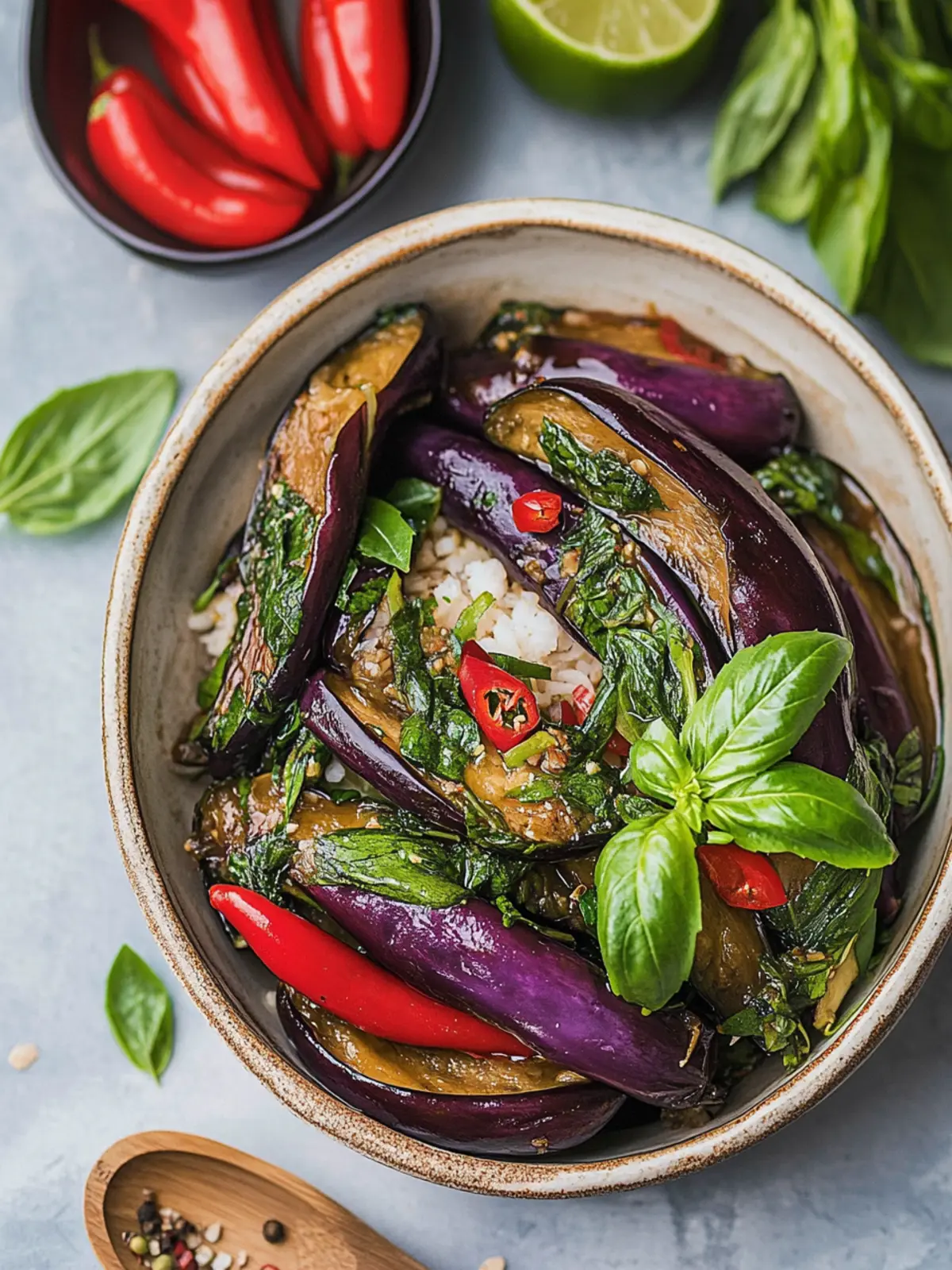
Thai Basil Eggplant Recipe FAQs
How do I choose the right eggplant?
Absolutely! For this recipe, I recommend using small Chinese or Thai eggplants as they have a naturally sweeter flavor and tender texture. Look for ones that are firm with smooth skin, avoiding any that feel soft or have dark spots.
What’s the best way to store leftovers?
You can store leftover Thai Basil Eggplant in an airtight container in the refrigerator for up to 3 days. Make sure to allow it to cool completely before sealing it—this will help keep the flavors fresh and the colors vibrant.
Can I freeze Thai Basil Eggplant?
Yes! You can freeze this dish in a freezer-safe container for up to 2 months. Just remember to cool it completely before sealing to avoid ice crystals forming. When you’re ready to enjoy it, thaw it overnight in the fridge and warm gently in a skillet, adding a splash of water to loosen the sauce if needed.
What if my dish turns out too spicy?
If your Thai Basil Eggplant ends up being spicier than you’d like, don’t worry! You can mellow the heat by adding a dollop of coconut milk or a bit more palm sugar to the dish. Or, serve it over rice to balance the spice!
Can I modify this recipe for dietary restrictions?
Absolutely! If you have anyone with dietary restrictions, the sambal oelek or sriracha can be left out or substituted with a milder chili paste. For gluten-free options, tamari is already included, and you can substitute the vegan fish sauce with a mix of soy sauce and vegan Worcestershire sauce for a similar umami flavor without the allergens.
Can this dish be made ahead of time?
Most definitely! It can be prepared in advance and stored in the fridge for up to 3 days. Keep the sauce separate for added freshness when reheating, and don’t forget to add those lovely fresh garnishes just before serving!
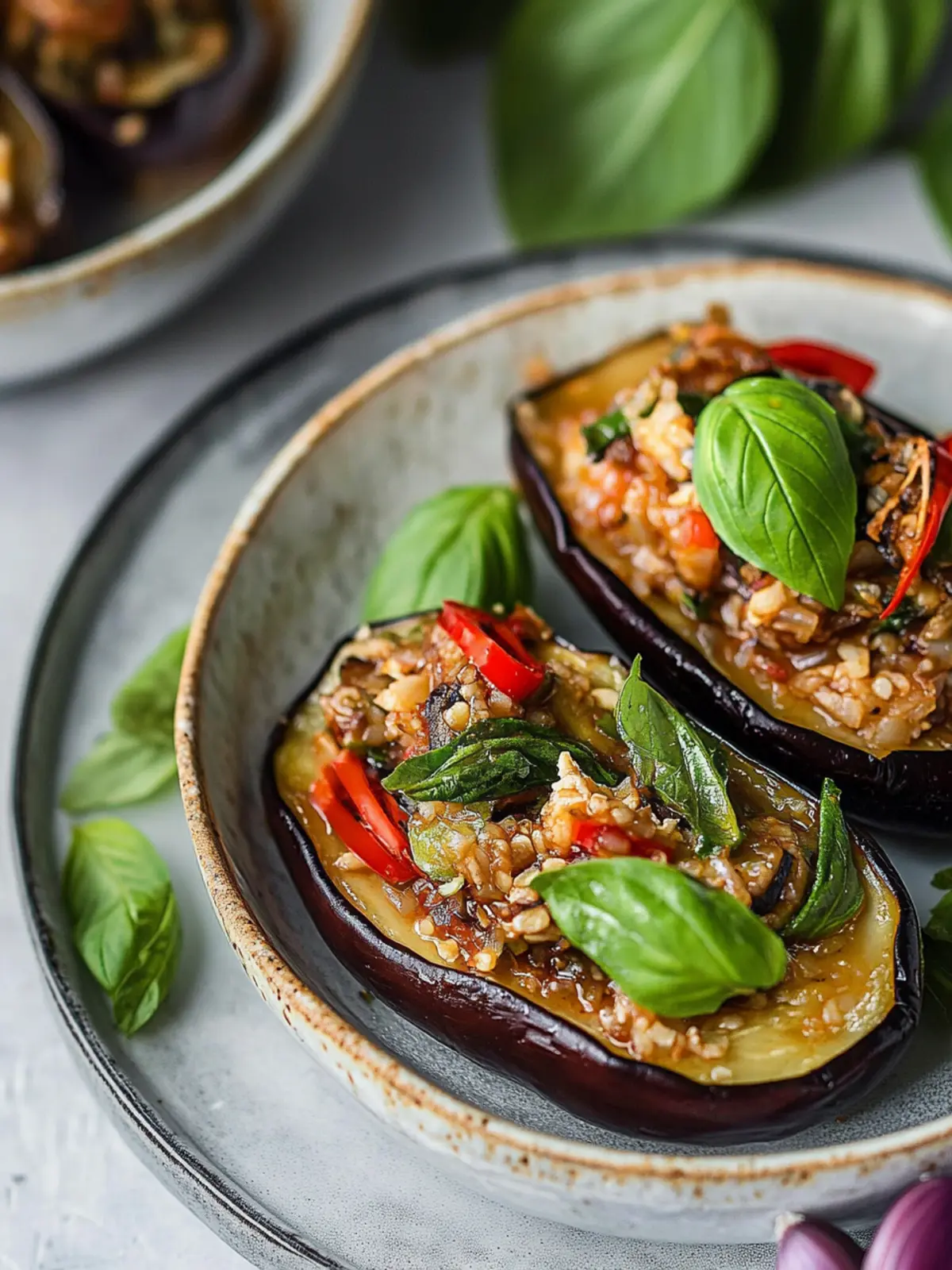
Savory Thai Basil Eggplant That'll Spice Up Your Dinner!
Ingredients
Equipment
Method
- Heat the oil in a large frying pan or Dutch oven over medium-high heat. Add the sliced Chinese or Thai eggplants and cook for 7-8 minutes until tender and slightly browned. Set aside to keep warm.
- Sauté minced shallots or red onion in the same pan, adding a little extra oil if needed. Cook for 4 minutes until fragrant and softened.
- Add garlic, Thai basil, sliced red bell pepper, green bell pepper, and sliced Bird's eye chiles into the mix. Stir-fry for a few minutes until the vegetables are vibrant yet crisp.
- Combine tamari, sesame oil, rice vinegar, sambal oelek or sriracha, your choice of sugar, vegan fish sauce, water, and cornstarch in a bowl. Whisk together until the cornstarch is completely dissolved.
- Combine the cooked eggplant back into the pan with the sautéed vegetables, then pour the sauce over everything. Stir well to ensure an even coating, and let it simmer for a couple of minutes until the sauce thickens.
- Serve by transferring everything to a serving plate. Garnish with fresh Thai basil leaves, thinly sliced Bird's eye chiles, and garlic chives or green onion.