
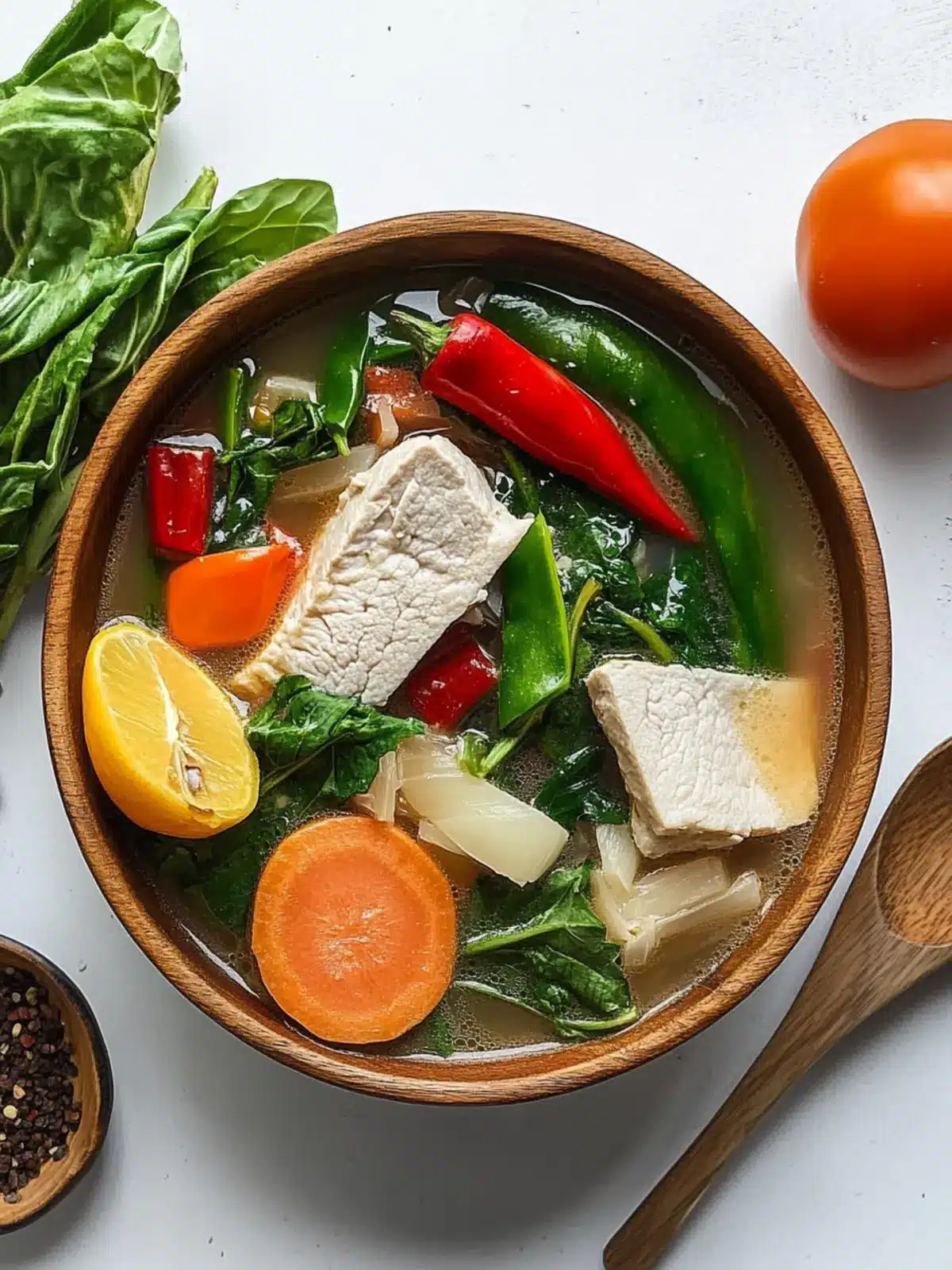
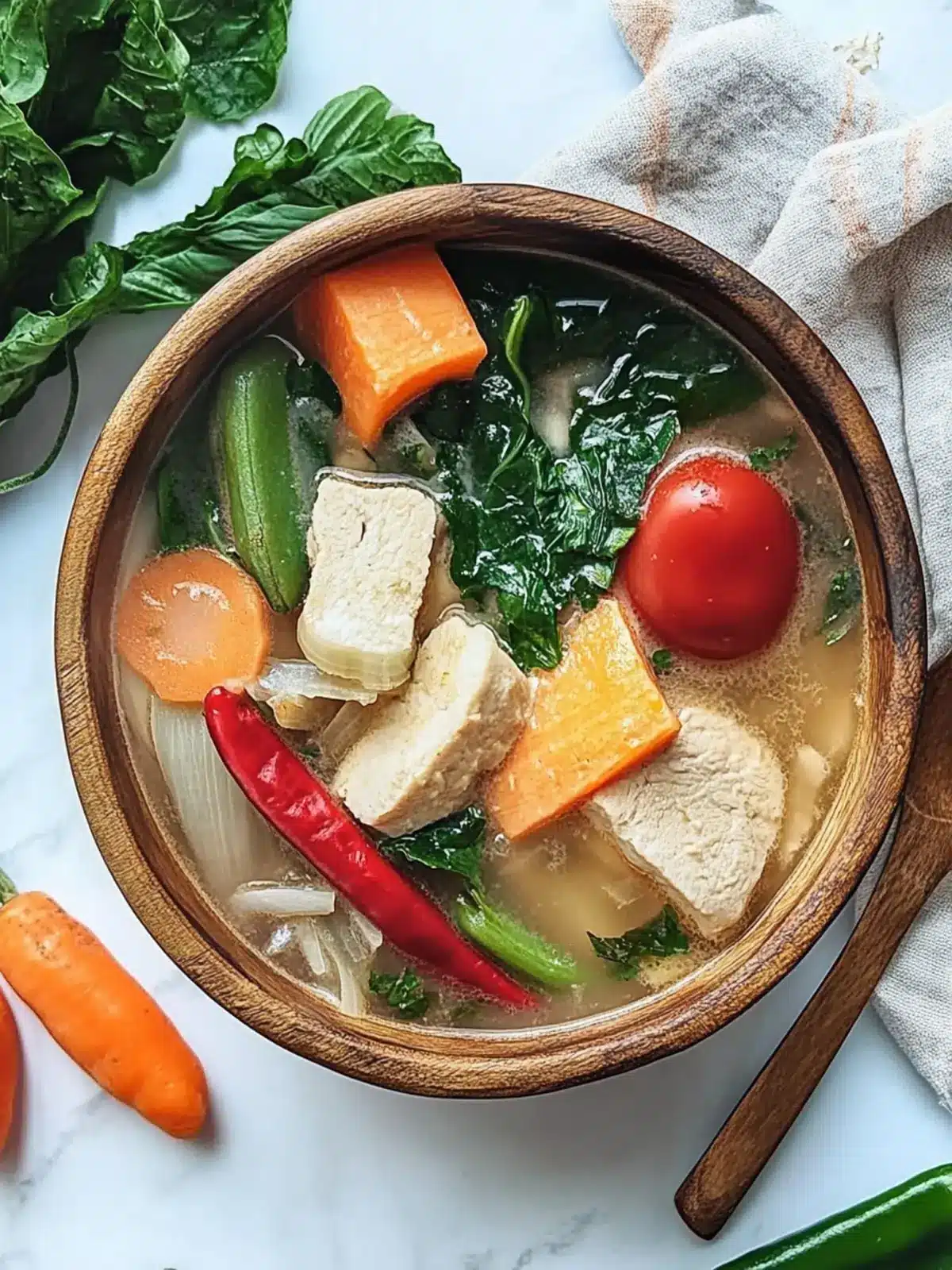
There’s a certain comfort that envelops you when you first take a whiff of a simmering pot of Vegan Sinigang. As the tangy aroma of tamarind fills your kitchen, memories of family dinners and shared laughs come flooding back. This heartwarming Filipino soup is more than just a dish; it’s a celebration of vibrant flavors and nourishing ingredients, each spoonful brimming with a delightful mix of savory and sour notes. Whether you’re seeking a cozy meal after a long day or looking to impress your friends with a dish that captures the essence of comfort food, this Vegan Sinigang is a perfect choice. Featuring a medley of hearty vegetables like taro, radish, and eggplant, along with the earthy punch of kangkong, it’s a simple yet satisfying recipe that will surely become a staple in your home. Let’s dive into the vibrant world of Vegan Sinigang and discover just how effortless and delicious homemade comfort food can be!

Why is Vegan Sinigang so special?
Heartwarming Comfort: This Vegan Sinigang is a delightful embrace in a bowl, warming your soul with every sip.
Vibrant Flavors: The perfect balance of sour tamarind and fresh vegetables creates a mouthwatering taste experience that entices your palate.
Easy Preparation: With simple steps and easily accessible ingredients, you can whip up this dish in no time, making it perfect for busy weeknights.
Nutritional Boost: Packed with fiber and plant-based protein—this soup is not just delicious but also health-conscious!
Versatility: Customize your Vegan Sinigang according to your taste by substituting vegetables or protein sources for endless variations.
For more delicious vegan dishes, check out our vegan recipe collection.
Vegan Sinigang Ingredients
For the Broth
• Water – A primary liquid base that creates the rich soup.
• Batuan or Tamarind – Essential for the signature sour taste of sinigang; tamarind paste can be used as a substitute.
For the Vegetables
• Taro – Provides a creamy texture when cooked; potatoes can be used as a substitute.
• Radishes – Adds crunch and peppery flavor; daikon is a great alternative.
• String Beans – Contributes firmness and a fresh taste; feel free to swap with green peas.
• Eggplants – Imparts subtle sweetness; Japanese eggplants are ideal for a firmer bite.
• Red Tomatoes – Balances the sour notes with sweetness; use any ripe tomatoes if needed.
• Red Onion – Enhances the flavor profile; yellow or white onions can work as well.
• Bell Pepper – Offers sweetness and vibrant color; any variety can be chosen based on preference.
• Ginger – Adds warmth and spice; you can substitute fresh ginger with powdered ginger if necessary.
• Okra – Contributes a unique texture; can be omitted or replaced with zucchini for variety.
For the Protein
• Vegetarian Soy Salmon – Delivers a seafood flavor without the fish; consider using firm tofu or chick’n seitan as a substitute.
For the Greens
• Kangkong (Water Spinach) – Adds vibrant color and nutrients; spinach can be a suitable replacement.
• Green Onions – Perfect for garnish and an extra flavor boost; chives can serve as a substitute.
Seasonings
• Salt & Pepper – Basic seasonings to enhance flavors; adjust according to your taste.
• Mushroom Powder (Optional) – Brings umami depth; any mushroom seasoning can be used or omitted if unavailable.
With these ingredients, you’re set to create a delightful Vegan Sinigang that celebrates the rich flavors of Filipino cuisine. Happy cooking!
How to Make Vegan Sinigang
-
Prepare the Base: In a large pot, bring 4 cups of water to a boil over medium heat. Once boiling, add 1 cup of cubed taro and cook for 8-10 minutes until softened.
-
Layer in Vegetables: Next, add the sliced radishes and keep boiling for an additional 2 minutes. Add string beans and eggplant, then lower the heat, cover, and simmer for 2 more minutes.
-
Flavor Enhancement: Stir in the batuan or tamarind, halved tomatoes, quartered onion, sliced bell pepper, and ginger. Cover the pot and let it simmer for another 2 minutes to develop those rich flavors.
-
Add Protein and Season: Introduce the okra and vegetarian soy salmon. Season with salt, pepper, and optional mushroom powder, then cover the pot and cook for 3 minutes.
-
Finish with Greens: Finally, stir in the kangkong and sliced green onions. Allow the greens to wilt slightly before serving hot with a side of rice.
Optional: Drizzle with a bit of soy sauce or add chili for an extra kick!
Exact quantities are listed in the recipe card below.
Make Ahead Options
Vegan Sinigang is a fantastic choice for meal prep, allowing you to save time without compromising flavor! You can chop and prepare all the vegetables, including taro, radishes, and eggplant, up to 3 days in advance; just store them in an airtight container in the refrigerator to maintain their freshness. The broth can also be made and refrigerated up to 24 hours ahead—just keep the tamarind and vegetables separate until you’re ready to finish cooking. When it’s time to enjoy your comforting bowl of Vegan Sinigang, simmer the broth, add your prepped vegetables, and finish by stirring in the kangkong and green onions right before serving. This way, you’ll have a hearty meal ready in no time, just bursting with that signature flavor!
What to Serve with Vegan Sinigang?
Indulge in a flavorful experience that complements this heartwarming soup beautifully.
-
Steamed Jasmine Rice: A fluffy bed for your Vegan Sinigang, offering an ideal texture contrast and soaking up that tangy broth.
-
Banana Lumpia: These sweet spring rolls provide a lovely crunch and satisfy your sweet tooth, making them the perfect contrast to the sour soup.
-
Stir-fried Vegetables: A vibrant mix of seasonal greens and veggies creates a fresh element that balances the hearty soup beautifully.
-
Pineapple Salsa: The sweetness of pineapple salsa adds a zesty kick that pairs well, enhancing the flavors of Vegan Sinigang while providing a fruity punch.
-
Coconut Rice: Infused with aromatic coconut milk, it adds a rich creaminess that complements the soup’s tangy notes seamlessly, making each bite memorable.
-
Gabi (Taro) Chips: Crispy and savory, these chips mirror the creamy taro in the soup, providing that delightful crunch with every spoonful.
-
Fresh Mango Salad: Bright and refreshing, this salad pairs perfectly with the soup’s depth, weaving in a complex citrus flavor that brightens the meal.
-
Buko (Young Coconut) Drink: Serve a refreshing coconut drink alongside your meal to cleanse the palate and bring a tropical twist to your dining experience.
Vegan Sinigang Variations
Feel free to explore your creativity in the kitchen with these delightful twists on Vegan Sinigang!
- Protein Swap: Replace vegetarian soy salmon with chickpeas for a hearty and nutritious protein alternative.
- Spicy Kick: Add sliced chili peppers during simmering for a heat that elevates the flavor profile. This adjustment awakens your senses and adds a wonderful dimension to the soup.
- Sweet Potato Delight: Swap out taro for sweet potatoes to infuse your soup with a touch of natural sweetness and added nutrients. The vibrant orange color will surely entice!
- Herb Infusion: Toss in fresh herbs like cilantro or basil at the end for an aromatic finish that brightens the dish. These additions amplify the flavors and create a refreshing experience.
- Mushroom Medley: Incorporate a mix of mushrooms, such as shiitake or oyster, to enhance the umami flavor and add texture. This combination takes the soup to new culinary heights!
- Coconut Cream: For a richer broth, add a splash of coconut cream to lend a luxurious touch. This twist brings a creamy richness that complements the sour notes beautifully.
- Zucchini Twist: Substitute okra with diced zucchini to introduce a different texture while keeping the soup light and fresh. This variation maintains the vibrant essence of the dish.
- Quinoa Boost: Stir in cooked quinoa for an added grain element, increasing the fiber and protein content for a nutritious upgrade. This slight modification transforms your soup into a complete meal.
These variations not only enhance the flavor profile but also cater to different dietary needs and preferences, ensuring that everyone can enjoy this beloved Filipino comfort food!
Storage Tips for Vegan Sinigang
-
Fridge: Store your Vegan Sinigang in an airtight container in the refrigerator for up to 3 days to maintain its freshness and flavor.
-
Freezer: This heartwarming soup can be frozen for up to 2 months. Properly cool the soup, then transfer it to a freezer-safe container, leaving space for expansion.
-
Reheating: To enjoy, thaw in the fridge overnight and reheat gently on the stove over low heat, adding a splash of water if needed to restore its desired consistency.
-
Serving Suggestions: For best results, serve hot with freshly steamed rice, enjoying the delightful combination of flavors!
Expert Tips for Vegan Sinigang
-
Cooking Timing: Add each vegetable at the right moment to ensure they maintain their perfect textures and avoid mushiness.
-
Sourness Adjustment: Taste your broth as you go! You can easily modify the sourness of your Vegan Sinigang by adding more or less tamarind.
-
Thicker Consistency: If you prefer a heartier soup, add more taro or decrease the amount of water in your simmering broth.
-
Fresh Ingredients: Use the freshest vegetables you can find for the best flavor! Frozen options can work but may alter the texture slightly.
-
Garnish Lavishly: Don’t skip the green onions; they add an essential flavor boost that makes the dish pop!
Vegan Sinigang Recipe FAQs
What is the best way to select ripe vegetables for Vegan Sinigang?
Absolutely! When selecting vegetables, look for fresh, vibrant colors. For example, pick taro with smooth skin and no dark spots, radishes should be crisp and firm, and tomatoes should be plump and slightly soft to the touch, indicating ripeness. String beans should be bright green without any yellowing for the best flavor profile!
How can I store leftover Vegan Sinigang?
Very! To store your Vegan Sinigang, place it in an airtight container in the refrigerator for up to 3 days. Be sure to let it cool completely before refrigerating to preserve its flavors. When reheating, do so gently on the stove over low heat, stirring occasionally to ensure even warming.
Can I freeze Vegan Sinigang, and how do I do it?
Absolutely! To freeze your Vegan Sinigang, allow it to cool completely, then transfer it to a freezer-safe container, leaving about an inch of space at the top for expansion. It will keep well in the freezer for up to 2 months. When you’re ready to enjoy it, thaw it in the refrigerator overnight and reheat on the stove, adding a little water if it seems thick.
What should I do if my Vegan Sinigang is too sour?
Don’t worry! If you find your Vegan Sinigang a bit too sour for your taste, you can balance it by adding more diced tomatoes for sweetness or even a sprinkle of sugar, if you prefer. Adjust incrementally so you can find the flavor balance that appeals to you best!
Are there any allergies I should be aware of with this recipe?
Very! Vegan Sinigang is generally safe for those with common dietary restrictions, but be cautious if you’re allergic to soy, as the vegetarian soy salmon and mushroom powder may trigger reactions. Additionally, if cooking for pets, keep them away from the dish due to potential harmful ingredients like salt and onions.
Is there an alternative to tamarind for making Vegan Sinigang?
Definitely! If you can’t find tamarind or batuan, using tamarind paste is an excellent alternative that still delivers that signature sour flavor. Alternatively, a combination of lime or lemon juice can work as a last resort; just add it at the end of cooking to retain the bright acidity!
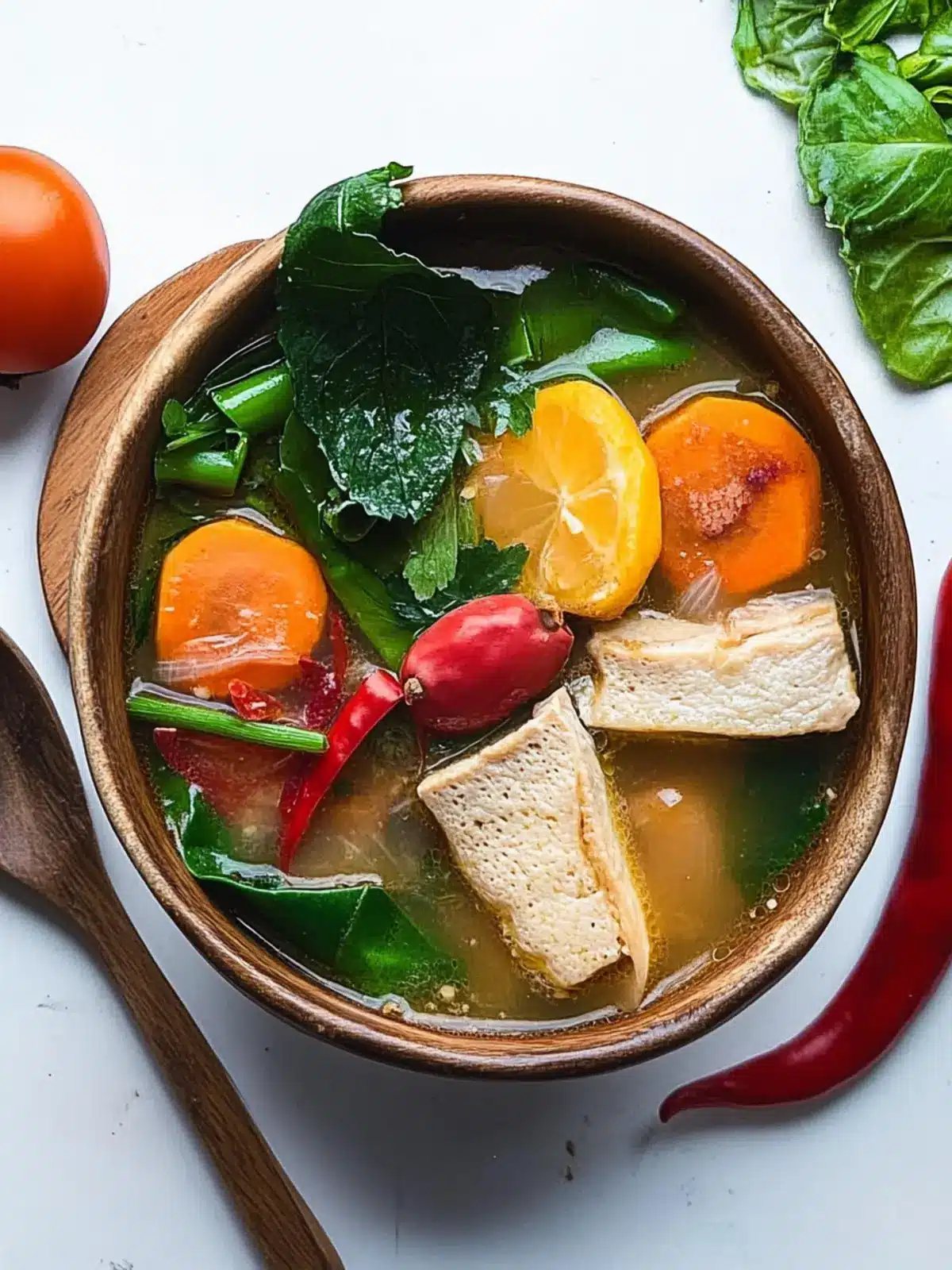
Savory Vegan Sinigang: A Heartwarming Filipino Delight
Ingredients
Equipment
Method
- In a large pot, bring 4 cups of water to a boil over medium heat. Once boiling, add 1 cup of cubed taro and cook for 8-10 minutes until softened.
- Next, add the sliced radishes and keep boiling for an additional 2 minutes. Add string beans and eggplant, then lower the heat, cover, and simmer for 2 more minutes.
- Stir in the batuan or tamarind, halved tomatoes, quartered onion, sliced bell pepper, and ginger. Cover the pot and let it simmer for another 2 minutes.
- Introduce the okra and vegetarian soy salmon. Season with salt, pepper, and optional mushroom powder, then cover the pot and cook for 3 minutes.
- Finally, stir in the kangkong and sliced green onions. Allow the greens to wilt slightly before serving hot with a side of rice.