
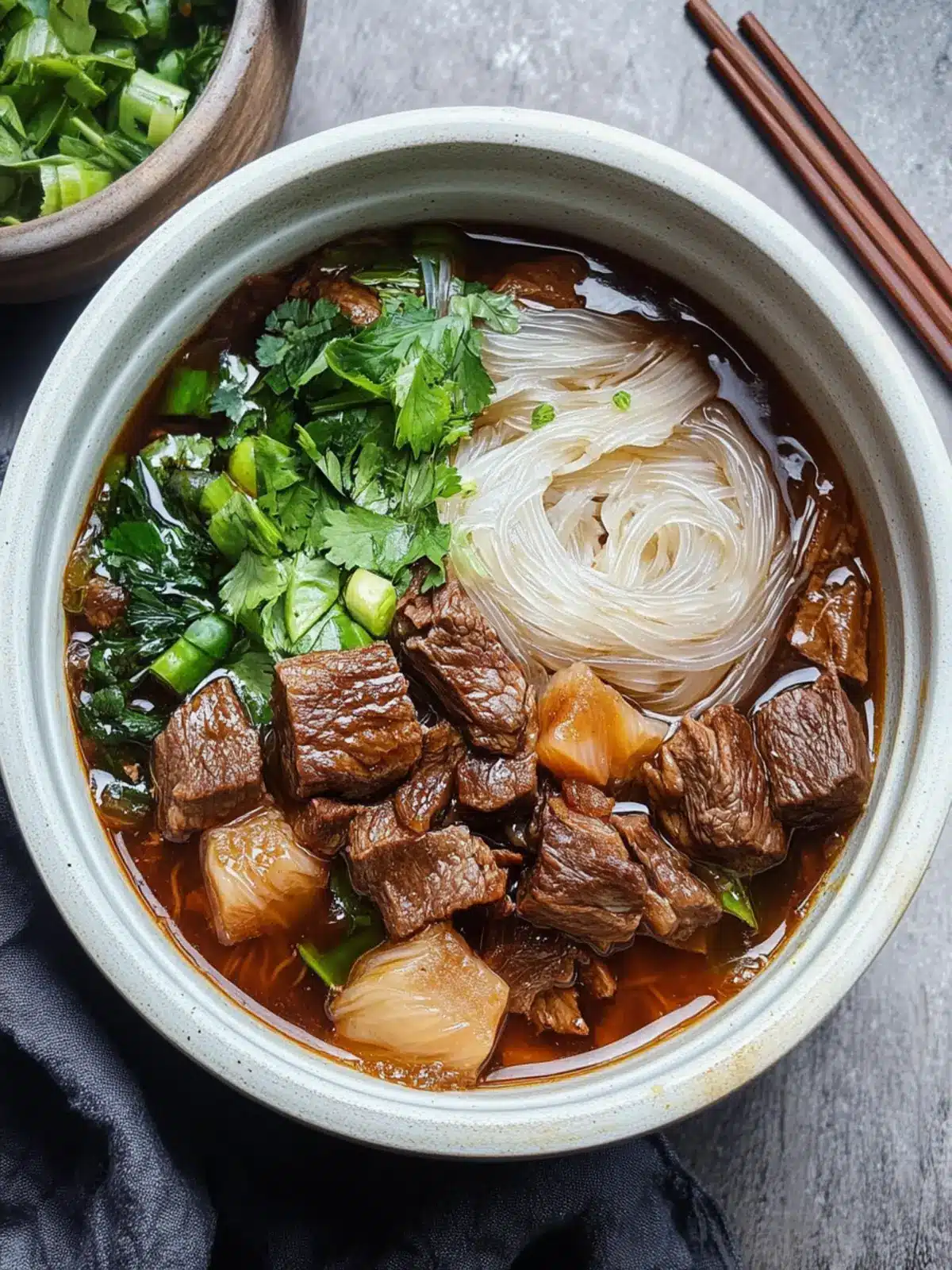
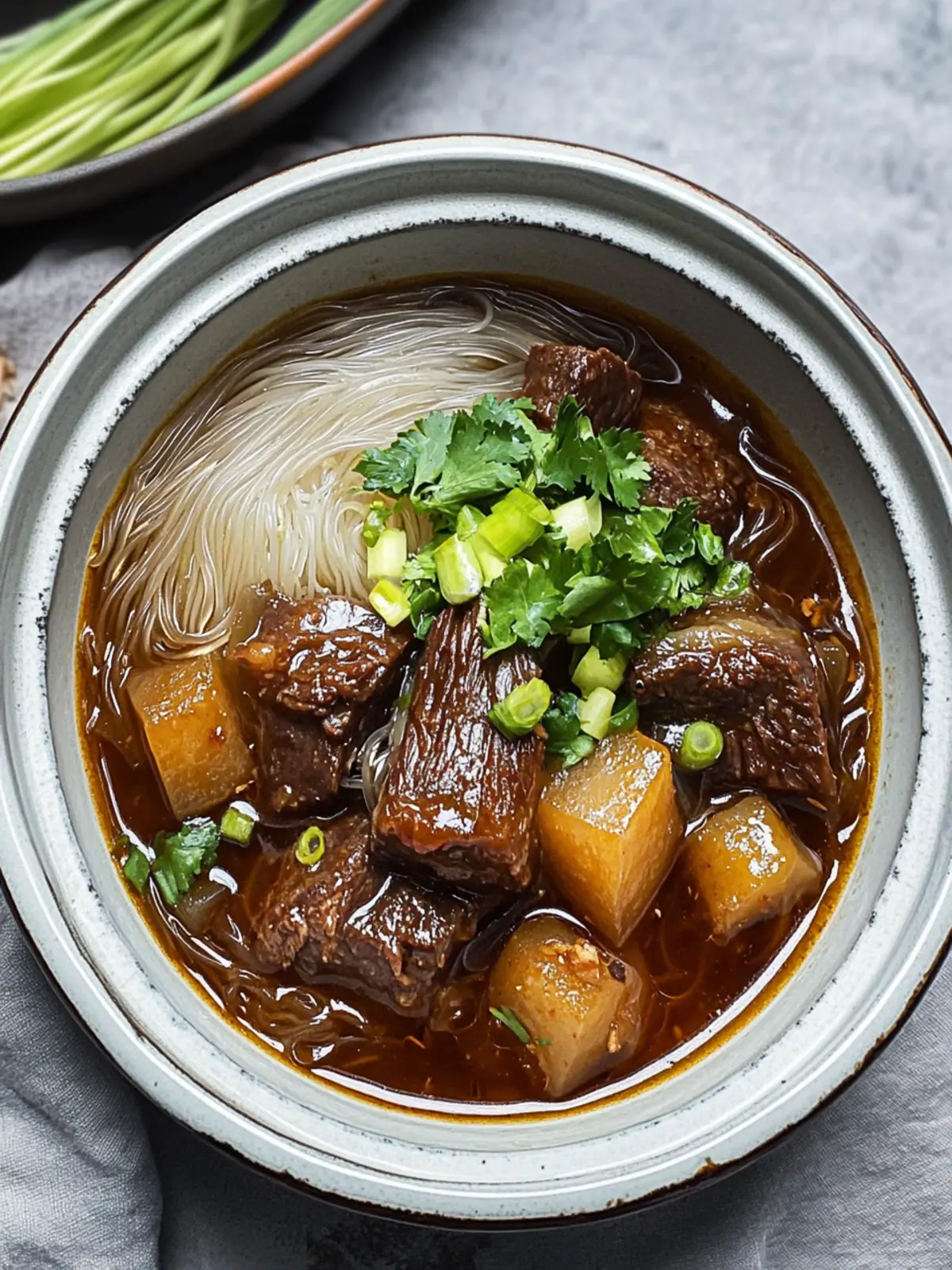
Picture this: a chilly evening, and the comforting scent of savory beef and rich spices wafts from your kitchen, wrapping you in warmth like a cozy blanket. That’s the magic of my Chinese Braised Beef Stew with Glass Noodles. This dish came to life one October night when I craved something hearty and satisfying after a long day. As the beef slowly simmers, the flavors meld into an irresistible sauce that clings to the tender chunks, while the glass noodles absorb the rich, umami goodness.
This stew is not just a meal; it’s an experience that transforms your kitchen into your favorite local eatery. With minimal effort and a handful of ingredients, you’ll create a dish that your family and friends will rave about. I promise, you won’t miss the fast food once you dive into this comforting bowl of home-cooked bliss. Let’s gather the ingredients and embark on this culinary journey together—it’s time to treat yourself to something truly special!

Why is Chinese Braised Beef Stew with Glass Noodles a Must-Try?
Savor the rich and complex flavors that transport you straight to the streets of China! Hearty and filling, this stew is perfect for chilly nights when comfort food is calling your name. Minimal effort is required; just a bit of chopping and simmering transforms simple ingredients into a gourmet experience. Noodle lovers will adore how the glass noodles soak up the savory broth, while crowd-pleasing is a guarantee with this dish—watch your family gather around the table in delight. For a quicker fix, consider our tips for quick meal prep ideas!
Chinese Braised Beef Stew with Glass Noodles Ingredients
For the Beef
• 1½ lbs short rib meat, beef shank, or brisket – choose your favorite cut for rich flavor and tenderness.
• 6 cups water – this forms the base for your delicious broth.
For the Aromatics
• 4 cloves garlic – crushed and roughly chopped for that pungent, warming flavor.
• 2 green onions – sliced into 2-inch pieces, adding fresh zest to the stew.
• 1 small onion (optional) – quartered to enhance the stew’s depth with sweetness.
For the Seasoning
• 2 tablespoons soy sauce – brings umami richness to the dish.
• 1 tablespoon dark soy sauce – for deeper color and flavor complexity.
• 2 tablespoons Shaoxing wine or michiu – adds a unique aromatic note; feel free to substitute with dry sherry if needed.
• 1 tablespoon doubanjiang (chili bean paste) – infuses the stew with subtle heat and depth.
• 1 teaspoon sugar (or rock sugar) – balances the savory flavors beautifully.
For the Noodles and Veggies
• 1 bundle mung bean vermicelli (glass noodles) – soak in warm water for 10 minutes for a delightful texture in your stew.
• Napa cabbage or bok choy (optional) – chopped to add a crunchy, vibrant element to the dish.
• 1 additional star anise (optional) – enhances the aromatic profile, making each bite fragrant.
• 1 teaspoon Sichuan peppercorns (optional) – choose these for a delightful tingle; adjust according to your spice preference.
• 3–5 dried chili peppers (optional) – toss in for extra heat; omit for a milder stew.
Let’s indulge in the comforting warmth of this Chinese Braised Beef Stew with Glass Noodles—you won’t want to miss it!
How to Make Chinese Braised Beef Stew with Glass Noodles
-
Prepare Ingredients. Cut the beef into 2-inch chunks and prep your garlic, green onions, and any optional vegetables. Soak the glass noodles in warm water for 10 minutes if you’re using them.
-
Boil Beef. Place the beef in a pot of cold water. Bring it to a rolling boil, then turn off the heat. Drain and rinse the beef under cold water to remove any impurities.
-
Sauté Aromatics. In a soup pot or Dutch oven, heat oil over medium heat. Add garlic, green onions, and optional onion; sauté for 1–2 minutes until fragrant. Stir in doubanjiang and cook for an additional 30 seconds to release its flavor.
-
Add Ingredients. Incorporate the prepped beef, remaining green onions, soy sauces, Shaoxing wine, sugar, and star anise. If you’re using optional spices, add them now. Pour in 6 cups of water and bring to a boil.
-
Simmer. Lower the heat to a simmer, cover, and let it cook for 1½ to 2 hours. You’ll know it’s ready when the beef is tender and easily shredded with a fork.
-
Add Greens. During the last 15–20 minutes of simmering, stir in the chopped cabbage or bok choy for added color and crunch (this step is optional, but highly recommended!).
-
Cook Noodles. Add the soaked noodles and simmer for 5–7 minutes if soaked, or 7–9 minutes if not. Make sure to stir occasionally to prevent sticking.
-
Season & Serve. Taste your stew and adjust any seasonings if necessary. Sprinkle the remainder of the green onions on top before serving hot, and enjoy this heartwarming dish!
Optional: Serve with a dash of sesame oil for an extra layer of flavor.
Exact quantities are listed in the recipe card below.
Make Ahead Options
These Chinese Braised Beef Stew with Glass Noodles are a fantastic choice for busy home cooks looking to streamline their meal prep. You can chop the beef and veggies up to 24 hours in advance, storing them in airtight containers in the refrigerator to maintain their freshness. Additionally, you can mix the sauces and seasonings ahead of time, keeping them refrigerated (this will enhance their flavors!). When you’re ready to enjoy, simply follow the cooking instructions: sauté the aromatics, add your prepped beef and sauces, and simmer for the perfect comforting meal. Trust me, this dish will be just as delicious when prepared ahead!
Chinese Braised Beef Stew with Glass Noodles Variations
Feel free to experiment and create your own version of this heartwarming stew—your taste buds will thank you!
-
Gluten-Free: Substitute soy sauce with tamari or coconut aminos to keep it gluten-friendly while still enjoying that rich flavor.
-
Spicy Kick: Add an extra tablespoon of doubanjiang or toss in sliced fresh jalapeños for a fiery twist that will ignite your palate.
-
Vegetarian: Swap the beef for hearty mushrooms like shiitake or portobello and replace the broth with vegetable stock for a nourishing plant-based version.
-
Herbaceous Delight: Toss in fresh herbs like cilantro or parsley just before serving to give your stew a pop of fresh flavor and color.
-
Extra Crunch: Garnish with toasted sesame seeds or crushed peanuts for an added crunch that contrasts beautifully with the tender beef and noodles.
-
Coconut Creamy: Stir in a splash of coconut milk towards the end of cooking to introduce a rich creaminess that balances the spices nicely.
-
Vegetable Boost: Add diced carrots or bell peppers during the simmer to enhance both nutrition and color, making this stew even more comforting and wholesome.
-
Quicker Noodles: Use instant noodles as a quicker alternative; simply add them in the last 2-3 minutes of cooking for an easy and satisfying twist.
What to Serve with Chinese Braised Beef Stew with Glass Noodles?
Elevate your dining experience by pairing delightful sides with this hearty stew that warms the soul.
-
Steamed Bok Choy: This vibrant green side adds a fresh crunch and absorbs the stew’s savory flavors perfectly. Its subtle bitterness contrasts beautifully with the richness of the beef.
-
Fragrant Jasmine Rice: Serve fluffy jasmine rice to soak up every drop of the flavorful broth. It enhances the meal’s comforting aspect and provides a satisfying base.
-
Garlic Sesame Green Beans: Tossed in sesame oil and garlic, these tender green beans offer a delicious crunch. Their nutty flavor complements the stew’s umami components wonderfully.
-
Crispy Spring Rolls: Add a delightful crunch to your meal with golden spring rolls filled with veggies or shrimp. The crispy exterior contrasts with the tender beef and noodles in the stew, creating a balance that delights the senses.
-
Chili Oil Dipping Sauce: Boost the flavor profile with a homemade chili oil sauce. Just a drizzle over the stew enhances its heat and adds complexity, creating a robust tasting experience.
-
Mango Sticky Rice: End your meal on a sweet note with this classic dessert. The creamy coconut and fresh mango provide a refreshing finish, balancing the savory richness of the beef stew.
How to Store and Freeze Chinese Braised Beef Stew with Glass Noodles
Room Temperature: This stew is best enjoyed fresh; however, if left out, consume within 2 hours to avoid spoilage.
Fridge: Store any leftovers in an airtight container for up to 3 days. Reheat on the stovetop over medium heat, adding a splash of water if needed to loosen the stew.
Freezer: Freeze the stew in a freezer-safe container for up to 3 months. Allow it to cool completely before sealing to prevent ice crystals from forming.
Reheating: Thaw overnight in the fridge before reheating, or use the microwave on a defrost setting. Heat gently on the stovetop, stirring occasionally, until warmed through. Enjoy this delicious Chinese Braised Beef Stew with Glass Noodles without missing a beat!
Tips for the Best Chinese Braised Beef Stew
-
Choose Quality Meat: Select well-marbled beef for the best tenderness and flavor. Short ribs are particularly delicious, but brisket works beautifully too.
-
Avoid Overboiling: After bringing the beef to a rolling boil, turning off the heat is crucial to prevent tough meat. This step helps retain moisture and tenderness.
-
Layer Flavors: Don’t rush the sautéing of aromatics like garlic and onions; this enhances the depth of flavors in your Chinese Braised Beef Stew with Glass Noodles.
-
Simmer Low and Slow: A longer simmer at a low heat allows the beef to become incredibly tender while letting flavors meld beautifully.
-
Optional Ingredients: Feel free to customize with optional spices like Sichuan peppercorns or dried chili peppers to adjust the heat level to your taste.
-
Taste and Adjust: Always taste your stew before serving; a little extra soy sauce or sugar can enhance the overall flavor balance wonderfully.
Chinese Braised Beef Stew with Glass Noodles Recipe FAQs
What kind of beef should I use for the Chinese Braised Beef Stew?
I recommend using short rib meat, beef shank, or brisket for this stew. These cuts are well-marbled, which adds flavor and tenderness to your dish. If you’re looking for even more flavor, go for short ribs, as they melt beautifully into the stew!
How do I store leftovers of the stew?
Store any leftovers in an airtight container in the refrigerator for up to 3 days. When reheating, do so gently on the stovetop over medium heat, and add a splash of water if the stew seems too thick. This will help keep it moist and delicious!
Can I freeze the Chinese Braised Beef Stew with Glass Noodles?
Absolutely! You can freeze the stew in a freezer-safe container for up to 3 months. Make sure to let it cool completely before sealing to avoid ice crystals. When you’re ready to enjoy it again, thaw the stew in the fridge overnight, then reheat gently on the stove.
What if my stew is too salty or not flavorful enough?
If your stew turns out too salty, adding a splash of water can help dilute it. Alternatively, throwing in a few chunks of raw potato while simmering can absorb some saltiness—just remove them before serving! If it lacks flavor, consider a drizzle more soy sauce or a dash of sugar to balance it.
How important is ingredient freshness in this recipe?
Very! Using fresh ingredients, particularly the beef and aromatics like garlic and onions, significantly enhances the flavors of your stew. Be sure to select bright, firm green onions and aromatic garlic cloves to ensure their flavors shine through in your hearty dish.
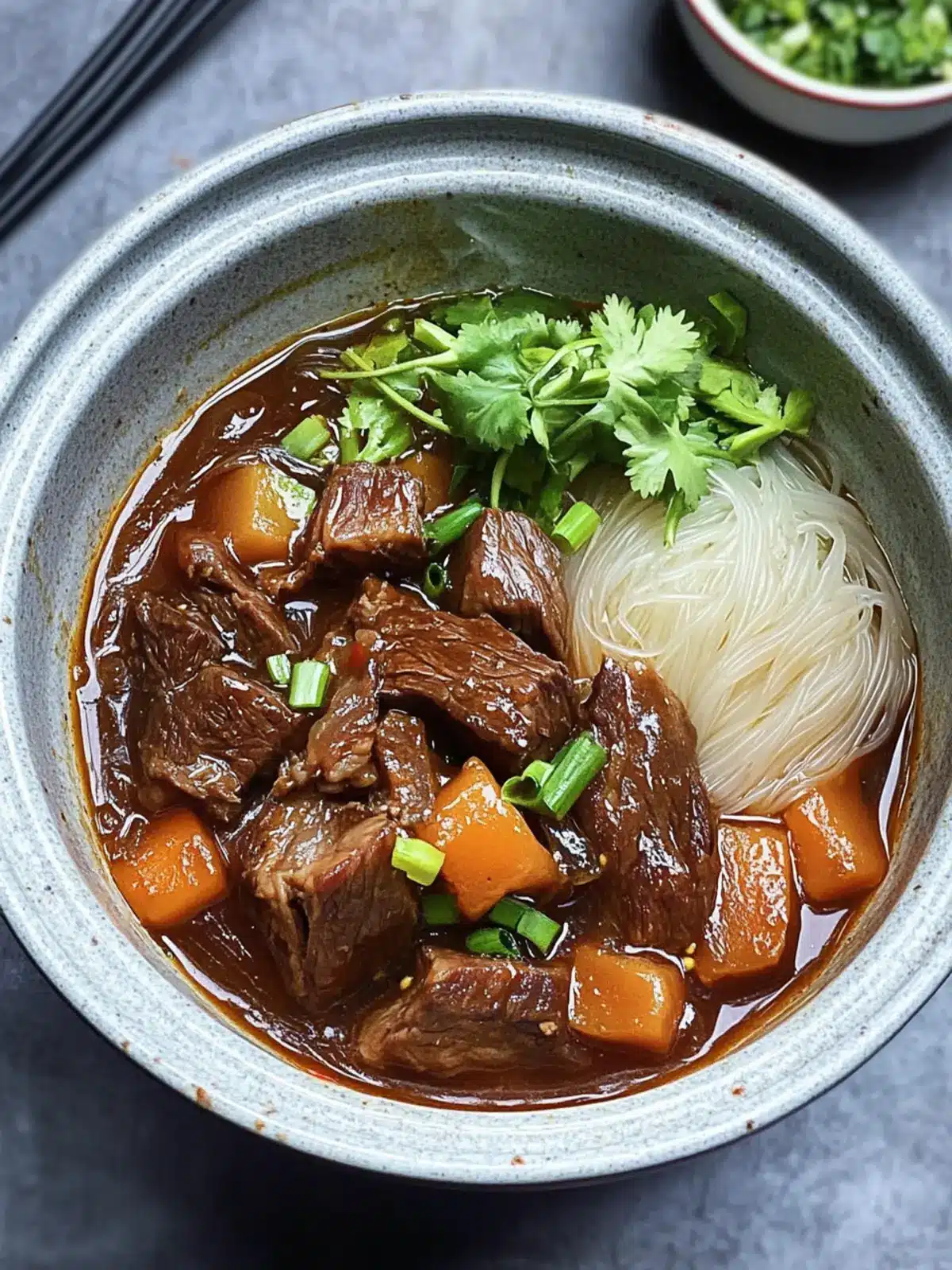
Savor Comfort: Chinese Braised Beef Stew with Glass Noodles
Ingredients
Equipment
Method
- Prepare Ingredients: Cut the beef into 2-inch chunks and prep your garlic, green onions, and any optional vegetables. Soak the glass noodles in warm water for 10 minutes if you’re using them.
- Boil Beef: Place the beef in a pot of cold water. Bring it to a rolling boil, then turn off the heat. Drain and rinse the beef under cold water to remove any impurities.
- Sauté Aromatics: In a soup pot or Dutch oven, heat oil over medium heat. Add garlic, green onions, and optional onion; sauté for 1–2 minutes until fragrant. Stir in doubanjiang and cook for an additional 30 seconds.
- Add Ingredients: Incorporate the prepped beef, remaining green onions, soy sauces, Shaoxing wine, sugar, and star anise. Add any optional spices. Pour in 6 cups of water and bring to a boil.
- Simmer: Lower the heat to a simmer, cover, and let it cook for 1½ to 2 hours until the beef is tender and easily shredded.
- Add Greens: During the last 15–20 minutes of simmering, stir in the chopped cabbage or bok choy for added color and crunch.
- Cook Noodles: Add the soaked noodles and simmer for 5–7 minutes if soaked; 7–9 minutes if not, stirring occasionally.
- Season & Serve: Taste your stew and adjust any seasonings if necessary. Sprinkle the remainder of the green onions on top before serving hot.