
As the chilly winds of autumn start to sweep through my neighborhood, there’s a comforting tradition that transforms my kitchen into a warm haven—making Galbi Jjim. The rich aroma of tender beef short ribs simmering in a savory blend of soy sauce and sweet Asian pear fills the air, instantly lifting my spirits. It’s the perfect remedy for those evenings that crave something hearty yet undeniably delicious.
Picture this: after a long day at work, my mind seeks solace in the art of slow-cooking, where a dash of sesame oil and a hint of ginger can elevate an ordinary meal into something extraordinary. It’s no wonder that this Korean dish has become a staple for my family and friends. Not only is each bite a flavor explosion, but it also fosters a sense of community when paired with steamed rice and delightful side dishes.
Whether you’re a seasoned chef or someone eager to explore homemade delicacies beyond fast food, this recipe promises an experience that blends simplicity with exquisite taste. Let’s dive into making this aromatic masterpiece together!
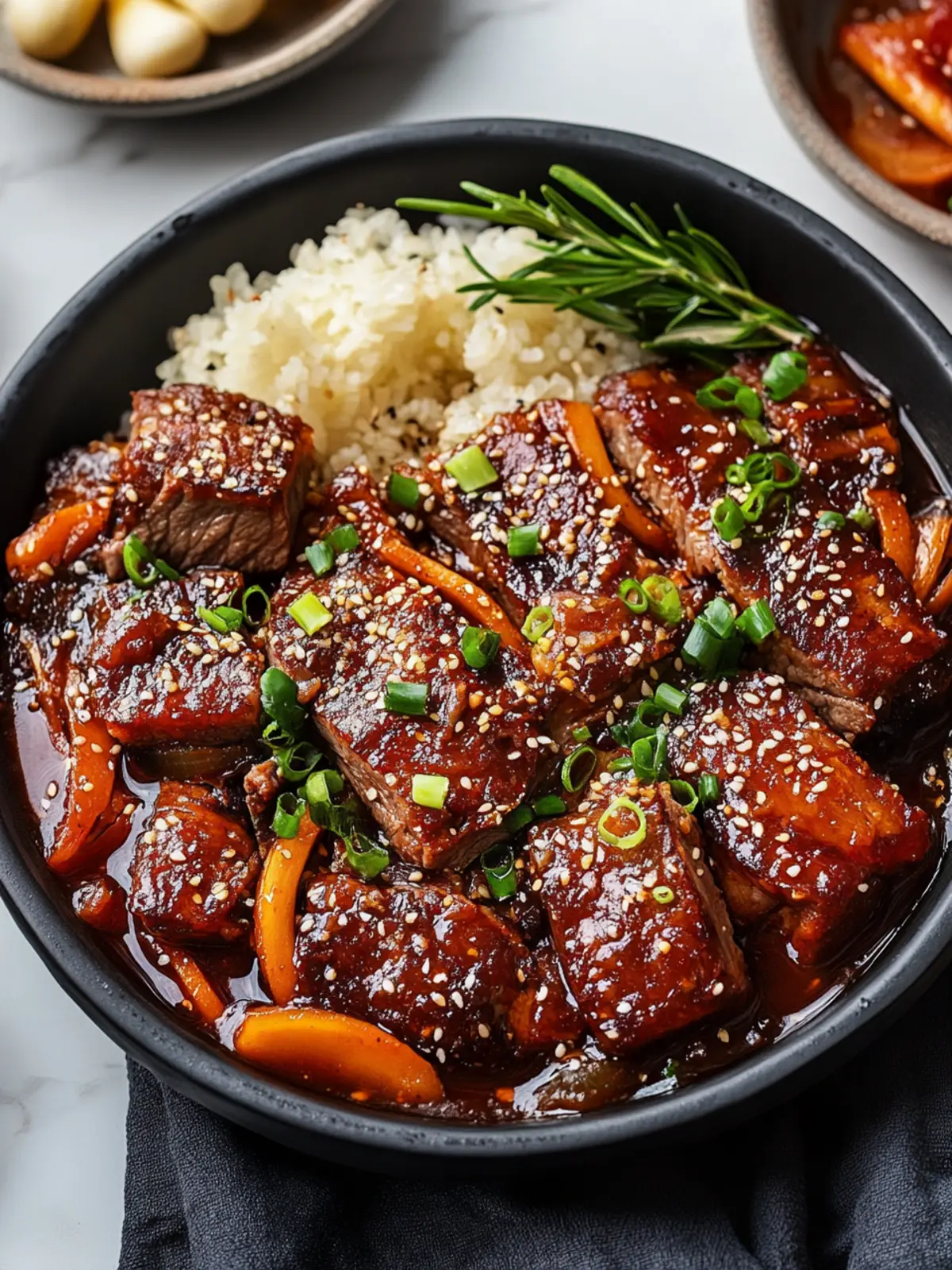
Why is Galbi Jjim a Must-Try?
Heartwarming meal: There’s something magical about the tender beef and fragrant vegetables simmering together, creating a dish that’s both satisfying and nourishing.
Exquisite balance: The unique combination of soy sauce, sweet pear, and ginger brings out layers of flavor that are simply irresistible.
Crowd-pleaser: Perfect for sharing at family gatherings or dinner parties, it’s sure to impress your guests.
Versatile sides: Pair with rice and your favorite Korean banchan to complete the meal—options abound!
Time well spent: Although it takes a few hours, the process is incredibly rewarding, making your kitchen the coziest place to be.
Elevate your culinary skills with this delightful dish that everyone will love!
Ingredients for Galbi Jjim
• To kick off this heartwarming journey, gather these essential ingredients for your Galbi Jjim!
For the Ribs
- 3 pounds beef short ribs bone-in – A rich cut ideal for slow cooking, ensuring maximum flavor and tenderness.
- Cold water for soaking – This step cleans the meat, ensuring your dish is pure and delicious.
For the Saucy Base
- ½ cup soy sauce – The backbone of flavor, delivering that signature savory umami twist in your Galbi Jjim.
- 2 cups water or beef broth – Broth adds depth, enriching the overall taste profile of the dish.
- 1 Asian pear peeled and grated (or 1 small apple) – The sweetness balances the savory elements in your braise.
- ¼ cup brown sugar – Enhances sweetness while contributing to the glossy finish of the sauce.
- 3 tablespoons rice wine or mirin – Imparts a subtle depth and complexity to the overall flavor.
- 6 cloves garlic minced – Aromatic magic that elevates your dish with its rich and pungent profile.
- 1 tablespoon fresh ginger grated – Adds a warm, zesty kick that perfectly complements the beef.
- 1 tablespoon sesame oil – For that nutty aroma, creating an irresistible fragrance as it cooks.
- 1 teaspoon black pepper – A pinch of spice that awakens the palate.
For the Vegetables
- 1 large onion quartered – Sweetens as it cooks, adding layers of flavor to the comforting mix.
- 2 carrots cut into large chunks – The sweetness of carrots adds depth and vibrant color to your dish.
- 1 small daikon radish cut into chunks – A traditional addition that absorbs all the rich flavors during cooking.
- 2 medium potatoes quartered – Adds substance and heartiness, making this dish truly filling.
Optional Additions
- 4 –5 dried shiitake mushrooms – An extra umami burst; soaking them provides a wonderful texture.
- 8 –10 chestnuts – A delightful surprise, these add sweetness and creaminess to the dish.
For Garnishing
- Sliced green onions – Fresh and vibrant, they add a pop of color and flavor to your dish.
- Sesame seeds – Just a sprinkle brings a nutty crunch and aesthetic appeal.
With these lovingly selected ingredients, your journey to creating delicious Galbi Jjim is well on its way!
How to Make Galbi Jjim
-
Soak the ribs: Place the beef short ribs in a large bowl and cover them with cold water. Let them soak for 1 hour, changing the water once or twice to remove excess blood and impurities. Drain and rinse well afterward.
-
Blend the sauce: In a mixing bowl, combine soy sauce, 2 cups of water or beef broth, grated Asian pear, brown sugar, rice wine, minced garlic, grated ginger, sesame oil, and black pepper. Blend until well-combined for a beautiful braising sauce.
-
Boil the ribs: Bring a pot of water to a boil and add the ribs. Cook for 5–7 minutes, then drain and rinse the ribs under cold water to remove any foam or residue, enhancing the flavor.
-
Start braising: Add the rinsed ribs to a Dutch oven along with the prepared braising sauce. Bring it to a gentle boil, then reduce the heat to low. Cover and let it simmer for about 1½ hours, filling your kitchen with a rich aroma.
-
Add the veggies: Stir in the quartered onion, large chunks of carrots, cut daikon radish, quartered potatoes, and any optional mushrooms or chestnuts. Continue cooking uncovered or partially covered for another 45–60 minutes until the meat is tender and vegetables are soft.
-
Thicken the sauce: If needed, remove any excess fat from the surface. Simmer uncovered for a few minutes until the sauce becomes glossy and slightly thickened, intensifying the flavors.
-
Serve the dish: Transfer your delightful Galbi Jjim to a serving dish, garnishing it with fresh green onions and sesame seeds. Serve hot with steamed rice and a selection of Korean side dishes for a complete experience.
Optional: For an extra kick, add a sprinkle of crushed red pepper flakes before serving.
Exact quantities are listed in the recipe card below.
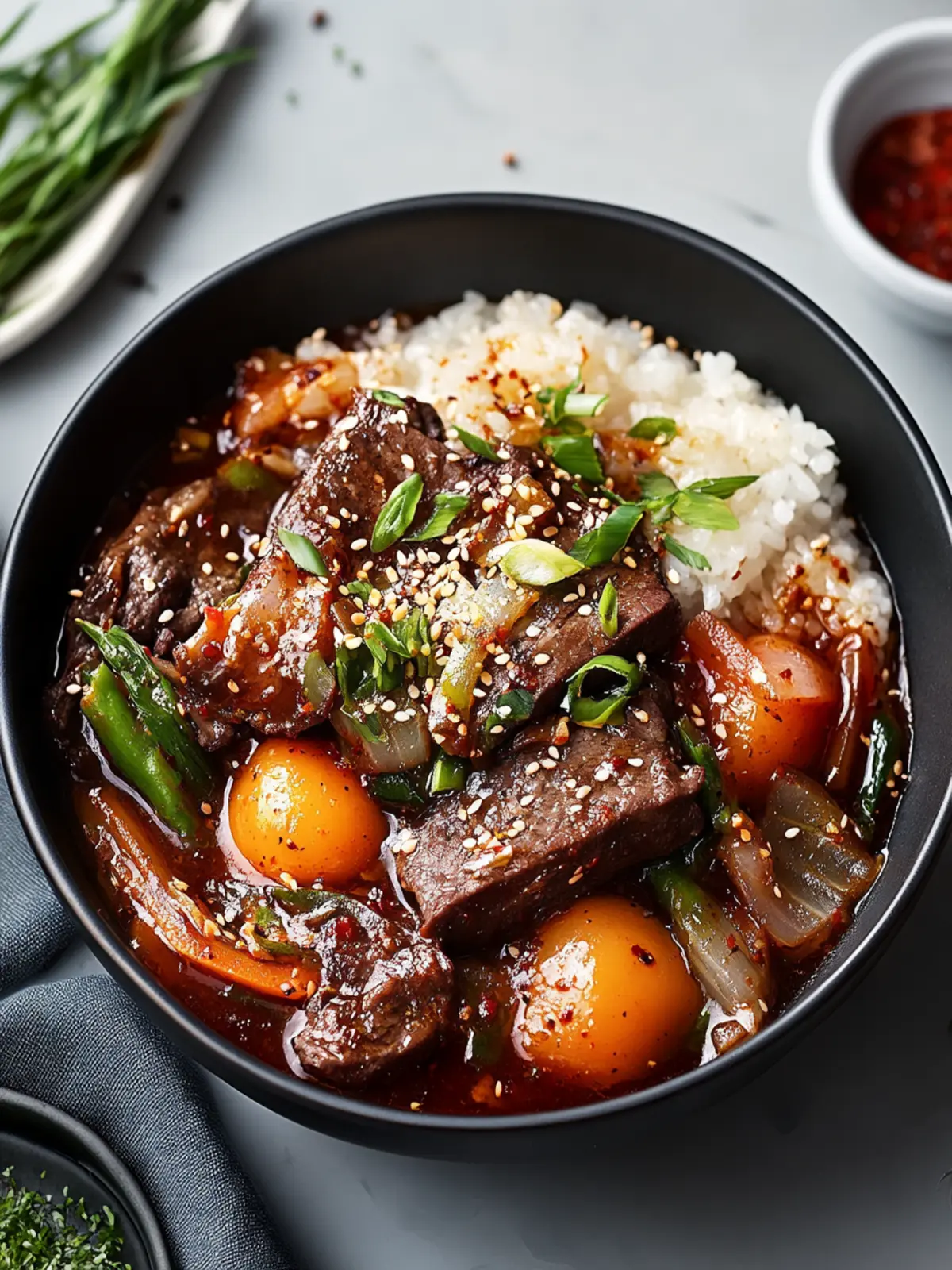
What to Serve with Galbi Jjim?
Looking to create a symphony of flavors alongside your comforting Galbi Jjim? Let’s explore some delightful pairings!
-
Steamed White Rice: The fluffy grains soak up the rich sauce, balancing the savory flavors of the Galbi Jjim perfectly. A thoughtful accompaniment that completes the meal.
-
Kimchi: This spicy and tangy Korean pickle brings a refreshing crunch that contrasts beautifully with the tender beef. It’s a must-have for that authentic touch!
-
Miso Soup: Light and warming, miso soup complements the hearty dish with its umami flavor. A clean palate cleanser to keep the focus on your delicious Galbi Jjim.
-
Korean Pancakes (Pajeon): These savory pancakes add a delightful crunch and a hint of sweetness, making them a delightful texture contrast to the tender meat. Perfect for sharing!
-
Cucumber Salad: A fresh salad with a tangy dressing enhances the meal by offering a crisp, cooling sensation. Its bright flavors elevate your dining experience splendidly.
-
Roasted Vegetables: A medley of seasonal roasted veggies can be a colorful side, providing caramelized sweetness. They round out your plate with variety and flavor.
-
Chilled Soju: A glass of this traditional Korean spirit can cut through the richness of Galbi Jjim, enhancing your dining adventure. It’s an experience of taste and culture!
-
Strawberry Slices with Honey: For dessert, this light and sweet pairing is a delightful way to end your meal. It’s a refreshing treat that echoes the sweet notes in your main dish.
Make Ahead Options
These Galbi Jjim are perfect for meal prep enthusiasts! You can soak and rinse the beef short ribs up to 24 hours in advance, ensuring they are ready for cooking. Additionally, the braising sauce can be blended and refrigerated for up to 3 days before you plan to serve. Simply store it in an airtight container to maintain its flavor and freshness. When you’re ready to enjoy your meal, just follow the cooking steps: bring the ribs and sauce to a boil, then add your veggies. This approach not only saves you time but allows the flavors to deepen—resulting in just as delicious a Galbi Jjim with minimal effort!
Tips for the Best Galbi Jjim
-
Soak Well: Rinse the short ribs thoroughly before cooking. Soaking helps to remove blood and impurities, resulting in a cleaner taste.
-
Balance Sweetness: Adjust the amount of brown sugar and Asian pear to suit your preference. Too much sweetness can overpower the savory flavors.
-
Simmer Gently: Keep the heat low and allow the dish to simmer without a full boil. This ensures perfectly tender meat that falls off the bone.
-
Layered Veggies: Add heartier vegetables like potatoes and daikon radish first, allowing them to absorb the flavor while cooking alongside the meat.
-
Thicken the Sauce: If you prefer a thicker sauce, simmer uncovered for the last few minutes to enhance the richness of your Galbi Jjim.
-
Garnish Generously: Don’t skimp on the green onions and sesame seeds when serving. They add a fresh finish and elevate the presentation beautifully.
How to Store and Freeze Galbi Jjim
Fridge: Store leftovers in an airtight container for up to 3 days. Reheat gently on the stovetop or microwave until warmed through.
Freezer: For longer storage, freeze Galbi Jjim in a freezer-safe container for up to 2 months. Thaw overnight in the fridge before reheating.
Reheating: To maintain tenderness, reheat in a pot over low heat, adding a splash of water or broth if necessary for moisture. Enjoy the scrumptious flavors of your Galbi Jjim!
Variations & Substitutions for Galbi Jjim
Feel free to explore these variations and make your Galbi Jjim truly your own!
- Dairy-Free: Substitute rice wine with coconut aminos for a wholesome, soy-free alternative that retains flavor.
- Lean Meat: Use beef shank or brisket instead of short ribs for a slightly lighter version while still keeping the dish hearty.
- Spicy Kick: Add sliced jalapeños or a teaspoon of gochugaru (Korean red pepper flakes) to spice things up. This adds a nice bit of warmth.
- Vegetable Boost: Enhance nutrition by stirring in green beans or bok choy during the last 15 minutes of cooking for a delightful, colorful addition.
- Fruit Twist: Swap in grated pineapple or mango for a surprising fruit flavor that enhances the sweet notes of the dish. It’s deliciously unexpected!
- Gluten-Free: Use tamari instead of soy sauce to ensure your dish remains gluten-free without losing any of that wonderful umami flavor.
- Nutty Flavor: Replace sesame oil with toasted walnut oil for a unique nutty profile that complements the savory characters beautifully.
- Umami Boost: Incorporate miso paste into the braising sauce for added depth and richness—the ultimate flavor enhancement!
With these variations, your culinary adventure with Galbi Jjim can be as unique as your taste buds desire!
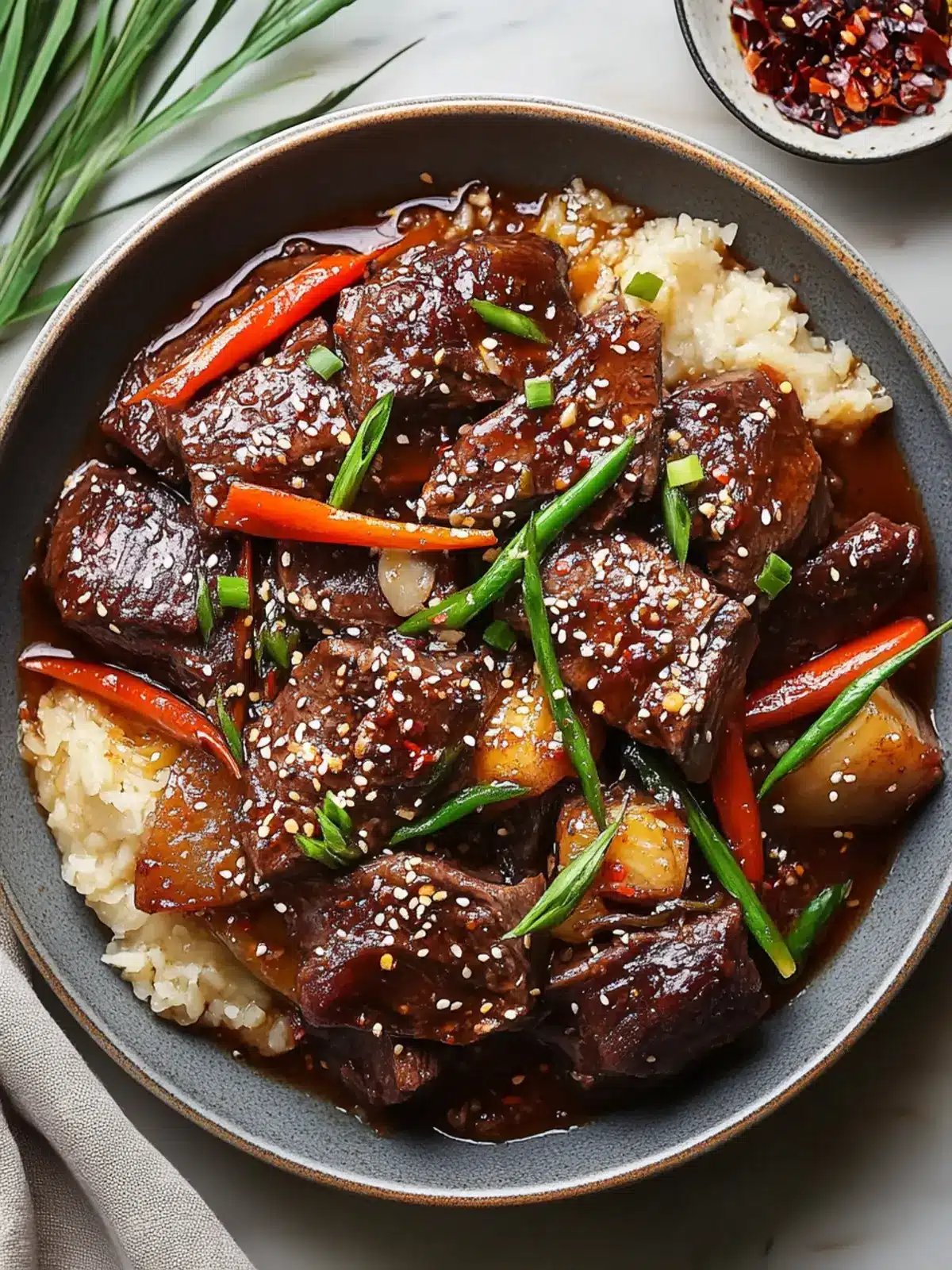
Galbi Jjim Recipe FAQs
How do I select the right beef short ribs for Galbi Jjim?
Absolutely! When selecting beef short ribs, look for well-marbled pieces with a good amount of fat. The marbling enhances flavor and tenderness. Avoid those that have dark spots or a dry exterior, as these may indicate poor quality. Fresh short ribs should have a bright red color and feel moist to the touch.
How should I store leftover Galbi Jjim?
To store leftovers, place them in an airtight container and refrigerate for up to 3 days. Make sure to let the dish cool completely at room temperature before sealing it. When you’re ready to enjoy it again, heat it gently on the stovetop or in the microwave, adding a little water or broth to keep it moist and delicious!
Can I freeze Galbi Jjim, and if so, how?
Very! To freeze Galbi Jjim, transfer it to a freezer-safe container once it has cooled. Make sure to leave some space at the top, as the dish may expand when frozen. It can be stored for up to 2 months. When you’re ready to eat, thaw it overnight in the fridge and then reheat on the stovetop over low heat, adding a splash of broth or water if needed.
What should I do if the sauce for my Galbi Jjim is too thin?
If you find that your sauce is too thin, don’t worry—this can be resolved easily! Allow the Galbi Jjim to simmer uncovered for the last few minutes of cooking. This will help reduce the liquid and thicken the sauce. You can also add a cornstarch slurry (1 tablespoon cornstarch mixed with 2 tablespoons of cold water) during the last few minutes, stirring it in until the sauce thickens to your desired consistency.
Is Galbi Jjim safe for my pets to eat?
It’s best to keep Galbi Jjim away from pets, especially dogs and cats. The high sodium content from soy sauce and other seasonings could be harmful to them. Always consult your veterinarian if you’re unsure about what human food is safe for your furry companions.
Can I use other vegetables instead of the ones listed in the recipe?
The more the merrier! Feel free to get creative with your vegetables. While traditional Galbi Jjim includes daikon radish and potatoes, you could substitute with sweet potatoes, parsnips, or even bell peppers for a different twist. Just keep in mind that cooking times may vary slightly depending on the vegetables you choose. Enjoy experimenting!
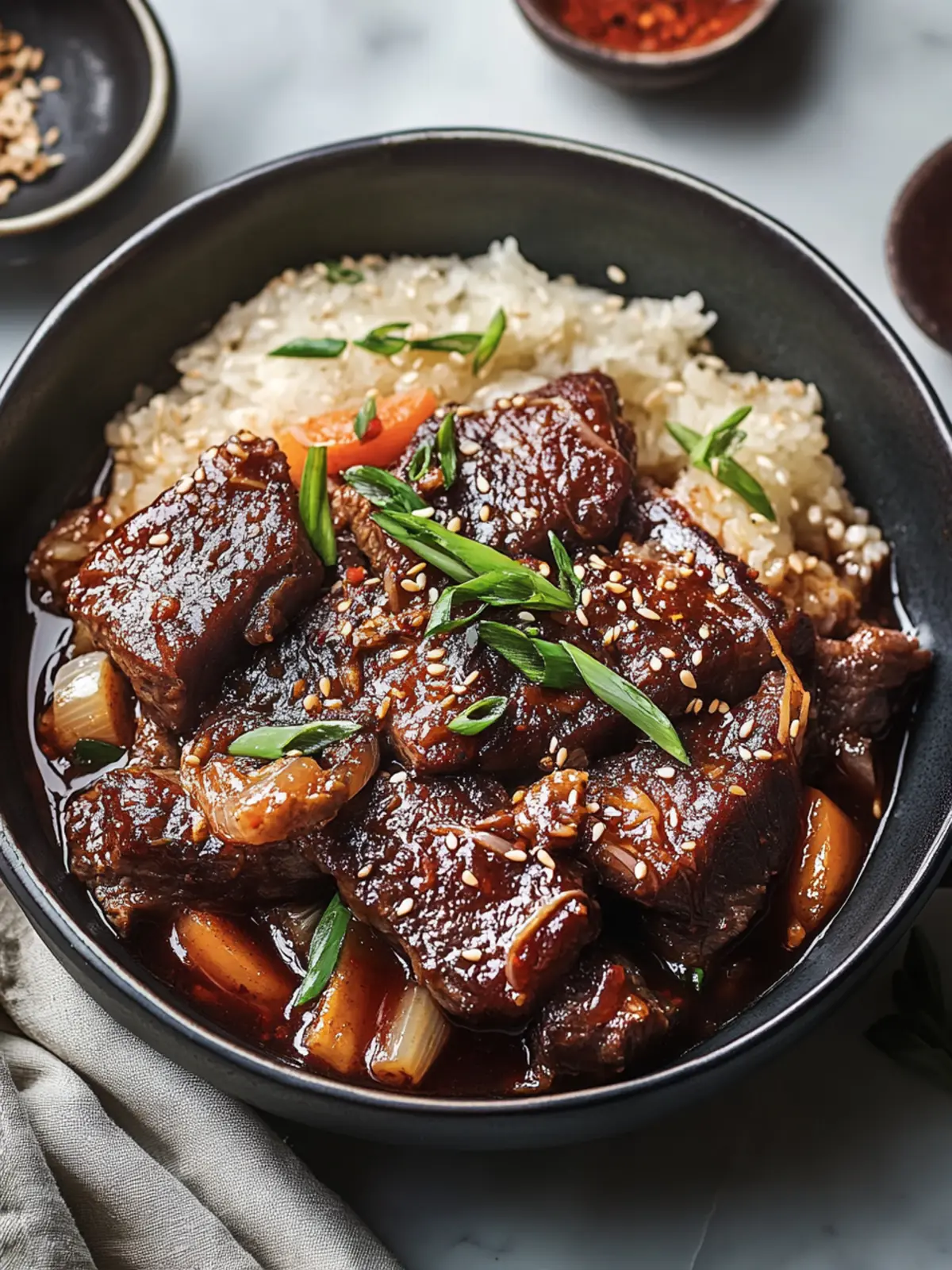
Savory Galbi Jjim: The Ultimate Comfort Food Experience
Ingredients
Equipment
Method
- Soak the ribs: Place the beef short ribs in a large bowl and cover them with cold water. Let them soak for 1 hour, changing the water once or twice to remove excess blood and impurities. Drain and rinse well afterward.
- Blend the sauce: In a mixing bowl, combine soy sauce, 2 cups of water or beef broth, grated Asian pear, brown sugar, rice wine, minced garlic, grated ginger, sesame oil, and black pepper. Blend until well-combined.
- Boil the ribs: Bring a pot of water to a boil and add the ribs. Cook for 5-7 minutes, then drain and rinse the ribs under cold water to remove any foam or residue.
- Start braising: Add the rinsed ribs to a Dutch oven along with the prepared braising sauce. Bring it to a gentle boil, then reduce the heat to low. Cover and let it simmer for about 1½ hours.
- Add the veggies: Stir in the quartered onion, large chunks of carrots, cut daikon radish, quartered potatoes, and any optional mushrooms or chestnuts. Continue cooking uncovered or partially covered for another 45-60 minutes.
- Thicken the sauce: If needed, remove any excess fat from the surface. Simmer uncovered for a few minutes until the sauce becomes glossy and slightly thickened.
- Serve the dish: Transfer your Galbi Jjim to a serving dish, garnishing it with fresh green onions and sesame seeds. Serve hot with steamed rice and a selection of Korean side dishes.