
On a particularly chilly evening, I found myself craving something comforting yet exciting. That’s when the idea of creamy gochujang udon noodles started dancing in my mind. The wonderfully rich and spicy flavor of gochujang, combined with the silkiness of udon noodles, creates a dish that’s not only quick to whip up but also bursting with warmth and flavor.
As I rummaged through my kitchen, I stumbled upon frozen udon noodles nestled in the back of my freezer—perfect for a last-minute dinner! The sensational aroma of sautéing garlic and shallots filled the air, mingling beautifully with the gochujang sauce, tempting my taste buds with every stir.
This recipe transforms a humble weeknight dinner into an indulgent culinary adventure, all in just 15 minutes! Whether you’re looking to impress guests or just seeking a satisfying meal after a long day, these creamy gochujang udon noodles promise to become a staple in your kitchen. Let’s dive into this delightful dish that’s guaranteed to banish any fast-food fatigue!
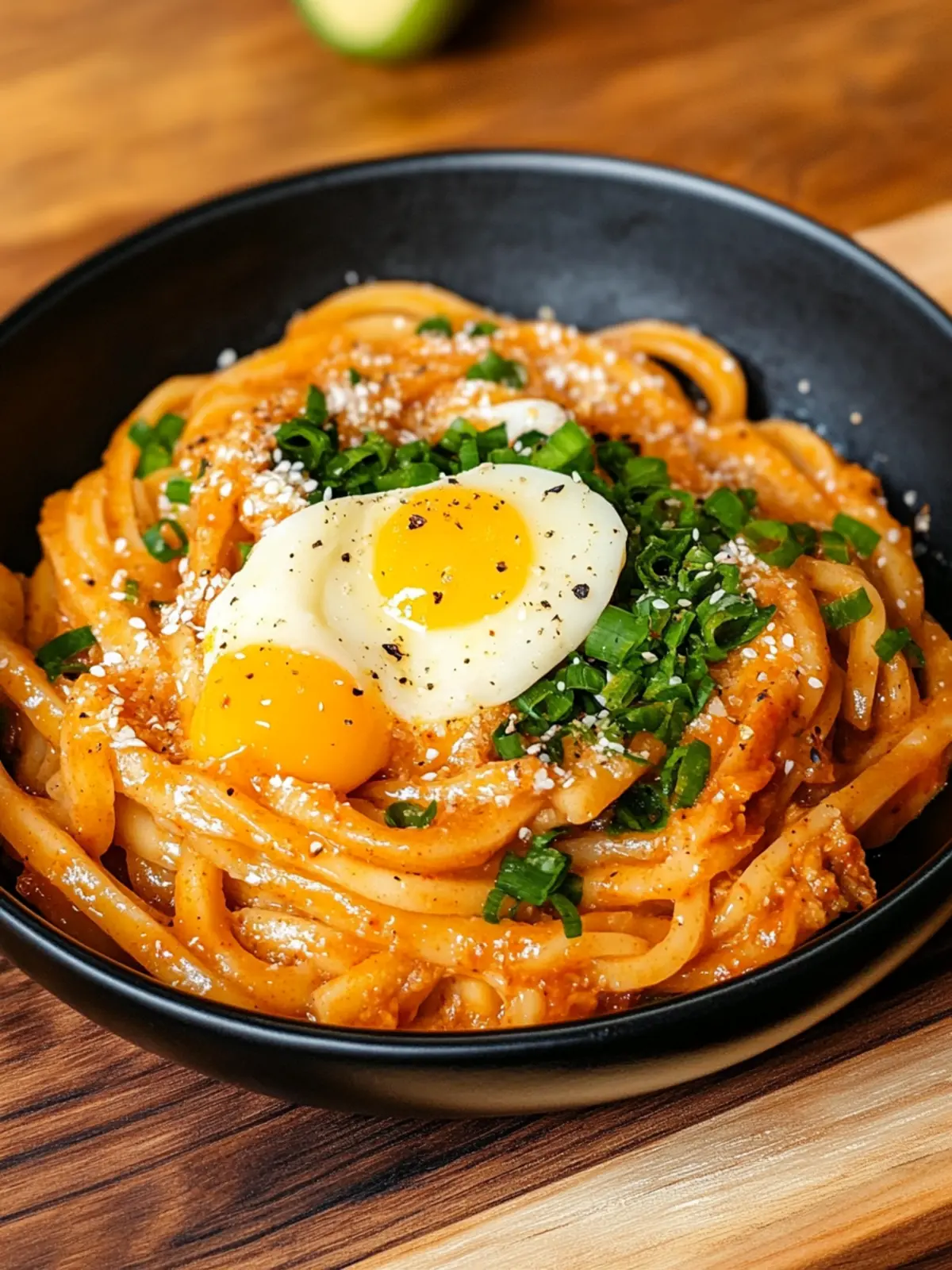
Why love Gochujang Udon Noodles?
Quick and Easy: These creamy gochujang udon noodles are perfect for busy weeknights, taking just 15 minutes from start to finish.
Bold Flavors: The rich blend of gochujang and garlic creates a delectable sauce that tantalizes the taste buds.
Versatile Dish: Whether you enjoy them as a main course or a side, you can dress them up with your favorite proteins or veggies.
Comforting Texture: The silky udon noodles paired with a creamy sauce provide a comforting dining experience.
Crowd-Pleaser: This dish can easily impress family and friends, making it a fantastic option for gatherings.
Elevate your meal game and say goodbye to fast food; give these gloriously flavorful noodles a try!
Ingredients for Gochujang Udon Noodles
• Get ready to create a delicious dish with this simple ingredient list!
For the Noodles
- Frozen udon noodles – These quick-cooking noodles provide a luscious base for the creamy sauce.
For the Sauce
- Butter (unsalted) – Adds richness; you can substitute with olive oil for a dairy-free version.
- Garlic – Freshly minced garlic brings a fragrant warmth to the dish.
- Shallots – These delicate onions add layers of sweetness to the flavor profile.
- Gochujang – This spicy fermented paste is the star, giving your noodles that authentic umami kick!
- Heavy cream – Ensures a luscious, velvety texture for the sauce.
- Reserved noodle water – Combine with the sauce for a perfect coating that clings to the noodles.
- Soy sauce – Enhances the savory notes, balancing with the creaminess.
- Gochugaru – A sprinkle of this Korean chili powder adds an extra touch of heat.
For Garnishing
- Green onion – Chopped for a pop of color and a fresh crunch on top.
- Grated parmesan cheese – Offers a delightful cheesy finish; feel free to omit for a dairy-free option.
- Egg yolk (optional) – Adds an extra layer of richness and a luxurious touch if desired.
How to Make Gochujang Udon Noodles
-
Boil the Noodles: Bring a pot of water to a rolling boil and cook your frozen udon noodles according to package instructions. Once done, save 1/2 cup of the noodle water, drain, and rinse the noodles with cold water. Set them aside.
-
Sauté Aromatics: In a large pan, melt the butter over medium heat. Add the minced garlic and chopped shallots. Sauté until fragrant and soft, about 3-4 minutes, then mix in the gochujang and cook for another 30 seconds until aromatic.
-
Create the Sauce: Gradually pour in the heavy cream and reserved noodle water, stirring in the soy sauce and gochugaru. Allow the sauce to simmer for about 3-5 minutes until it thickens slightly, stirring occasionally.
-
Combine Noodles with Sauce: Add the cooked udon noodles to the pan. Gently toss them in the creamy gochujang sauce until they are fully coated. Allow them to heat through for a minute.
-
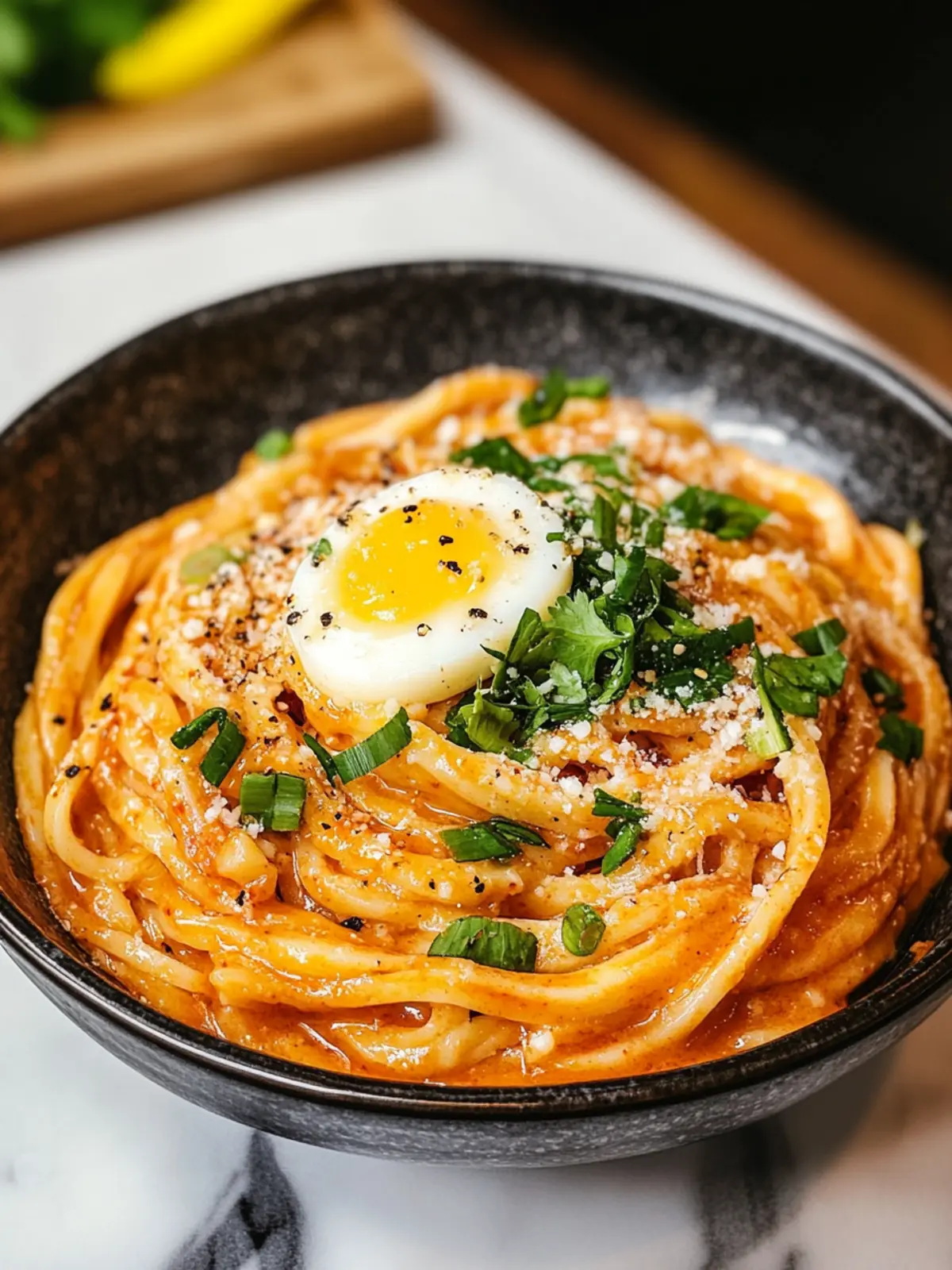
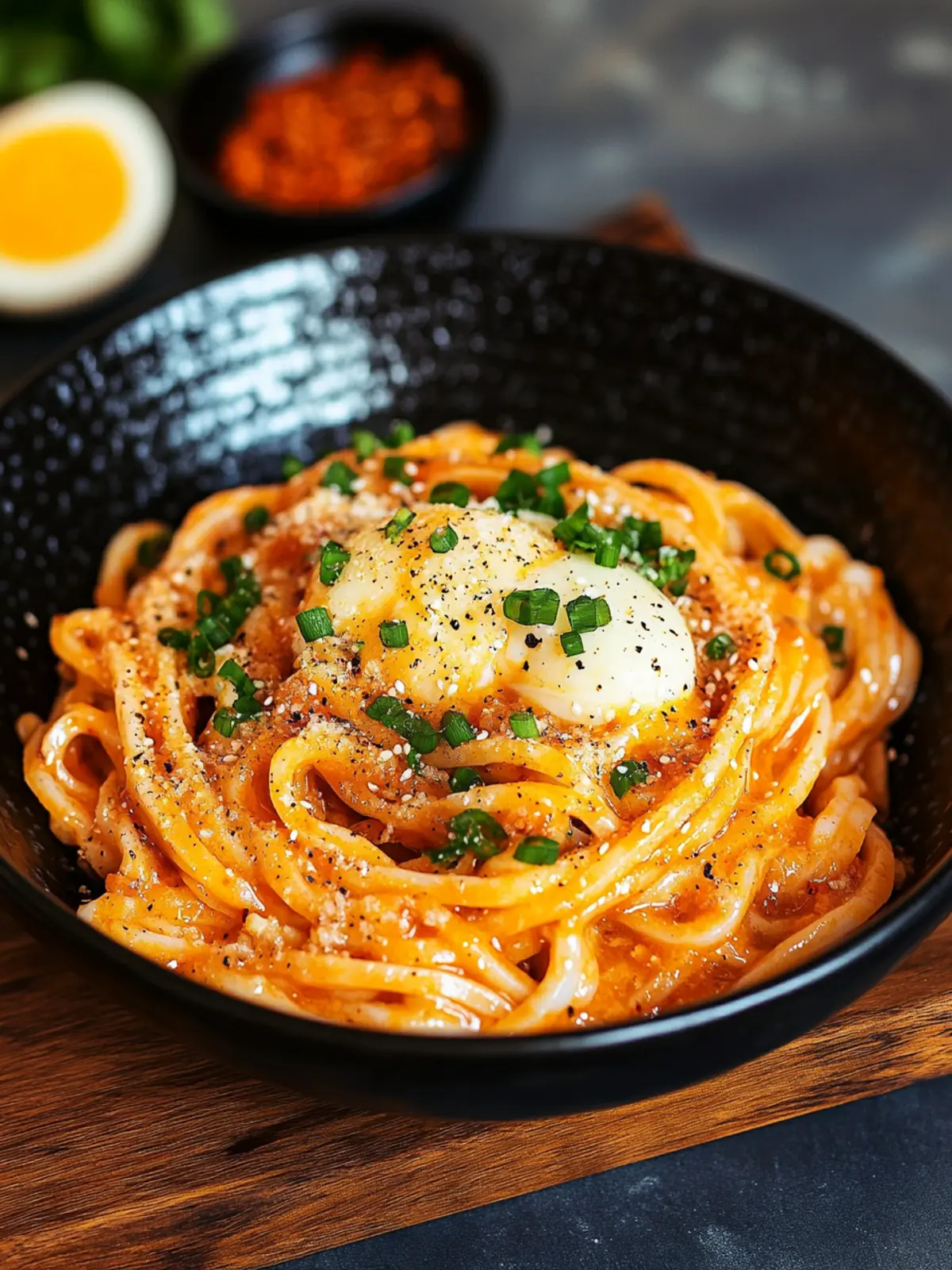
Serve and Garnish: Transfer your delicious noodles to a serving bowl. Top with grated parmesan cheese, a sprinkle of chopped green onion, and, if desired, an egg yolk for an extra decadent touch. Enjoy your meal hot!
Optional: Serve with sesame seeds for an added crunch!
Exact quantities are listed in the recipe card below.
Make Ahead Options
These creamy gochujang udon noodles are an excellent choice for meal prep, saving you time on busy weeknights! You can prepare the sauce up to 3 days in advance; simply sauté the garlic and shallots, then mix in the gochujang, cream, and reserved noodle water. Allow the sauce to cool before transferring it to an airtight container and refrigerating. For the noodles, you can cook and cool them, storing them separately in the fridge for up to 2 days. When you’re ready to serve, just reheat the sauce over medium heat, toss in the noodles until warmed through, add your garnishes, and enjoy a comforting meal that tastes just as delightful as when freshly made!
Expert Tips for Gochujang Udon Noodles
-
Don’t Overcook Noodles: Ensure you follow the package instructions for boiling the udon noodles. Overcooking can make them mushy, so keep an eye on them!
-
Adjust Spice Levels: If you prefer a milder dish, start with less gochujang and gradually add more until you reach your desired spice level in your gochujang udon noodles.
-
Balance the Sauce: Taste the sauce before adding the noodles. If it’s too spicy, a splash of extra cream can mellow out the heat beautifully.
-
Use Fresh Ingredients: Fresh garlic and shallots elevate the flavor significantly. Avoid using pre-minced varieties for the best taste in your creamy gochujang udon noodles.
-
Experiment with Toppings: Don’t shy away from personalizing your dish! Add protein like grilled chicken or tofu and colorful veggies for added nutrition and flavor.
What to Serve with Gochujang Udon Noodles?
Looking to create a fabulous meal around these decadent noodles? Enhance your dining experience with these delightful pairings.
-
Sesame Spinach Salad: A light salad with fresh spinach, sesame seeds, and a citrus dressing cuts beautifully through the richness of the noodles.
-
Teriyaki Chicken Skewers: The sweet-savory flavor of teriyaki-infused chicken complements the spicy kick of the udon while adding a satisfying protein option.
-
Crispy Tempura Vegetables: The crunch of tempura-battered veggies contrasts with the creamy noodles, adding a textural balance that invites everyone to dig in.
-
Miso Soup: This warm and comforting soup acts as a perfect starter, offering a delicate umami flavor that pairs beautifully with the gochujang heat.
-
Kimchi: The tangy and spicy notes of fermented kimchi add an exciting burst of flavor to your meal, enhancing the overall experience of the udon.
-
Chilled Green Tea: Serve a refreshing glass of chilled green tea to cleanse the palate amidst the creamy sauce and spicy finish of the noodles.
-
Fruit Sorbet: For dessert, a light and fruity sorbet will provide a refreshing contrast to the savory meal, leaving everyone with a sweet and satisfying end note.
Variations & Substitutions for Gochujang Udon Noodles
Customize your creamy gochujang udon noodles with these fun twists and substitutions to suit your taste and dietary preferences!
-
Vegan: Substitute the butter with olive oil and replace heavy cream with coconut cream for a rich, dairy-free version.
-
Spicy Kick: Add fresh sliced chili peppers or extra gochugaru for an intensified heat that spice lovers will adore.
-
Protein Boost: Stir in cooked chicken, shrimp, or tofu to turn this dish into a hearty meal that satisfies everyone’s hunger.
-
Vegetable Medley: Toss in your favorite sautéed or steamed vegetables—like bok choy or bell peppers—for added texture, color, and nutrients.
-
Noodle Alternative: Swap udon for soba, ramen, or even zucchini noodles to mix up the flavor and texture experience.
-
Nutty Touch: Drizzle with toasted sesame oil before serving to add a toasty, nutty flavor that enhances the dish beautifully.
-
Cream Cheese Twist: For a uniquely creamy experience, mix in a couple of tablespoons of cream cheese along with the heavy cream for extra richness.
-
Gluten-Free Option: Use gluten-free noodles made from rice or konjac to enjoy this dish without gluten concerns.
How to Store and Freeze Gochujang Udon Noodles
-
Room Temperature: It’s best to avoid leaving cooked gochujang udon noodles at room temperature for more than 2 hours to prevent bacterial growth.
-
Fridge: Store any leftover creamy gochujang udon noodles in an airtight container in the refrigerator for up to 3 days. Reheat gently on the stove or in the microwave.
-
Freezer: For longer storage, freeze the noodles (without any toppings) in a freezer-safe container for up to 2 months. Thaw in the fridge overnight before reheating.
-
Reheating: To maintain creaminess when reheating, add a splash of water or extra cream while warming them up, ensuring your gochujang udon noodles stay delectable.
Creamy Gochujang Udon Noodles Recipe FAQs
How do I choose the best frozen udon noodles?
When selecting frozen udon noodles, look for brands that use high-quality wheat and have a smooth texture. Check the package for any signs of freezer burn or dark spots, which indicate that the noodles may not be as fresh. I often opt for those that are vacuum-sealed for the best quality.
What’s the best way to store leftover creamy gochujang udon noodles?
Absolutely! Leftover creamy gochujang udon noodles can be stored in an airtight container in the fridge for up to 3 days. To maintain their texture, I recommend reheating them gently on the stove or in the microwave, adding a splash of water or cream to help keep the sauce creamy.
Can I freeze creamy gochujang udon noodles?
Definitely! To freeze, allow the cooked noodles to cool completely first. Transfer them to a freezer-safe container, leaving some space for expansion, and store for up to 2 months. When you’re ready to enjoy them, thaw them overnight in the fridge, then reheat gently while adding a bit of water or cream to restore creaminess.
What should I do if my sauce is too spicy?
If your creamy gochujang sauce turns out spicier than you’d like, don’t worry—there’s a simple fix! You can balance the heat by stirring in a little more heavy cream, which will mellow out the spice. If you’re still finding it too intense, consider adding a teaspoon of sugar or honey to counteract the heat and enhance the flavors.
Are there any dietary considerations for making gochujang udon noodles?
Very much! For those keeping an eye on allergies, remember that gochujang often contains gluten and soy. If you’re cooking for someone with special dietary needs, look for gluten-free gochujang or substitute it with a mild chili paste. Additionally, you can make the dish dairy-free by using coconut cream instead of heavy cream, and leaving out the parmesan cheese.
Is it safe to leave cooked gochujang udon noodles at room temperature?
It’s best to follow food safety guidelines and avoid leaving any cooked noodles out at room temperature for more than 2 hours. This helps prevent bacterial growth and keeps your meal safe to enjoy. If they do sit out too long, it’s best to err on the side of caution and discard them.
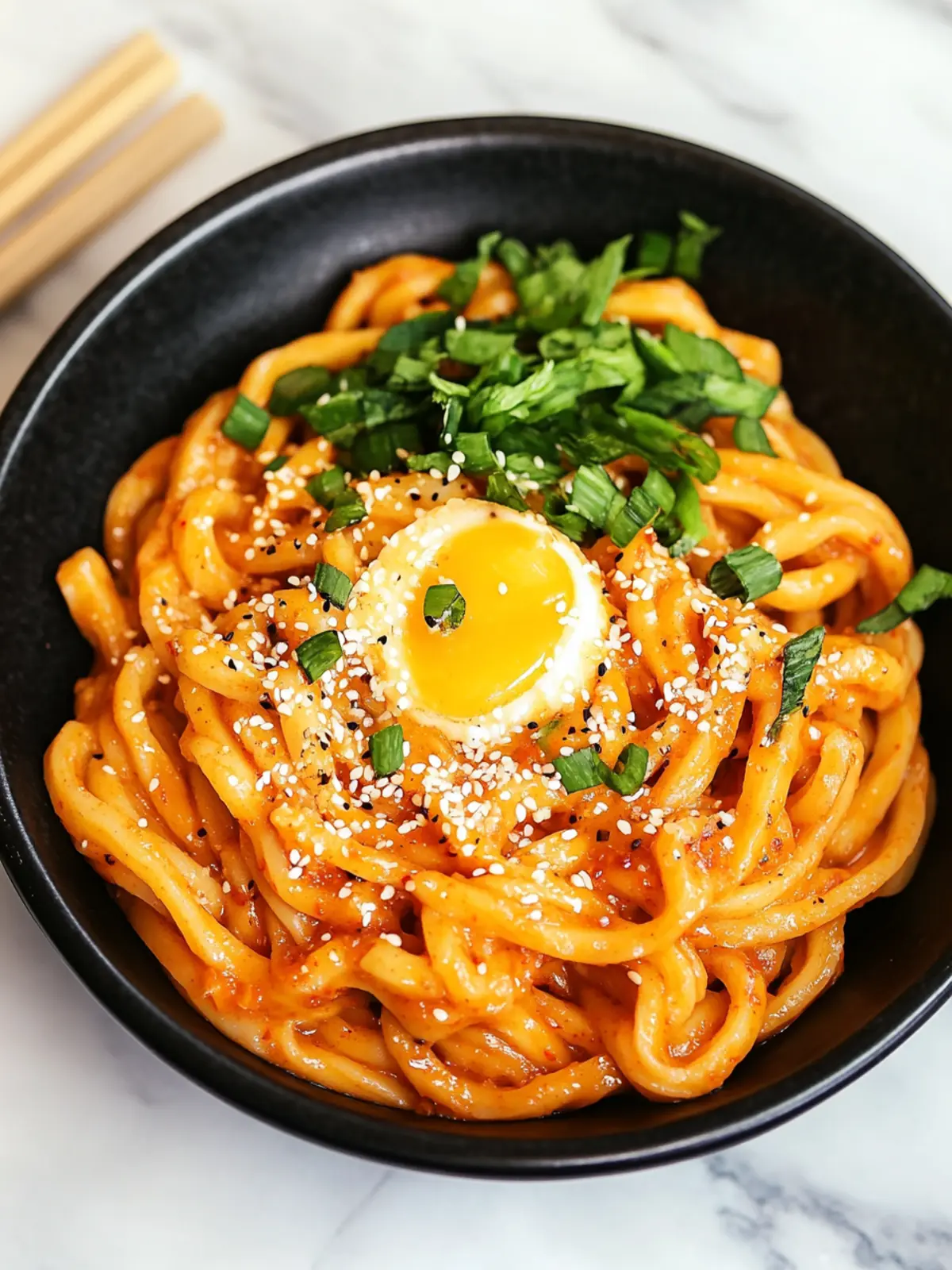
Creamy Gochujang Udon Noodles for a Cozy Night In
Ingredients
Equipment
Method
- Bring a pot of water to a rolling boil and cook your frozen udon noodles according to package instructions. Once done, save 1/2 cup of the noodle water, drain, and rinse the noodles with cold water. Set them aside.
- In a large pan, melt the butter over medium heat. Add the minced garlic and chopped shallots. Sauté until fragrant and soft, about 3-4 minutes, then mix in the gochujang and cook for another 30 seconds until aromatic.
- Gradually pour in the heavy cream and reserved noodle water, stirring in the soy sauce and gochugaru. Allow the sauce to simmer for about 3-5 minutes until it thickens slightly, stirring occasionally.
- Add the cooked udon noodles to the pan. Gently toss them in the creamy gochujang sauce until they are fully coated. Allow them to heat through for a minute.
- Transfer your delicious noodles to a serving bowl. Top with grated parmesan cheese, a sprinkle of chopped green onion, and, if desired, an egg yolk for an extra decadent touch. Enjoy your meal hot!