
On a chilly evening, the allure of a warm, hearty Korean Soft Tofu Stew pulls you into the kitchen like a cozy blanket. The moment I lift the lid on my pot, the aroma of garlic and spicy gochugaru fills the air, instantly cheering me up. This comforting dish, known as Sundubu Jjigae, is not just a soup; it’s a hug in a bowl, brimming with silky tofu, rich broth, and vibrant kimchi.
I first discovered this gem while exploring the depths of Korean cuisine, drawn in by its vibrant colors and flavors. It quickly became a comforting staple—a perfect antidote to fast food fatigue. With just a handful of ingredients and a tiny bit of prep, you can whip up this bold stew in under 30 minutes.
Whether you’re savoring it solo or sharing it at a table filled with loved ones, this stew is indulgent yet simple, offering a versatile dish that easily adapts to your dietary preferences. So, let’s dive into the warmth of this magical bowl together!
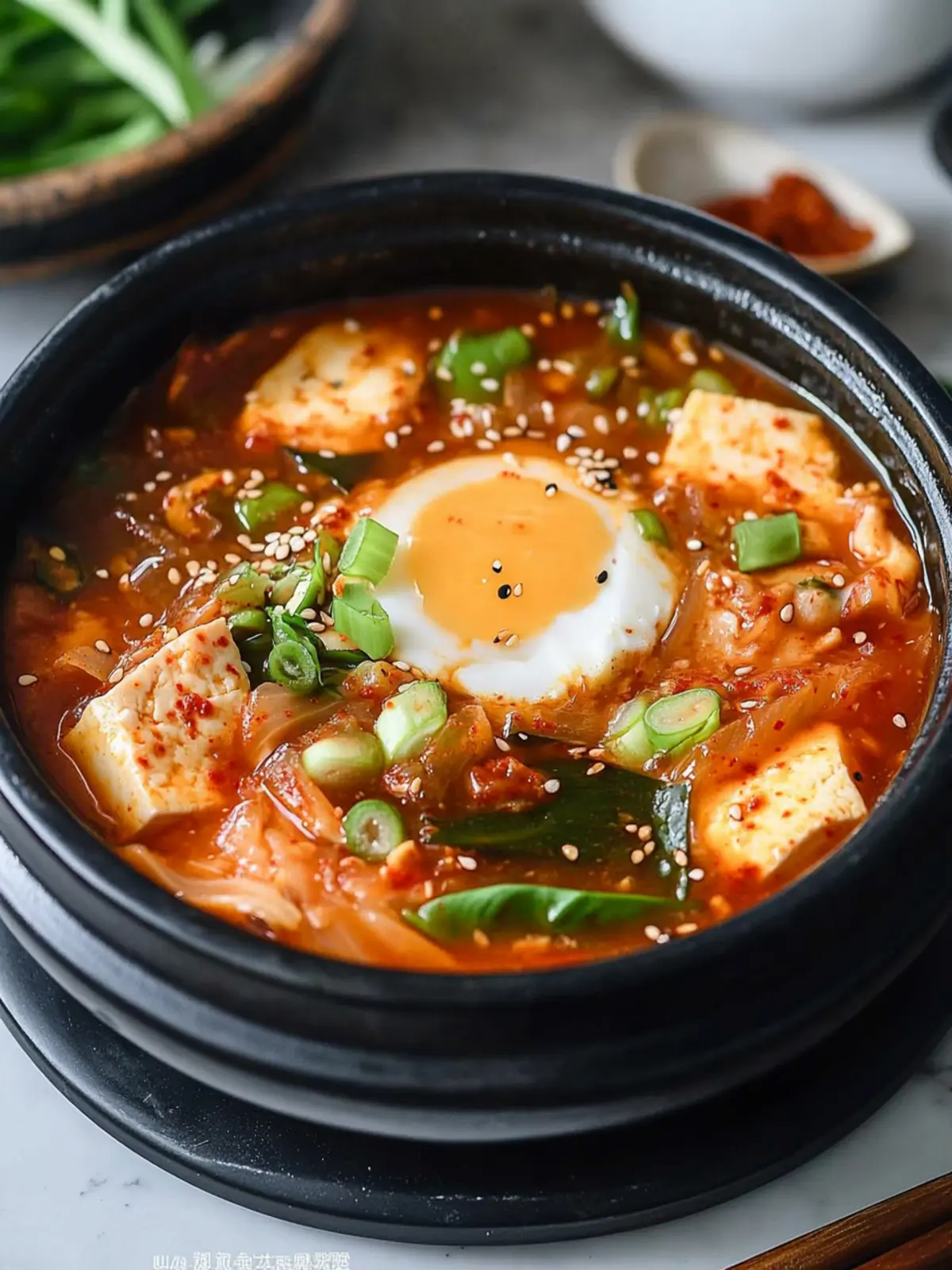
Why is Korean Soft Tofu Stew irresistible?
Comforting warmth: This dish wraps you in a cozy embrace with its rich flavors and hearty ingredients.
Quick and easy: With just 30 minutes from start to finish, it’s perfect for busy weeknights.
Flexible options: Customize the stew by adding your favorite vegetables or proteins for a personal touch.
A taste of tradition: Experience authentic Korean flavors that transport you across the globe with every bite.
Crowd-pleaser: Perfect for sharing around the table, it’s a dish that unites and delights everyone, young and old.
Korean Soft Tofu Stew Ingredients
Discover the delightful components that make up this heartwarming dish.
For the Broth
• Anchovy stock – adds umami depth, but low-sodium chicken stock or dashi can also work well.
• Kimchi juice – use this to infuse extra flavor; it’s a fantastic addition to the stew.
For the Main Ingredients
• Silken tofu – provides a creamy texture that melts in your mouth, perfect for Korean Soft Tofu Stew.
• Pork belly strips – gives richness and flavor; you can substitute with beef or mushrooms for a vegetarian version.
• Kimchi – brings zest and spiciness, making your stew vibrant and hearty.
For the Aromatics
• Onion – sweetens the broth; sautéing brings out its full flavor.
• Garlic cloves – enhances the overall aroma and adds a savory kick.
For the Seasonings
• Regular soy sauce – infuses saltiness and umami; opt for low-sodium versions if you’re watching your sodium intake.
• Fish sauce – deepens the broth’s flavor, but you can skip it for a vegetarian approach.
• Sesame oil – adds a rich, nutty aroma that elevates the dish.
• Sugar – balances the spice with a hint of sweetness.
• Gochugaru – Korean chili flakes that provide both color and heat.
For the Garnish
• Green onion – freshly chopped, it adds a hint of freshness and crunch to your stew.
For Serving
• Cooked short grain rice – the perfect companion to soak up all the delicious broth.
With just a handful of these ingredients, you’re well on your way to crafting a steaming pot of joy!
How to Make Korean Soft Tofu Stew
-
Heat the pot: Begin by heating a small pot or traditional Korean earthenware clay pot over medium heat. Once it’s hot, toss in the sliced pork belly and fry for about 2 minutes, allowing the fat to render out while cooking through. Sauté the minced garlic and onions with the pork until fragrant.
-
Mix the sauces: Add the regular soy sauce, fish sauce, sesame oil, sugar, and gochugaru to the pot. Stir everything together, cooking until the onions turn translucent, which should take a couple of minutes. Then, introduce the kimchi, allowing it to cook for 1-2 minutes until its juices are released.
-
Add the stock: Pour in the anchovy stock along with the kimchi juice. Cover the pot and bring the mixture to a boil over medium-high heat. Once boiling, reduce the heat to medium and let it simmer uncovered for 20 minutes, stirring occasionally.
-
Incorporate the tofu: Gently add the soft silken tofu into the center of the pot. Use a spoon to break it up into big chunks, ensuring it nests in the rich broth.
-
Add mushrooms: Place the enoki mushrooms beside the tofu in two bunches. Let everything simmer together for 1 minute until the mushrooms are slightly tender.
-
Crack the egg: Finally, crack a raw egg right into the center of the stew on top of the tofu. Allow it to cook until it reaches your desired doneness, then remove the pot from heat. Garnish with freshly chopped green onions and serve alongside a bowl of short grain rice.
Optional: Serve with additional kimchi on the side for extra flavor.
Exact quantities are listed in the recipe card below.
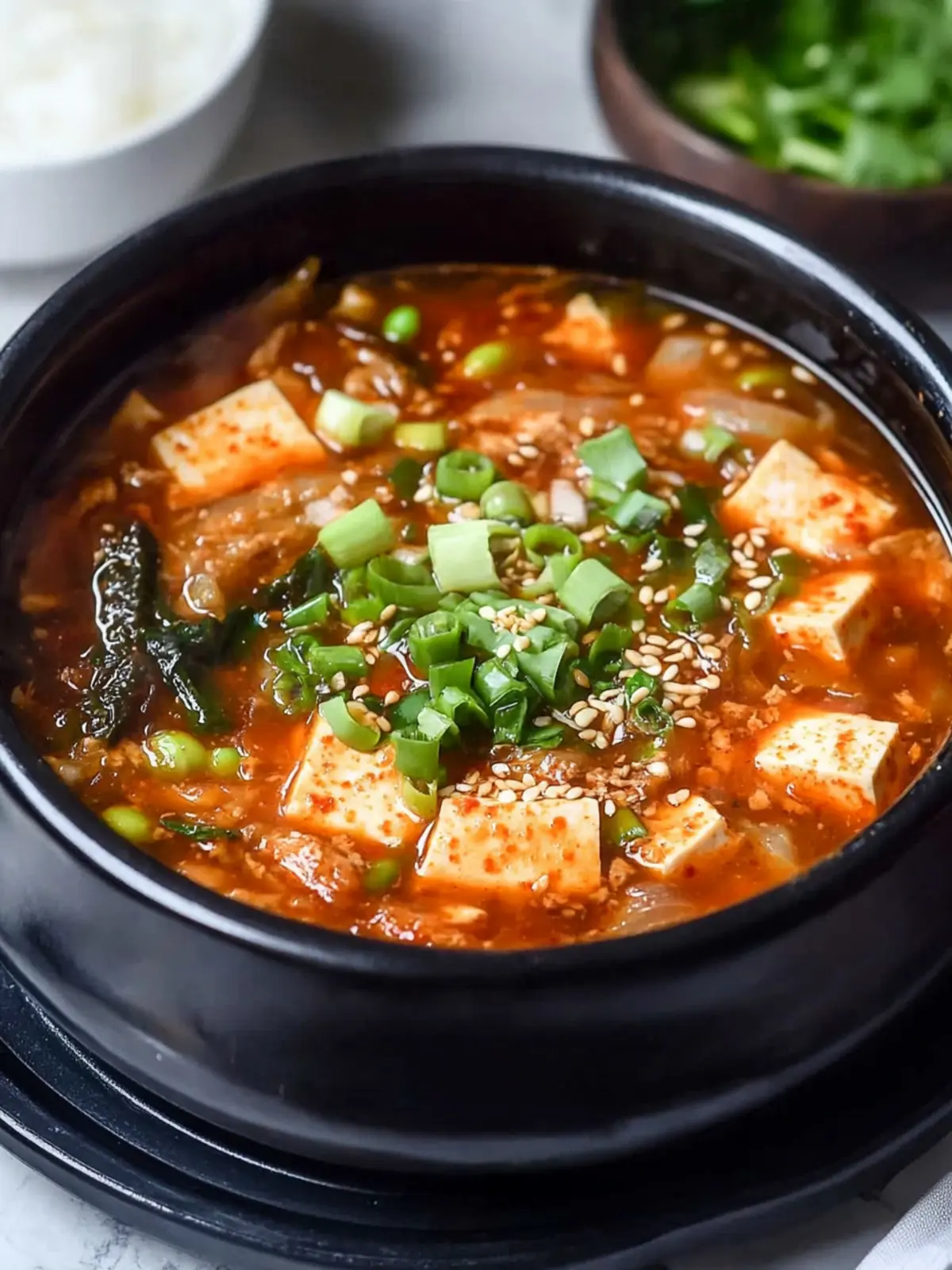
Korean Soft Tofu Stew Variations
Feel free to explore your creativity in the kitchen with these delightful twists!
-
Vegetarian: Substitute pork belly with mushrooms or tofu for a plant-based option that’s equally satisfying.
Want to maintain that warm, comforting essence? Use vegetable stock for a more robust flavor profile. -
Spicy Kick: Increase gochugaru or add fresh sliced chili peppers for an extra heat boost.
The combination of spicy and savory will elevate your keto experience and warm you from the inside out. -
Creamy Addition: Stir in a splash of coconut milk for a luscious, rich finish.
This will enhance the soup’s creaminess, making every spoonful a delightful experience. -
Seafood Twist: Incorporate shrimp or clams for a seafood-inspired delight.
Pair these fresh seafood elements with the other savory ingredients for a true taste of the sea. -
Double the Veggies: Add seasonal vegetables like zucchini or bok choy for added nutrition.
They’ll soak up all the delicious flavors while enhancing the stew’s vibrant texture and color. -
Soy-Free: For a soy-free version, use coconut aminos instead of soy sauce and fish sauce.
This simple swap keeps everything flavorful without compromising on the essence of the dish. -
Umami Boost: Mix in some dried shiitake mushrooms for deeper umami notes.
Soak them in warm water, then chop and add them to the broth for a beautifully layered flavor. -
Savory Miso: Blend a spoonful of miso paste into the broth for an extra depth of flavor.
This fermented addition will provide a warm umami hit that perfectly complements the other ingredients.
How to Store and Freeze Korean Soft Tofu Stew
Fridge: Store any leftover Korean Soft Tofu Stew in an airtight container for up to 3 days. Keep the rice separate to maintain its texture.
Freezer: For longer storage, freeze the stew without the tofu and rice for up to 2 months. When ready to enjoy, thaw it overnight in the fridge before reheating.
Reheating: Gently reheat the stew on the stove over low heat until warmed through. If frozen, bring it to a simmer before serving.
Airtight Storage: Make sure to use airtight containers to prevent freezer burn and maintain the stew’s delicious flavor!
Expert Tips for Korean Soft Tofu Stew
• Use fresh ingredients: Fresh kimchi and quality tofu make a world of difference; opt for homemade kimchi if possible for the best flavor.
• Adjust the heat: If you prefer a milder stew, reduce the gochugaru or choose a less spicy kimchi to keep it flavorful without overwhelming heat.
• Simmer time: Allow the stew to simmer uncovered for the full 20 minutes to develop rich flavors; don’t rush this step!
• Perfect egg: For a creamier texture, crack the egg gently and let it sit for slightly longer, allowing it to poach perfectly in the hot broth.
• Customization: Feel free to experiment with different proteins, like chicken or beef, or add in seasonal vegetables to make your Korean Soft Tofu Stew uniquely yours!
Make Ahead Options
These Korean Soft Tofu Stew ingredients are perfect for meal prep enthusiasts! You can chop the garlic, onions, and green onions, and slice the pork belly up to 24 hours in advance. Additionally, the kimchi can be portioned and stored in an airtight container in the refrigerator for up to 3 days. To maintain their freshness, be sure to refrigerate the prepared ingredients separately and only combine them when you’re ready to cook. When it’s time to enjoy your stew, follow the final cooking steps as outlined: sauté the pork and aromatics, add the stock and kimchi, then stir in the tofu and mushrooms. This way, you’ll have a deliciously comforting bowl with minimal effort after a busy day!
What to Serve with Korean Soft Tofu Stew?
The delightful warmth of this Korean Soft Tofu Stew creates the perfect backdrop for a well-rounded meal.
- Steamed Rice: Soft, fluffy rice is a classic companion, soaking up every bit of the rich broth, enhancing every bite.
- Korean Pancakes: The crispy texture of these savory pancakes offers a delightful contrast to the stew’s warmth and richness. A crispy bite enhances the overall experience, bringing in additional flavors.
- Kimchi: A side of vibrant kimchi adds crunch and a punch of flavor, elevating your meal with its spicy tang.
- Pickled Vegetables: The acidity and crunch of pickled radish or cucumber provide a refreshing balance to the stew’s hearty texture.
- Scallion Salad: A light, zesty salad with scallions and a tangy dressing brightens the meal, cutting through the stew’s richness.
- Soju or Makgeolli: An ice-cold glass of soju or a sweet, slightly fizzy makgeolli offers a wonderful complement to the spice and depth of the stew.
- Sesame Spinach Side: A simple sesame spinach side dish adds a burst of color and a nutritious crunch, pairing perfectly with the dish’s intensity.
Exploring these pairings will create a memorable dining experience that keeps you coming back for more!
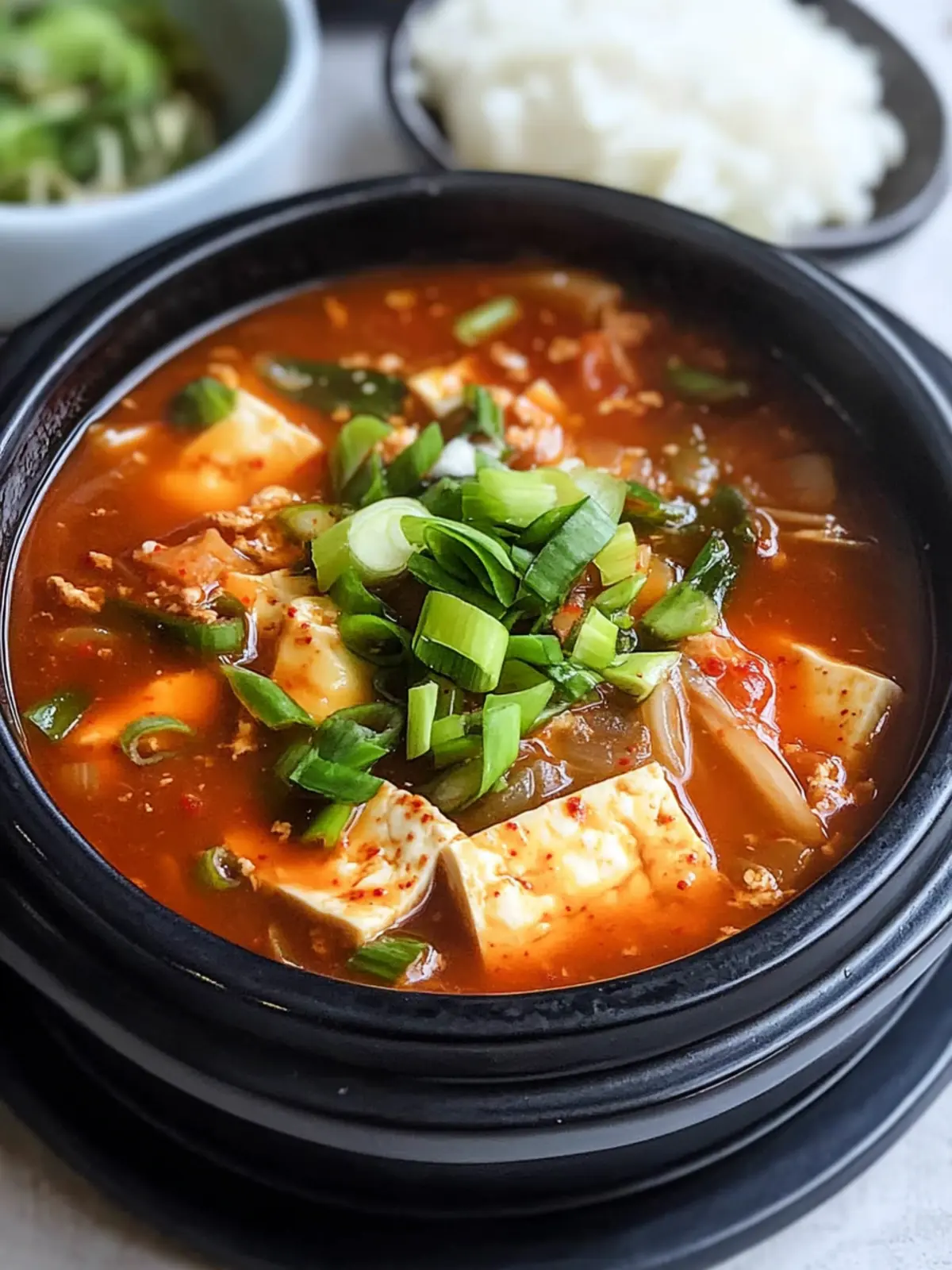
Korean Soft Tofu Stew Recipe FAQs
What type of stock is best for Korean Soft Tofu Stew?
Absolutely! I recommend using anchovy stock for its rich umami flavor, but low-sodium chicken stock or dashi are excellent alternatives if you prefer a lighter broth. Always choose a stock that aligns with your flavor preferences!
How should I store leftovers?
To keep your Korean Soft Tofu Stew fresh, store any leftovers in an airtight container in the refrigerator for up to 3 days. It’s best to keep the rice separate to maintain its texture, as it can get mushy if mixed with the stew.
Can I freeze Korean Soft Tofu Stew?
Yes! For freezing, I suggest removing the tofu and rice before freezing the stew. Transfer it to an airtight container and freeze for up to 2 months. When you’re ready to enjoy it, thaw in the fridge overnight and reheat gently on the stove.
What if my stew is too spicy?
Very! If your Korean Soft Tofu Stew turns out too spicy, you can balance the heat by adding a dollop of sour cream or yogurt to your bowl. Alternatively, adding more broth can also tone down the spiciness without losing flavor.
Is this stew safe for my pets?
Unfortunately, you should avoid giving this stew to pets. The combination of garlic, onion, and various sauces can be harmful to them. Stick to giving them treats formulated for pets to ensure their safety!
Do I need to use silken tofu?
While silken tofu is ideal for the creamy texture, you can use firm tofu as a substitute. Just remember to cube it for even cooking, as firm tofu maintains its shape better in the stew. Just make sure to allow the stew to simmer a bit longer so the flavors meld!
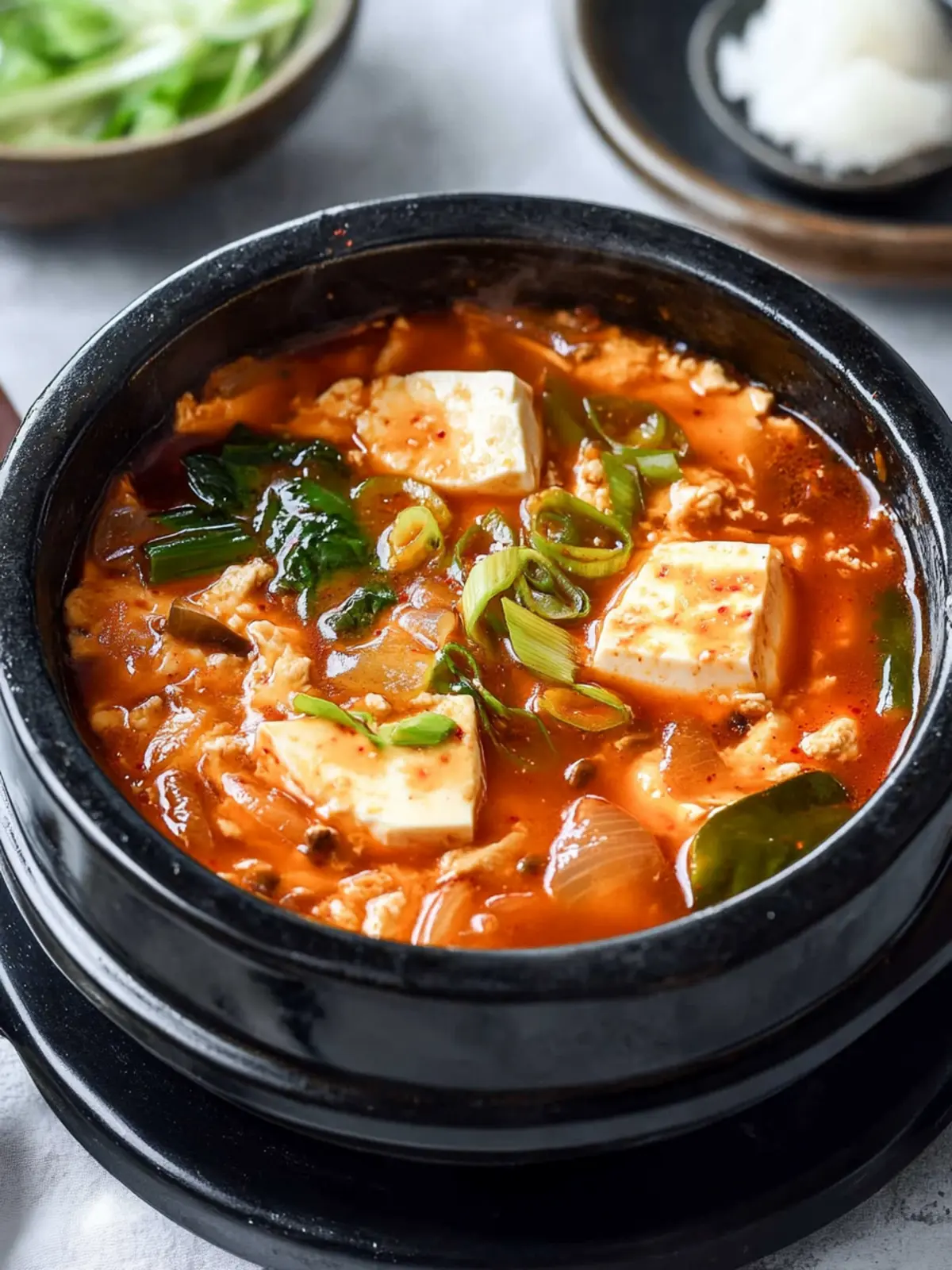
Savor Every Spoonful of Korean Soft Tofu Stew Bliss
Ingredients
Equipment
Method
- Begin by heating a small pot over medium heat. Add sliced pork belly and fry for about 2 minutes. Sauté minced garlic and onions until fragrant.
- Add regular soy sauce, fish sauce, sesame oil, sugar, and gochugaru to the pot. Cook until onions are translucent, then introduce kimchi and cook for 1-2 minutes.
- Pour in the anchovy stock and kimchi juice. Cover and bring to a boil, then reduce heat and simmer uncovered for 20 minutes.
- Gently add the silken tofu into the pot, breaking it up into large chunks.
- Place enoki mushrooms beside the tofu in two bunches. Simmer for an additional 1 minute.
- Crack a raw egg into the center of the stew on top of the tofu. Cook until desired doneness, then remove from heat. Garnish with green onions.
- Serve alongside a bowl of short grain rice, optionally with additional kimchi on the side.