
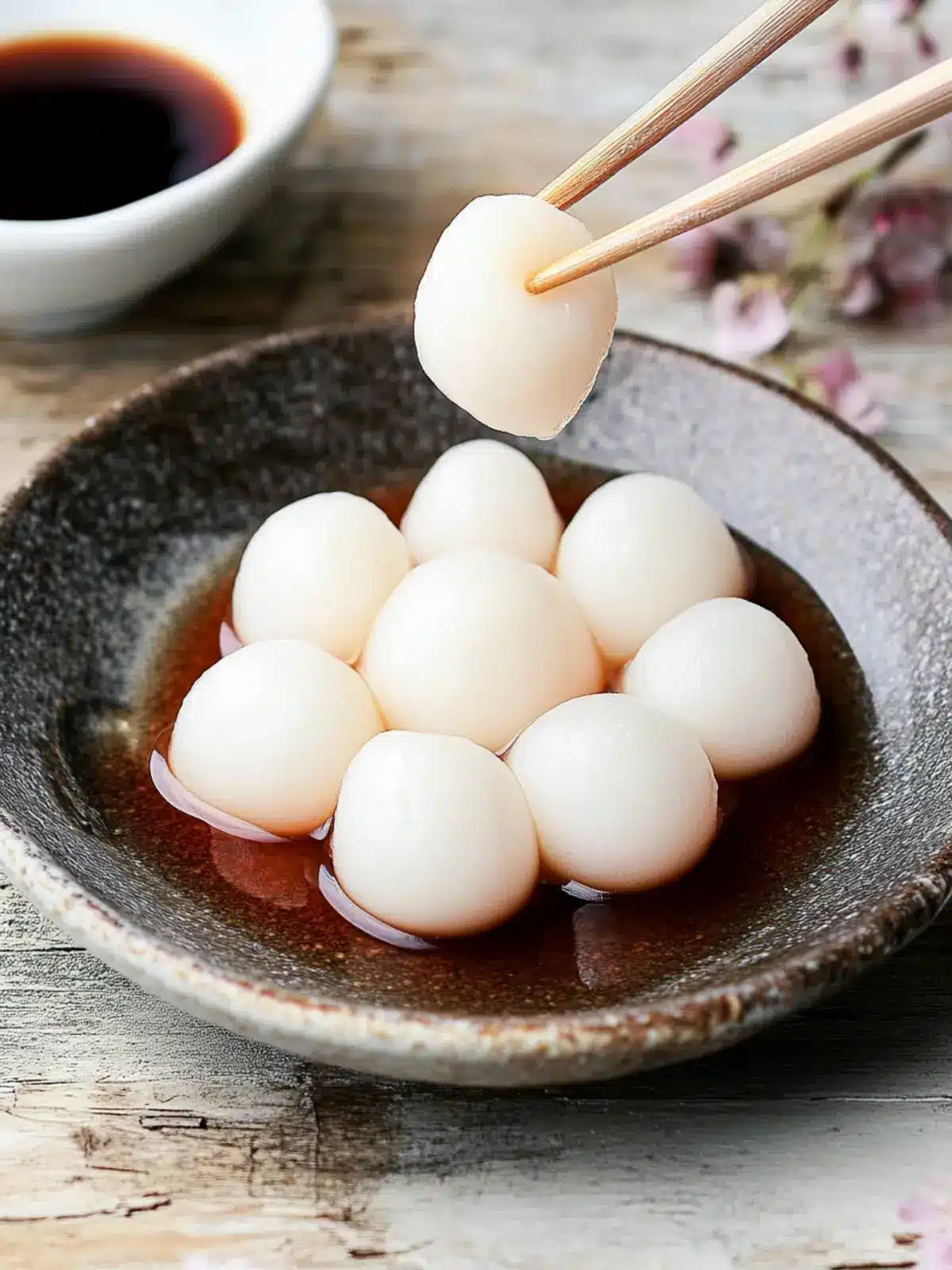
The first time I tried Shiratama Dango, I was captivated by its delightful chewiness and simplicity. Picture this: a cozy evening, and I find myself craving something both comforting and nostalgic. As I prepared these little rice dumplings, the air filled with the gentle sweetness of the dark brown sugar syrup that would soon drench them, creating a perfect harmony of flavors.
This Japanese treat is as versatile as it is satisfying—whether you choose to enjoy it plain, drizzled with syrup, or coated in roasted soybean powder, each bite is a celebration. In just 15 minutes, you can transform a handful of pantry ingredients into a warm, delectable dessert that will impress friends and family alike.
Join me as I walk you through the steps to create this traditional treat, bringing a taste of Japan to your home kitchen!

Why is Shiratama Dango a must-try?
Unique Texture: The chewy, delightful texture of Shiratama Dango sets it apart, making each bite a perfect blend of sweet and satisfying.
Quick to Make: With just 15 minutes of prep and cook time, you can whip up this tasty treat faster than any takeout!
Versatile Toppings: Dress it up with dark brown sugar syrup or roasted soybean powder for a personalized twist on this classic Japanese dessert.
Cultural Experience: Enjoying Shiratama Dango is like taking a delicious trip to Japan—your friends will be impressed by its authenticity.
Crowd-Pleaser: From family members to guests, this treat’s charming allure will be a hit at gatherings. Don’t forget to check out my guide on exploring Japanese sweets for more delightful inspirations!
Shiratama Dango Ingredients
For the Dough
- Glutinous rice flour (shiratamako) – 100 g; this is the heart of the dango, giving it that unique chewy texture.
- Water – 90 ml (approx); adjust as needed to form a smooth dough.
- Glutinous rice flour (mochiko) – 90 g; using this alongside shiratamako adds depth to your dango’s texture.
- Potato starch (katakuriko) or tapioca starch – 10 g; this helps keep the dango from becoming too sticky.
- Water – 80 ml (approx); just like before, add gradually to achieve the right consistency.
For Serving
- Dark brown sugar syrup (kuromitsu) (optional) – enhances the sweetness and adds a glossy finish to your shiratama dango.
- Roasted soybean powder (kinako) (optional) – provides a nutty flavor that beautifully complements the sweetness of the dango.
How to Make Shiratama Dango
-
Measure 100 g of glutinous rice flour (shiratamako) and whisk it in a bowl. Measure out 90 ml of water and pour half into the bowl, mixing it well until combined.
-
Combine in another bowl 90 g of mochiko and 10 g of potato starch (katakuriko). Measure 80 ml of water and add half to this mixture, whisking until smooth and well-blended.
-
Stir both mixtures with a spatula, adding the remaining water gradually to each until a soft dough forms. Knead the dough gently between each addition until it’s smooth and pliable.
-
Shape the dough by cutting it in half and rolling each half into cylinders. Then, cut each cylinder into 10 equal pieces, rolling them into balls with a slight dent in the center for a traditional look.
-
Arrange the shaped balls on a sheet of baking parchment to prevent sticking and ensure they’re easy to work with once boiled.
-
Boil a pot of water over medium heat, and when it’s bubbling, gently place the shiratama dango into the pot. Use chopsticks to nudge them, allowing them to float freely—this should take about 3 minutes.
-
Set a timer for 1 minute once they float to the top. Meanwhile, prepare a bowl filled with ice-cold water to cool the dango after boiling.
-
Transfer the cooked shiratama dango using a mesh spoon into the cold water, letting them cool for 5-10 minutes to enhance their texture and stop the cooking process.
-
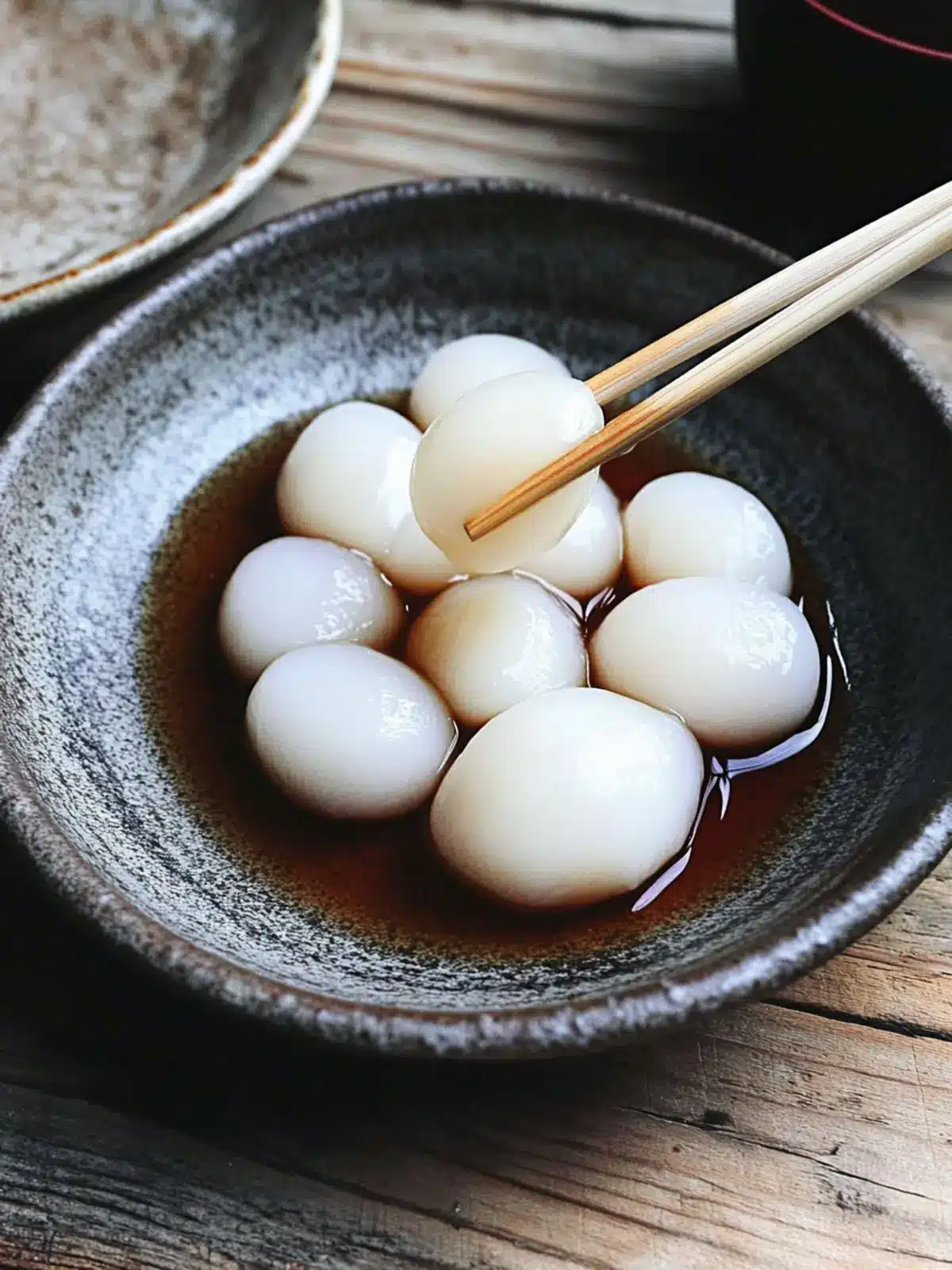
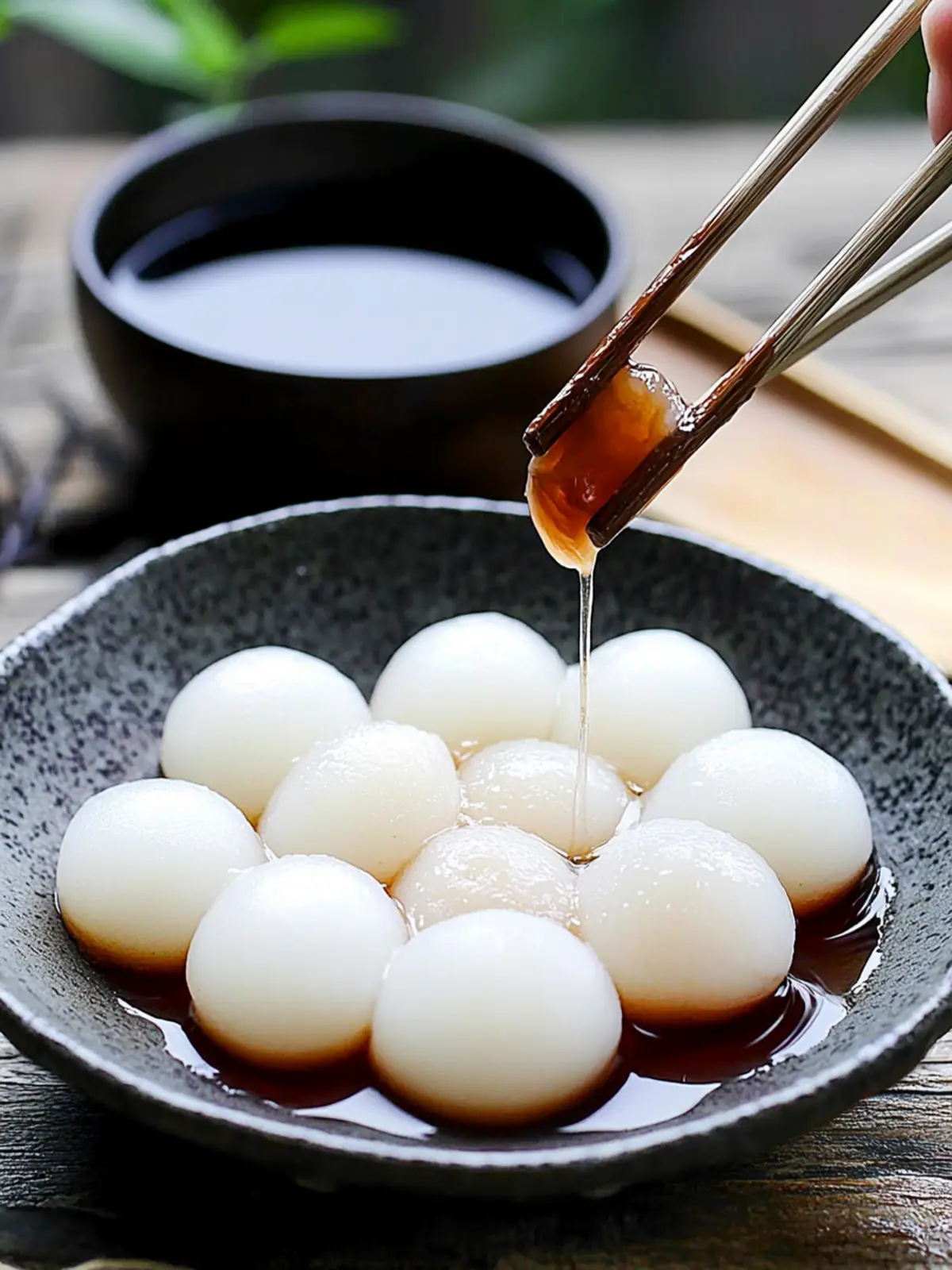
Serve the dango by draining the water and topping them with dark brown sugar syrup (kuromitsu) and roasted soybean powder (kinako) to taste for that delightful finish.
Optional: Drizzle a bit of extra syrup on top for an indulgent touch!
Exact quantities are listed in the recipe card below.
Make Ahead Options
Shiratama Dango is perfect for meal prep enthusiasts looking to add a delightful treat to their busy weeknights! You can prepare the dough up to 24 hours in advance, wrapping it tightly in plastic wrap and refrigerating it to maintain its texture. Additionally, you can shape the dango balls and store them on parchment paper in an airtight container for up to 3 days. When you’re ready to serve, simply boil the prepared shiratama dango according to the instructions, ensuring they float to confirm they’re cooked through. This way, you’ll enjoy the same delightful flavors of freshly made dango, all while saving valuable time during your week!
How to Store and Freeze Shiratama Dango
Room Temperature: Serve fresh Shiratama Dango immediately after preparation for the best texture and taste; however, it can be kept at room temperature for up to 2 hours.
Fridge: If you need to store leftover dango, place them in an airtight container lined with parchment paper. They’ll stay fresh in the fridge for up to 3 days.
Freezer: For longer storage, freeze the dango in an airtight container with parchment between layers. They can last for up to 2 months; simply thaw and reheat before serving.
Reheating: To reheat, steam the dango for 5-7 minutes or microwave briefly until warmed through. Enjoy the delightful texture once again!
Expert Tips for Shiratama Dango
- Achieve the Right Texture: Ensure the dough is pliable yet not too sticky—add water gradually. A smooth, slightly tacky dough is ideal for perfect shiratama dango.
- Prevent Sticking: Place your shaped dango on baking parchment to keep them from sticking together. This step saves you from frustration later on!
- Boiling Technique: Gently nudge the dango with chopsticks while boiling to prevent them from clumping, ensuring they float evenly for the best texture.
- Timing is Key: Keep an eye on the timer when boiling—this keeps the dango chewy without overcooking, which can make them tough.
- Chilling Matters: After boiling, quickly transferring dango to ice water is crucial. It stops the cooking process, giving that classic chewy bite you desire.
- Customize Toppings: Don’t hesitate to play around with different toppings like fruit or sweet red bean paste; this adds a twist to the traditional shiratama dango experience!
Shiratama Dango Variations
Feel free to play around with the ingredients and flavors to make this treat uniquely yours!
-
Gluten-Free: Swap glutinous rice flour with a gluten-free alternative like sweet rice flour; it’s just as delightful!
-
Sweetened Variations: Add 1-2 tablespoons of granulated sugar to the dough for a hint of sweetness. This simple adjustment makes each bite even more heavenly.
-
Fruit-Infused: Breathe new life into your dango by adding puree from fruits like strawberries or mango to the dough. It creates a delightful twist and vibrant color!
-
Matcha Magic: Incorporate 1-2 teaspoons of matcha powder into the dough for a lovely green tea flavor. The earthy notes perfectly complement the sweetness.
-
Coconut Creamy: Replace some of the water with coconut milk for a tropical vibe. This addition adds richness and a gentle coconut flavor to your dango.
-
Nutty Delight: Fold in some finely ground nuts (like almonds or hazelnuts) to the dough for added texture and flavor. It brings a lovely crunch to the chewiness of your dango.
-
Spicy Kick: Mix in a pinch of chili powder or cayenne pepper for those who enjoy a little heat in their sweets. This surprising twist will tantalize adventurous taste buds.
-
Syrup Variations: Try different syrups like maple or agave for a unique sweetness. Each syrup offers its distinct flavor profile, enhancing the dango in new and exciting ways.
What to Serve with Shiratama Dango?
Create a delightful Asian-inspired feast that tantalizes your taste buds and satisfies your cravings.
- Matcha Tea: This earthy drink beautifully complements the sweetness of shiratama dango, providing a lovely balance to your palate.
- Fruit Salad: A fresh mix of seasonal fruits like mango and strawberries adds a bright, juicy contrast, enhancing your dessert experience.
- Red Bean Paste: Smooth and sweet, red bean paste can be spread over the dango for an irresistible fusion of flavors that delights with every bite.
- Mochi Ice Cream: This adds an extra layer of fun and sweetness, creating a delightful contrast to the chewy dango texture.
- Coconut Milk: A drizzle of rich coconut milk gives a tropical twist, seriously elevating your shiratama dango and making it feel like a special treat.
- Sweet Soy Sauce: For a touch of umami, lightly drizzle this sauce over your dango to create a unique savory-sweet delight that surprises the senses.
- Chilled Sake: Enjoy a refreshing glass of chilled sake as it enhances the entire meal, inviting warmth and comfort that echoes the flavors of your dango.
- Green Tea Ice Cream: Serve this alongside for a refreshing, creamy contrast that harmonizes beautifully with the dango’s delightful texture.
- Sesame Balls: These offer a crunchy exterior with a sweet filling, providing a lovely textural contrast to the soft, chewy dango.
- Coconut Sticky Rice: Serve it warm to create a cozy, comforting side that melds beautifully with the sweetness of the shiratama dango.
Shiratama Dango Recipe FAQs
What flour should I use for Shiratama Dango?
Absolutely! The primary flour for Shiratama Dango is glutinous rice flour, specifically shiratamako. This flour gives the dango its unique chewy texture. You can also use mochiko, which is another type of glutinous rice flour; combining both can enhance the overall mouthfeel.
How should I store leftover Shiratama Dango?
To store any leftover shiratama dango, place them in an airtight container lined with parchment paper. They will stay fresh in the fridge for up to 3 days. If you want to prolong their shelf life, you can freeze them, but ensure they are stored with parchment between layers to prevent sticking.
Can I freeze Shiratama Dango? How?
Yes, you can freeze Shiratama Dango! First, allow them to cool completely. Then, arrange the dango in a single layer on a baking sheet and freeze until solid. Once frozen, transfer them to an airtight container with parchment paper between layers and store for up to 2 months. To enjoy, simply thaw and steam for about 5-7 minutes or microwave briefly until warmed through.
What should I do if my dango is too sticky?
Very! If you find the dough is too sticky while making your shiratama dango, it could be due to extra water. Gradually add more glutinous rice flour until you achieve a smooth, pliable consistency. Knead it well to incorporate the flour fully, which should alleviate the stickiness.
Are there any dietary considerations for Shiratama Dango?
The main ingredients in shiratama dango are gluten-free, making them suitable for those with gluten sensitivities. However, always check for allergies related to rice flour or any toppings you might add like dark brown sugar syrup or kinako, which are made from soybeans. If you’re offering it to pets, avoid sweeteners and syrups as they can be harmful to animals.
Deliciously Easy Shiratama Dango for Sweet Treat Lovers
Ingredients
Equipment
Method
- Measure 100 g of glutinous rice flour (shiratamako) and whisk it in a bowl. Measure out 90 ml of water and pour half into the bowl, mixing it well until combined.
- Combine in another bowl 90 g of mochiko and 10 g of potato starch (katakuriko). Measure 80 ml of water and add half to this mixture, whisking until smooth and well-blended.
- Stir both mixtures with a spatula, adding the remaining water gradually to each until a soft dough forms. Knead the dough gently between each addition until it’s smooth and pliable.
- Shape the dough by cutting it in half and rolling each half into cylinders. Then, cut each cylinder into 10 equal pieces, rolling them into balls with a slight dent in the center for a traditional look.
- Arrange the shaped balls on a sheet of baking parchment to prevent sticking and ensure they’re easy to work with once boiled.
- Boil a pot of water over medium heat, and when it’s bubbling, gently place the shiratama dango into the pot. Use chopsticks to nudge them, allowing them to float freely—this should take about 3 minutes.
- Set a timer for 1 minute once they float to the top. Meanwhile, prepare a bowl filled with ice-cold water to cool the dango after boiling.
- Transfer the cooked shiratama dango using a mesh spoon into the cold water, letting them cool for 5-10 minutes to enhance their texture and stop the cooking process.
- Serve the dango by draining the water and topping them with dark brown sugar syrup (kuromitsu) and roasted soybean powder (kinako) to taste for that delightful finish.
- Optional: Drizzle a bit of extra syrup on top for an indulgent touch!