
There’s something incredibly comforting about a steaming bowl of Galbitang, or Korean Short Rib Soup. The rich, savory aroma of simmering beef and fragrant garlic fills the kitchen, inviting everyone in the house to gather around the table. When my friends suggest a cozy night in, I often think back to the first time I discovered this dish at a local Korean restaurant; the depth of flavor was mesmerizing. Now, I can recreate that same magic right at home!
This soup is not just about convenience or a quick fix for dinner—it’s a celebration of community and warmth, perfect for sharing with loved ones. In about three and a half hours, you’ll transform simple ingredients into a dish that feels like a warm hug. Imagine tender short ribs floating alongside chewy glass noodles and seasoned radish, all swimming in a savory broth that speaks to the heart of Korean cuisine. With this accessible recipe, you’ll find it’s easier than ever to trade in fast food for something homemade and heartwarming, making it an ideal choice as the evenings get cooler. Let’s dive into making this soul-soothing bowl!

Why is Korean Short Rib Soup so beloved?
Comforting warmth: This hearty dish embraces you with every spoonful, making it perfect for chilly evenings.
Bold flavors: The umami-rich broth, infused with garlic and ginger, celebrates traditional Korean cuisine.
Hearty ingredients: Tender short ribs and chewy glass noodles create a satisfying meal that fills you up.
Family-friendly: It’s an excellent way to gather loved ones; everyone can enjoy the comforting goodness.
Easy to make: With a little prep time, you can have this delectable soup simmering while you relax—just like my favorite easy homemade meals.
Korean Short Rib Soup Ingredients
For the Soup Base
• Beef short ribs – Choose English-cut ribs for tender, flavorful meat that falls off the bone.
• Salt – Balance the flavors and enhance the richness of the broth.
• Garlic – Freshly minced garlic adds aromatic depth for that signature umami in Korean short rib soup.
• Ginger – Sliced fresh ginger complements the garlic beautifully, offering warmth and zest.
• Black pepper – Finely ground black pepper contributes an extra layer of flavor that rounds out the taste.
For the Vegetables
• Korean radish – Its slightly sweet and pungent flavor enriches the broth; you can substitute with Chinese white radish if needed.
• Scallions – Sliced into pieces, they provide a beautiful garnish and a mild onion flavor.
For the Noodles
• Glass noodles – These add a delightful chewy texture; feel free to adjust the amount to your preference.
For the Seasoning
• Soy sauce – Enhances the savory profile of the broth; low-sodium options can be used for a healthier version.
• Sesame oil – A splash elevates the flavor with its toasted richness and distinct aroma.
• Kochukaru chili powder (optional) – Sprinkle this on for a touch of heat and authenticity!
Dive into this delightful experience of making Korean Short Rib Soup, where every ingredient plays a vital role in crafting a heartwarming dish that your family and friends will adore!
How to Make Korean Short Rib Soup
-
Soak the Ribs: Begin by soaking the beef short ribs in a bowl of cold water for about 1 to 2 hours. Change the water a couple of times to ensure they’re clean and ready for cooking.
-
Make the Seasoned Radish: While the ribs soak, prepare the seasoned radish. In a bowl, mix the sliced Korean radish with soy sauce, sesame oil, minced garlic, fresh ginger, and black pepper. This will add vibrant flavor to your soup!
-
Boil the Ribs: Place the soaked ribs in a pot and cover them with fresh water. Bring it to a boil and let it simmer vigorously for 5 minutes to help extract any impurities.
-
Rinse the Ribs: Carefully remove the ribs from the pot and rinse them off in cold water. This helps to achieve a clear broth free from scum or oil.
-
Simmer the Ribs: In a large pot, put the cleaned ribs back in and cover them with 4 cups of fresh water. Bring to a boil again, then reduce the heat to a simmer and cook for 30 minutes, letting the flavors meld.
-
Add Seasoned Radish: Stir in the seasoned radish alongside 2 teaspoons of salt into the pot, and let it cook for an additional 10 minutes. This will infuse your broth with irresistible flavors!
-
Cook the Noodles: Add the glass noodles to the pot and let them cook for about 4 minutes until they soften and absorb the rich broth.
-
Add Scallions: Toss in the sliced scallions and cook for another minute, adding freshness and color to your delicious soup.
-
Serve: Ladle the soup into bowls and finish with a sprinkle of kochukaru chili powder, if desired, for an extra kick of flavor!
Optional: Garnish with a few extra scallion slices for an appealing presentation.
Exact quantities are listed in the recipe card below.
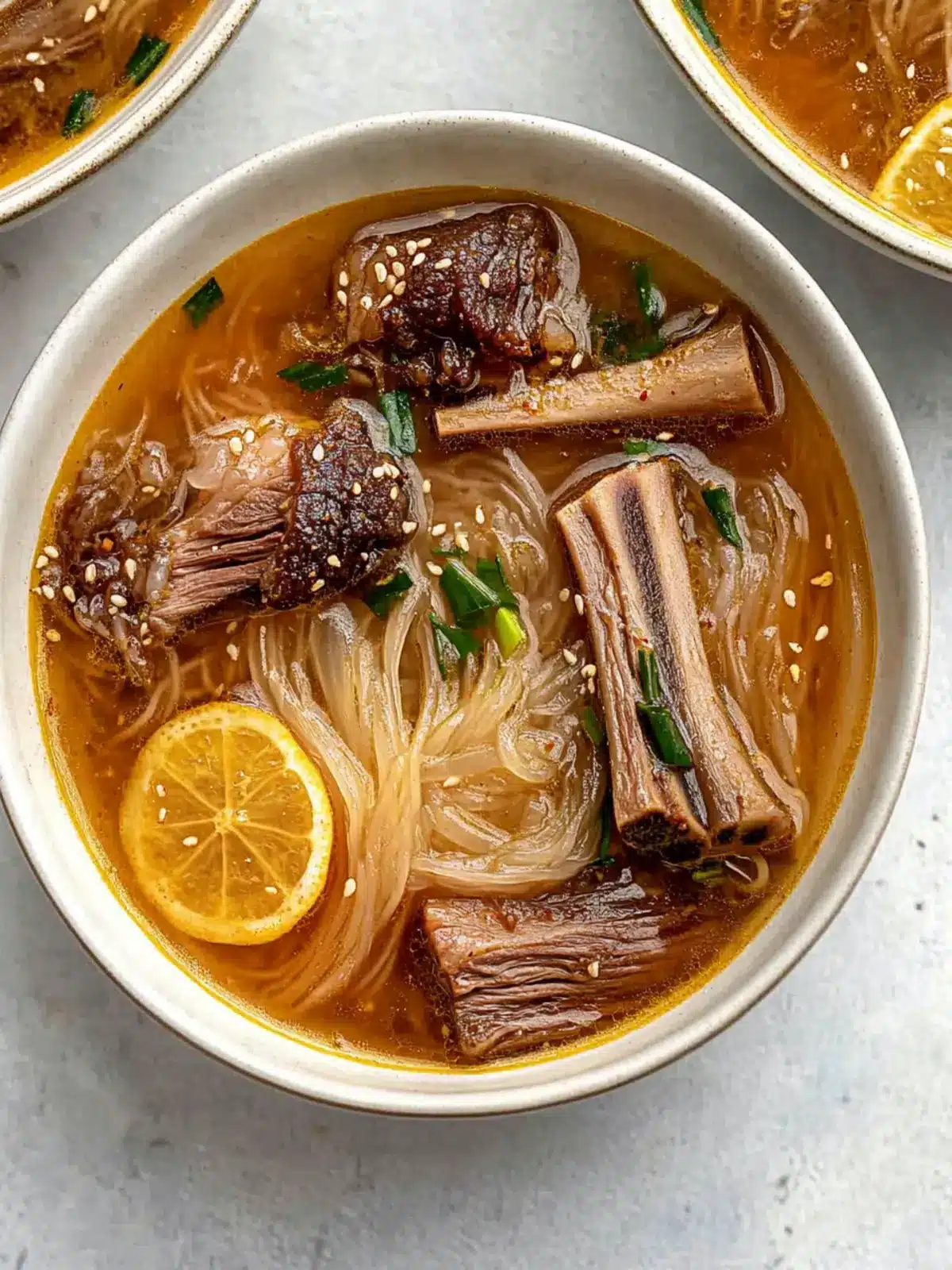
How to Store and Freeze Korean Short Rib Soup
Fridge: Store leftovers in an airtight container in the refrigerator for up to 3 days. Make sure the soup cools down to room temperature before sealing.
Freezer: For longer storage, freeze the soup in individual portions for up to 2 months. Leave some space in each container, as the soup will expand when frozen.
Reheating: Thaw in the refrigerator overnight for best results. Reheat gently on the stove or in the microwave until the soup is steaming hot, stirring occasionally.
Notes: The glass noodles may absorb some broth during storage, so you might want to cook fresh noodles when reheating, ensuring that your Korean short rib soup remains delicious!
What to Serve with Korean Short Rib Soup?
Enjoying a heartwarming bowl of this rich soup invites a full meal experience, creating wonderful opportunities for delightful pairings.
- Steamed Rice: This classic side absorbs the savory broth and complements the rich flavors of the soup, making every bite satisfying.
- Kimchi: The spicy, fermented cabbage adds a wonderful crunch and brightness that contrasts perfectly with the soup’s depth.
- Savory Pancakes: Crispy and slightly chewy, savory Korean pancakes provide a textural contrast that rounds out your meal. They are fun to share with family or friends.
- Pickled Vegetables: Refreshing and tangy pickled veggies cleanse the palate between spoonfuls, adding vibrant flavors to your experience.
- Crisp Salad: A simple salad with fresh greens and a light sesame dressing brightens up the meal, adding a nice crunch.
- Cold Soba Noodles: Serve chilled soba noodles dressed in soy sauce as a lighter side that complements the warmth of the soup.
- Fruity Soju Cocktails: A fruity twist on traditional soju breaks down the meal’s richness while keeping the Asian theme alive—perfect for a cozy gathering.
- Mochi Ice Cream: For dessert, this chewy yet creamy treat gently adds a sweet finish, making your meal feel complete and satisfying.
Expert Tips for Korean Short Rib Soup
-
Rib Selection: Choose English-cut short ribs for maximum tenderness. Other cuts may not yield the same melt-in-your-mouth experience.
-
Soaking Time: Soak the ribs thoroughly to remove impurities; this step is crucial for a clear broth. Changing the water frequently also helps.
-
Scrumptious Broth: Don’t skip rinsing the ribs after boiling. This simple step ensures a clean, clear broth by removing excess scum and fat.
-
Cooking Order: Add the seasoned radish and salt after the ribs have simmered for some time. This allows their flavors to meld beautifully into the broth.
-
Noodle Texture: Adjust the glass noodles to your liking. They can absorb broth flavors quickly, so keep an eye on them to avoid overcooking.
-
Spice it Up: If you’re after a tangy kick, add kochukaru chili powder as you serve! Don’t fear experimenting with heat to find your perfect flavor in this Korean short rib soup.
Make Ahead Options
These Korean Short Rib Soup components are perfect for meal prep enthusiasts! You can soak the beef short ribs and prepare the seasoned radish up to 24 hours in advance, allowing the flavors to meld beautifully. After soaking the ribs, chill them in the refrigerator, and store the seasoned radish in an airtight container. When you’re ready to serve, simply rinse the ribs and continue with your recipe starting from the boiling step. This method ensures your broth is just as rich and flavorful, saving you time on busy weeknights while delivering comforting results that taste freshly made. Enjoy that delightful homemade goodness with minimal effort!
Korean Short Rib Soup Variations
Feel free to get creative with this recipe—each twist will bring a new dimension to your comforting bowl!
- Dairy-Free: Substitute soy sauce with a gluten-free version to keep it dairy-free while still enjoying the rich flavors.
- Vegetable Boost: Add carrots and shiitake mushrooms for extra nutrients and delightful textures—these ingredients soak up the savory broth beautifully.
- Spicy Kick: Mix in extra kochukaru chili powder or sliced jalapeños for those who crave an added level of heat that invigorates every bite!
- Noodle Alternatives: Replace glass noodles with udon or soba noodles for a different texture that’ll surprise your taste buds.
- Herbal Freshness: Stir in a handful of chopped cilantro just before serving to introduce a fresh, aromatic lift that brightens the entire bowl.
- Umami Explosion: Incorporate a splash of fish sauce for an umami boost—it deepens the savory notes of your broth while keeping the dish true to its roots.
- Slow Cooker Option: Prepare this soup in a slow cooker by following the same instructions but allowing 6-8 hours on low for truly tender, melt-in-your-mouth ribs.
- Vegetarian Twist: Opt for mushrooms and tofu as a substitute for beef, creating a deliciously hearty vegetarian version that maintains the soul of the original dish.
Savoring each variant means discovering endless delicious possibilities right at home!
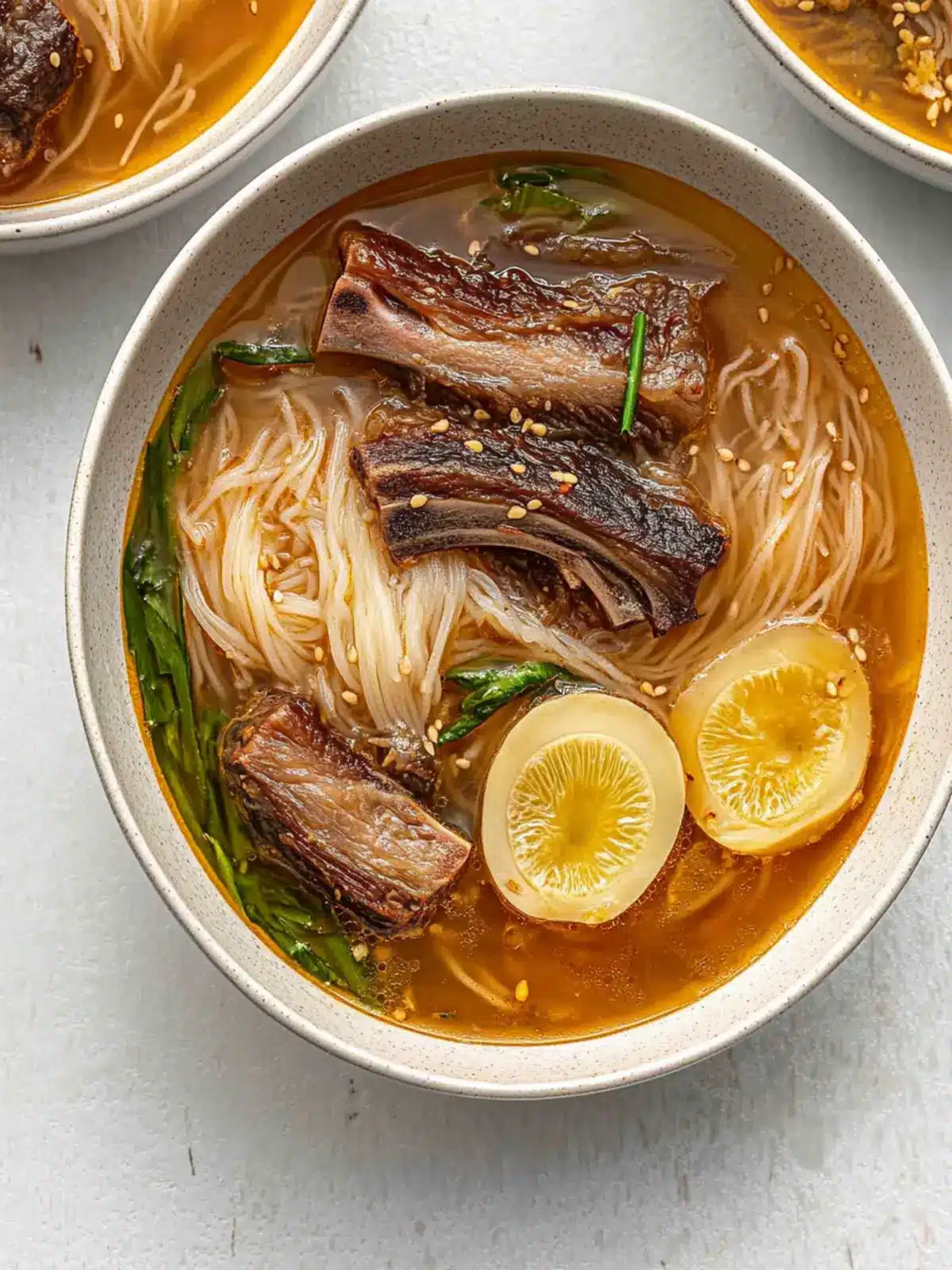
Korean Short Rib Soup Recipe FAQs
What kind of beef short ribs should I use for Korean short rib soup?
I recommend using English-cut short ribs for their tenderness and flavor. This cut allows the meat to become melt-in-your-mouth delicious as it simmers. Other cuts may not yield the same richness in the final dish.
How long can I store leftovers in the refrigerator?
You can store leftover Korean short rib soup in an airtight container in the fridge for up to 3 days. Just ensure the soup cools down to room temperature before sealing to prevent condensation.
Can I freeze Korean short rib soup?
Absolutely! You can freeze the soup in individual portions for up to 2 months. Make sure to leave some space in each container, as the soup will expand upon freezing. Allow it to cool completely before transferring to the freezer.
What should I do if the broth is too oily?
If your broth turns out too oily, you can skim the surface with a spoon after simmering. Additionally, cooling the soup in the fridge allows the fat to solidify, making it easy to remove before reheating.
Can I modify this recipe for dietary restrictions?
Sure! If you’re looking for a gluten-free option, use tamari instead of soy sauce. Additionally, if someone has seafood allergies, make sure any additional seasonings or garnishes are safe. Always taste your ingredients to ensure they align with your dietary needs!
How can I ensure the glass noodles stay perfect while storing?
The glass noodles tend to absorb broth if stored for too long. To keep them delightful, I recommend cooking fresh noodles when reheating. This way, your Korean short rib soup maintains its loved texture and flavor!
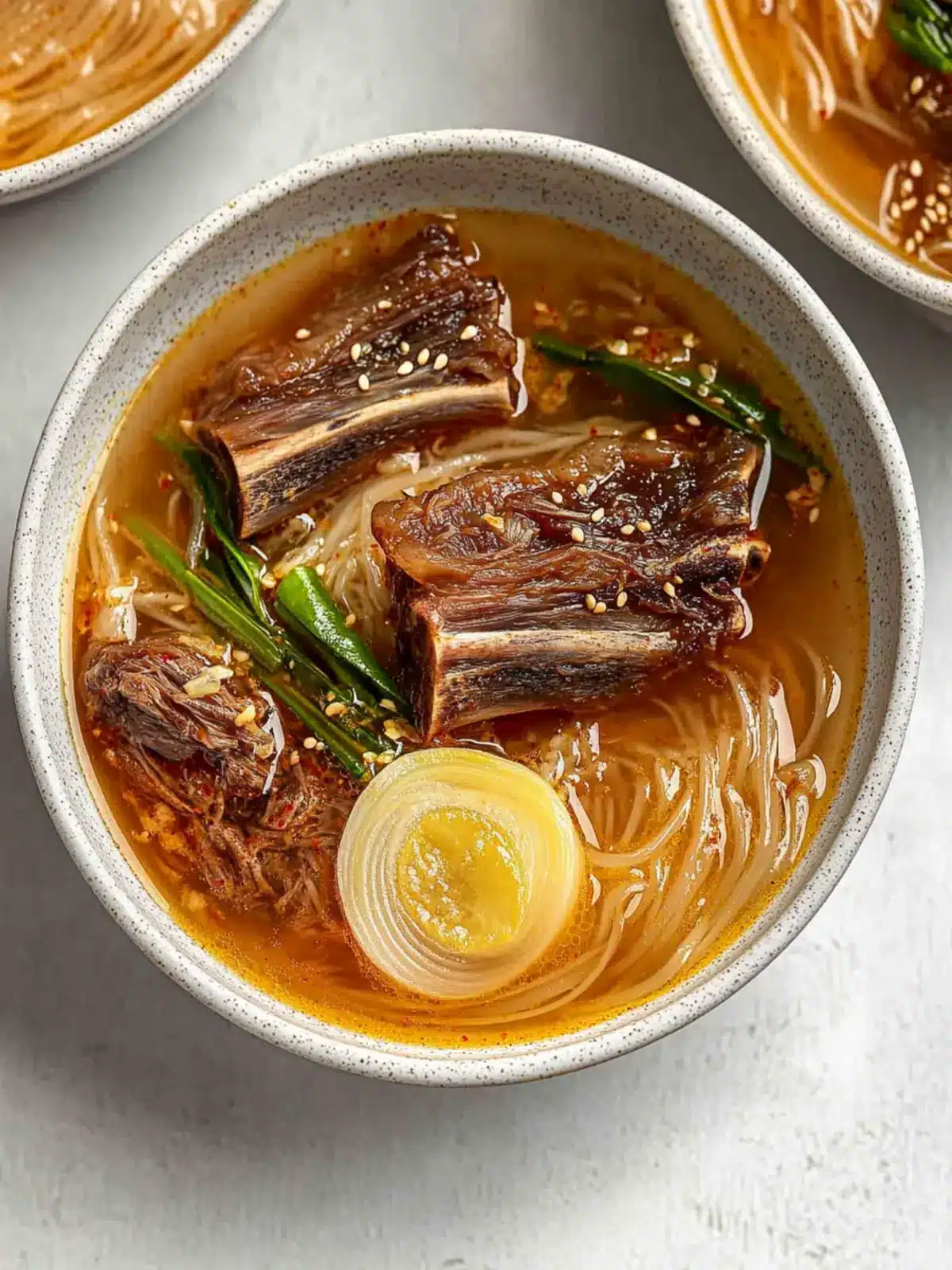
Savory Korean Short Rib Soup: A Comforting Bowl of Joy
Ingredients
Equipment
Method
- Soak the beef short ribs in a bowl of cold water for about 1 to 2 hours, changing the water a couple of times to ensure they’re clean and ready for cooking.
- In a bowl, mix the sliced Korean radish with soy sauce, sesame oil, minced garlic, fresh ginger, and black pepper to prepare the seasoned radish.
- Place the soaked ribs in a pot, cover with fresh water, bring to a boil, and let it simmer vigorously for 5 minutes.
- Carefully remove the ribs from the pot and rinse them off in cold water.
- In a large pot, put the cleaned ribs back in, cover with 4 cups of fresh water, bring to a boil again, then reduce to a simmer and cook for 30 minutes.
- Stir in the seasoned radish and 2 teaspoons of salt into the pot, cooking for an additional 10 minutes.
- Add the glass noodles to the pot, cooking for about 4 minutes until softened.
- Toss in the sliced scallions and cook for another minute.
- Ladle the soup into bowls and finish with a sprinkle of kochukaru chili powder, if desired, for an extra kick of flavor!