
The earthy scent of fermented cabbage fills my kitchen, a signal that something special is on the way: traditional kimchi, or ‘pogi kimchi’ as it’s lovingly called in Korean. Whenever I feel the mundane pull of fast food creeping in, I turn to this vibrant, tangy dish that not only brightens my meals but also connects me to a rich culinary tradition. This recipe is an unexpected delight; despite its reputation, making kimchi at home is far easier than you might think—and the flavors are well worth the effort!
Imagine transforming simple Napa cabbage and radishes into a festival of flavor, infused with garlic, ginger, and just the right amount of spice from gochugaru. Whether you’re a seasoned chef or a beginner looking for a new adventure, this homemade kimchi will elevate any dish. Join me in embracing this flavorful fermentation journey that promises both joy and a burst of health in every bite. Grab your ingredients, and let’s get started!

Why is Traditional Kimchi so beloved?
Full of flavor: This recipe bursts with rich flavors from garlic, ginger, and gochugaru, creating a taste that dances on your palate.
Health benefits galore: Packed with probiotics, this fermented dish promotes gut health, making it a nutritious choice for any meal.
Culinary adventure: Making kimchi at home is a fun, rewarding experience that allows you to explore Korean culinary traditions.
Versatile addition: Use it as a side dish, in salads, or even in sandwiches—kimchi is incredibly adaptable!
Crowd-pleaser: With its vibrant colors and bold taste, this traditional kimchi is sure to impress family and friends alike.
Time well spent: Though it requires a few hours for preparation, the payoff is delicious, homemade kimchi that’s truly worth the wait!
Traditional Kimchi Ingredients
• Unlock the flavors with these must-have components for your traditional kimchi!
For the Kimchi Base
- Napa cabbage – This large, leafy vegetable is the star of the dish, providing a crisp texture vibrantly soaked in flavor.
- Korean coarse sea salt – Essential for the salting process, it draws out moisture and enhances the cabbage’s natural taste.
- Water – Needed for soaking and creating the brine that helps develop richness in your kimchi.
For the Flavorful Seasoning
- Korean radish – Adds a crunchy and refreshing bite; be sure to slice it into matchsticks for the best texture.
- Korean pear (optional) – This sweet element adds a subtle depth, making your traditional kimchi even more delightful.
- Scallions – Their mild onion flavor complements the fermentation, brightening the overall taste of the dish.
- Dasima (dried kelp) (optional) – Adds umami to the broth, enriching the kimchi with a deeper flavor note.
- Glutinous rice flour – This helps create a paste that binds the seasoning, ensuring even distribution throughout the cabbage.
- Gochugaru – The secret ingredient for that iconic spicy kick; adjust the amount according to your heat preference.
- Saeujeot (salted and fermented shrimp) – Introduces a savory depth but can be omitted for a vegetarian option.
- Myulchiaekjeot (fish sauce) – Enhances savory flavor; like saeujeot, it’s not necessary if you prefer a plant-based version.
- Raw shrimps (optional) – Adds extra texture and flavor to the mix but is entirely optional.
- Minced garlic – A must-have for its aromatic and bold profile, elevating everything in every delectable mouthful.
- Grated ginger – Infuses a fresh spiciness that harmonizes beautifully with the other flavors.
- Water or dasima broth – Use for mixing in your seasoning paste, adding moisture to the kimchi without overpowering its flavors.
Incorporate these ingredients to create your own batch of traditional kimchi that is packed with love and flavor!
How to Make Traditional Kimchi
-
Slice the Cabbage: Cut the thick white part of the Napa cabbage in half lengthwise, then divide each half into quarters without completely severing the leaves. This will create the perfect shape for soaking!
-
Prepare Brine: Dissolve 1/2 cup of Korean coarse sea salt in 5 cups of water, creating a lovely brine for the cabbage. Bathe each cabbage quarter in this saltwater, then place them in another bowl for soaking.
-
Salt the Leaves: Generously sprinkle salt over each thick leaf of the cabbage quarters. Once done, pour any remaining brine over them and let them rest for 6-8 hours, rotating the bottom ones to the top every 2-3 hours for even salting.
-
Rinse Thoroughly: After salting, rinse the cabbages three times, ensuring you get rid of any excess salt between the leaves. Drain well, placing the cabbage cut-side down to remove excess moisture.
-
Make Dasima Broth: While the cabbage is soaking, boil a small piece of dasima in 1.5 cups of water for about 5 minutes to create a flavorful broth. Cool this broth before moving on.
-
Create Rice Paste: Mix glutinous rice flour with 1/2 cup of water or dasima broth and simmer it on low heat until thickened into a thin paste. Set it aside to cool.
-
Mix Seasonings: Prepare the garlic, ginger, and saeujeot (if using). In a bowl, combine all the seasoning ingredients with the cooled rice paste and about 1/2 cup of water (or dasima broth). Mix well until the gochugaru begins to dissolve.
-
Chop Vegetables: Slice the Korean radish and optional pear into matchsticks and place them in a large bowl. Cut the scallions diagonally and add them. Pour the seasoning mix over the vegetables and combine well, allowing it to sit for about 30 minutes to meld flavors.
-
Stuff the Cabbage: Remove the tough stem from each cabbage quarter, keeping enough to hold the leaves together. Take one quarter, place it in the vegetable mixture, and spread the seasoning mix over every leaf for maximum flavor!
-
Wrap the Cabbage: Fold the leaf portion over to the stem and wrap it securely with the outermost leaf. Set it cut side up in a jar or airtight container, pressing down gently to remove any air pockets. Repeat with the remaining portions.
-
Finalize Kimchi: If you have any extra seasoning, combine it with 1/2 cup of water (or dasima broth) and pour over the kimchi in the container. Seal it tightly and allow your creation to ferment at room temperature for a day or two before transferring it to the fridge.
Optional: Serve with a sprinkle of sesame seeds for a nutty touch!
Exact quantities are listed in the recipe card below.
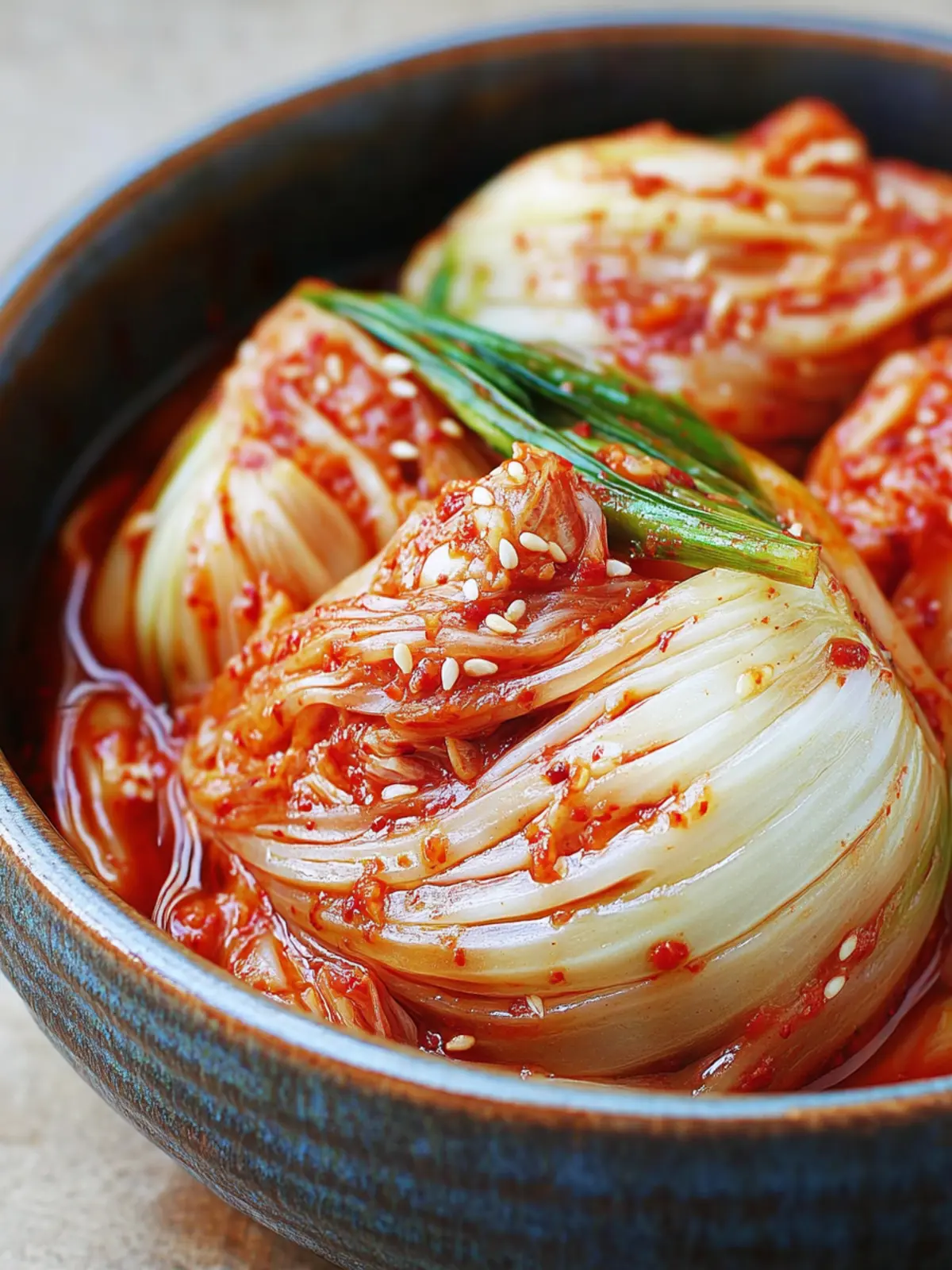
How to Store and Freeze Traditional Kimchi
Room Temperature: After making your traditional kimchi, let it ferment at room temperature for 1-2 days before transferring it to the fridge.
Fridge: Store your kimchi in an airtight container in the fridge, where it will typically last for up to 3 months while continuing to develop flavor.
Freezer: For longer storage, freeze your kimchi in a freezer-safe container for up to 6 months. Just be aware that the texture may change slightly.
Reheating: If using frozen kimchi, thaw it in the refrigerator overnight. To enjoy, simply add directly to your recipes without the need for reheating!
Traditional Kimchi Variations
Feel free to explore these delightful twists that can elevate your kimchi experience.
- Spicy Twist: Add extra cayenne pepper or more gochugaru to amp up the heat for an extra zing.
- Fruity Addition: Incorporate diced apples or mango instead of Korean pear for a lovely sweetness that contrasts the spice.
- Vegetarian Delight: Skip the shrimp and fish sauce entirely; substitute with soy sauce or tamari for a tasty vegan alternative.
- Crunchy Texture: Mix in shredded carrots or sliced cucumber for an additional crunch and a pop of color.
- Herbal Infusion: Throw in fresh herbs like cilantro or mint to provide a refreshing aromatic boost to your kimchi.
- Fermented Goodness: Experiment with adding other fermented ingredients, like miso or a spoonful of yogurt, to enhance the probiotic profile.
- Smoky Flavor: Use smoked paprika instead of or in addition to gochugaru for a unique depth and smokiness.
- Garlic Lovers: Increase the minced garlic for a stronger flavor, amplifying that beloved aromatic essence in every bite.
What to Serve with Traditional Kimchi?
Transform your meal into a culinary celebration with vibrant accompaniments that enhance every bite of your homemade kimchi.
-
Steamed White Rice: The perfect neutral base, steaming hot rice balances the spiciness of kimchi, offering a comforting meal.
-
Savory Korean Tofu Stew: Its rich and hearty flavors meld beautifully with the tangy kimchi, creating a warming, satisfying experience.
-
Grilled Meat: Juicy pork belly or tender beef bulgogi brings a smoky richness that pairs delightfully with the crunch of kimchi.
-
Kimchi Fried Rice: For a savory twist, stir-fry leftover rice with kimchi and add an egg; it’s a hearty dish bursting with flavor!
-
Sesame Spinach Salad: The nutty taste of sesame dressing complements the tanginess of kimchi while balancing textures and flavors deliciously.
-
Korean Pancakes (Pajeon): These crispy delights, filled with scallions and/or seafood provide a savory counterpoint to the spicy crunch of kimchi.
-
Simple Cucumber Salad: Refreshing and light, it cleanses the palate and adds a crisp contrast to the bold kimchi.
-
Ice-cold Korean Beer: The lightness of this brew is ideal for washing down the spicy flavors, enhancing the overall dining experience.
-
Traditional Korean Desserts: Sweet treats like mochi or red bean cakes can finish your meal on a delightful and contrasting note.
Expert Tips for Traditional Kimchi
Patience is key: Allowing your kimchi to ferment for the right amount of time develops its unique sourness. Taste it along the way to find your perfect balance!
Proper salting: Ensure even salting by rotating the cabbage every couple of hours. This prevents soggy leaves and ensures the cabbage preserves its crunch in your traditional kimchi.
Adjust spice levels: Start with less gochugaru if you’re unsure about heat levels. You can always add more after mixing the paste to suit your taste!
Mind your jars: Make sure your fermentation jar is airtight to keep microbes at bay but leave room for the kimchi to expand as it ferments.
Use fresh ingredients: Choosing high-quality, fresh vegetables and spices makes a world of difference in the flavor and longevity of your traditional kimchi.
Storage wisdom: Once refrigerated, kimchi can last for months! The flavors will continue to develop over time, each bite a delicious new discovery.
Make Ahead Options
Creating Traditional Kimchi ahead of time is a fantastic way to save time during busy weeknights! You can prepare the cabbage by salting it and letting it sit in the brine for up to 24 hours before moving on to the seasoning. After rinsing and mixing your spices and vegetables, simply store the seasoned mixture separately in the fridge for up to 3 days. To maintain the vibrant flavors and crisp texture, assemble the kimchi just before serving. When you’re ready to enjoy, stack the flavored cabbage in jars, allowing for fermentation at room temperature for 1-2 days before transferring to the fridge. This approach ensures that your Traditional Kimchi is just as delicious and full of flavor when you’re ready to dig in!
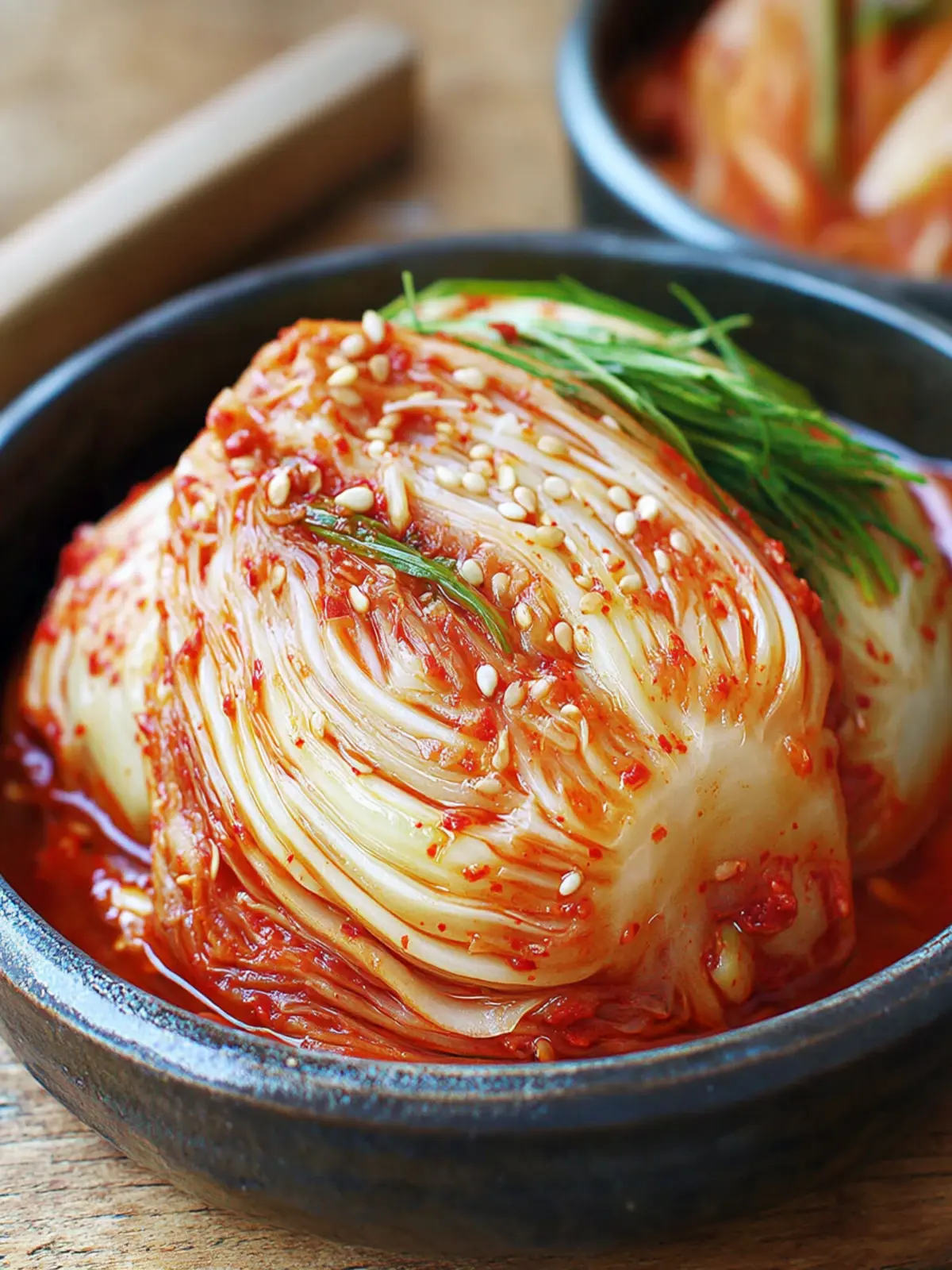
Traditional Kimchi Recipe FAQs
How do I select a ripe Napa cabbage?
When choosing a Napa cabbage, look for heads that are firm to the touch, with tightly packed leaves. Avoid any heads with yellow or wilting leaves and dark spots, as they indicate spoilage. A fresh cabbage should have a crisp texture and bright color, ensuring the best flavor for your traditional kimchi!
How long can I store traditional kimchi in the fridge?
Once your kimchi is in an airtight container and stored in the fridge, it can last for up to 3 months. Over time, it will continue to ferment and develop a stronger flavor, with each bite becoming a new delight. Always remember to check for any off smells or mold, and enjoy the evolving taste of your homemade kimchi!
Can I freeze traditional kimchi?
Absolutely! To freeze, transfer your kimchi into a freezer-safe container, leaving some space for expansion, as it may release some liquid during freezing. It can last for up to 6 months in the freezer. When ready to use, thaw it in the fridge overnight and add it directly to your recipes—no need to reheat!
What should I do if my kimchi turns out too salty?
If you find your kimchi is too salty, don’t fret! Rinse the leaves gently under cold water to remove some salt, then reassemble your kimchi with fresh vegetables or add extra water or broth to balance the flavors. Always taste as you go to prevent excess saltiness during the salting process!
Is traditional kimchi safe for pets?
Kimchi is not recommended for pets, especially due to the use of ingredients like garlic, which can be harmful to dogs and cats. If sharing the love of kimchi culture with your furry friends, it’s best to keep them in the loop with pet-friendly treats instead!
What if my kimchi doesn’t ferment properly?
Don’t worry if your kimchi doesn’t seem to ferment as expected! Make sure it’s stored in a warm environment, around 60-75°F (15-24°C), for the best fermentation results. If it still doesn’t develop any bubbles or sour flavor after 2-3 days, consider using a bit of leftover brine to kickstart the fermentation or check the freshness of your ingredients, as they can affect the process.
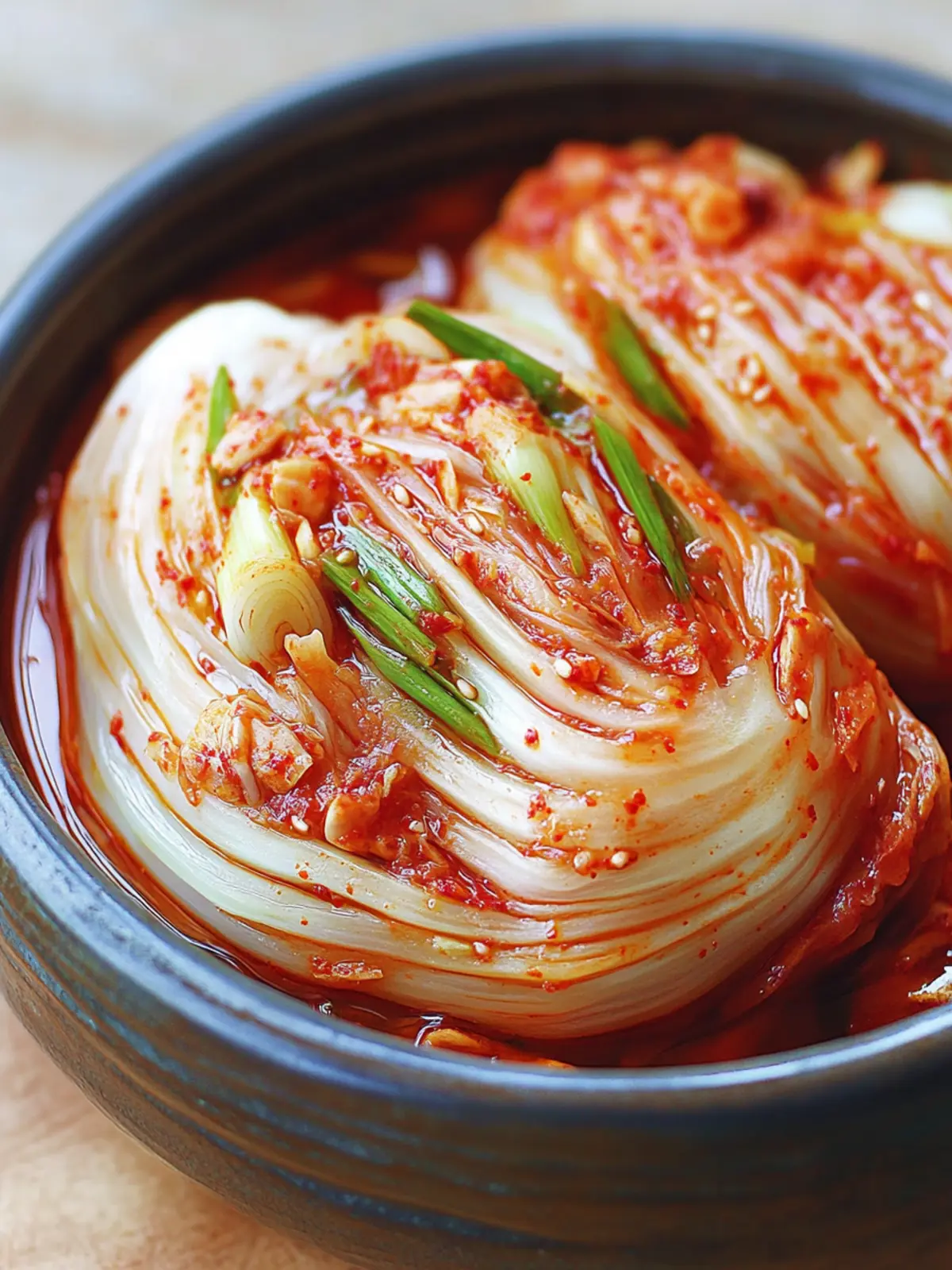
Ferment Your Love: Easy Traditional Kimchi Recipe
Ingredients
Equipment
Method
- Slice the thick white part of the Napa cabbage in half lengthwise, then divide each half into quarters without completely severing the leaves.
- Dissolve 1/2 cup of Korean coarse sea salt in 5 cups of water to create a brine for the cabbage.
- Generously sprinkle salt over each thick leaf of the cabbage quarters and let them rest for 6-8 hours, turning them every 2-3 hours.
- Rinse the cabbages three times to remove excess salt and drain well.
- While the cabbage is soaking, boil a small piece of dasima in 1.5 cups of water for about 5 minutes to create dasima broth.
- Mix glutinous rice flour with 1/2 cup of water or dasima broth and simmer until it thickens into a paste. Allow it to cool.
- Combine garlic, ginger, and saeujeot in a bowl with the cooled rice paste and about 1/2 cup of water until well mixed.
- Slice Korean radish and optional pear into matchsticks. Combine with scallions and pour seasoning mix over the vegetables. Mix well and let sit for 30 minutes.
- Remove the tough stem from each cabbage quarter and stuff them with the vegetable mixture, spreading the seasoning mix over every leaf.
- Wrap the cabbage securely and place it in a jar or airtight container cut side up, pressing down gently to remove air pockets.
- If you have extra seasoning, mix it with 1/2 cup of water and pour over the kimchi in the container. Seal tightly and let ferment at room temperature for 1-2 days.